
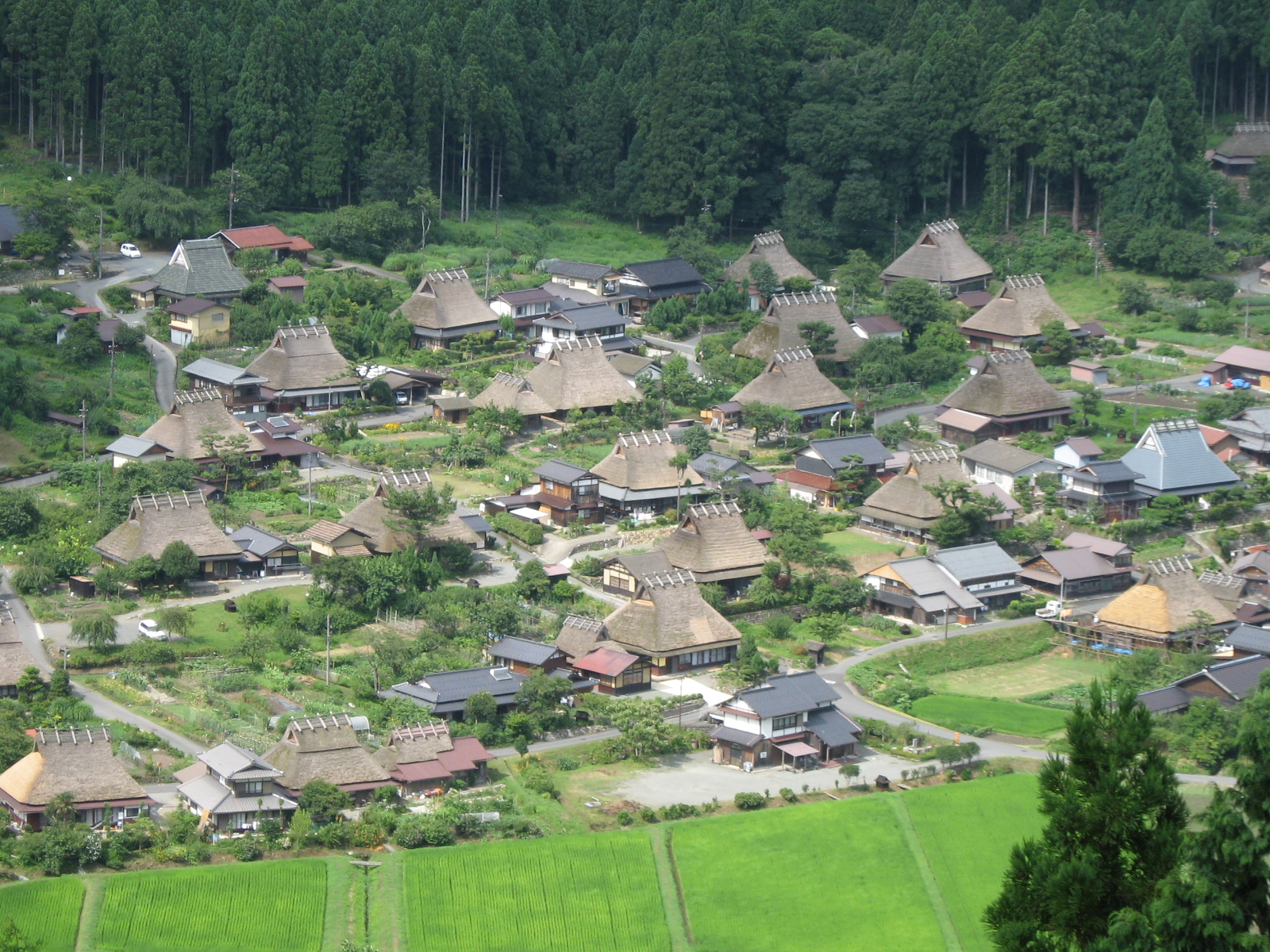
① About Miyama
Miyama was recognized in 2021 as a Best Tourism Village by UNWTO: United Nations World Tourism Organization.
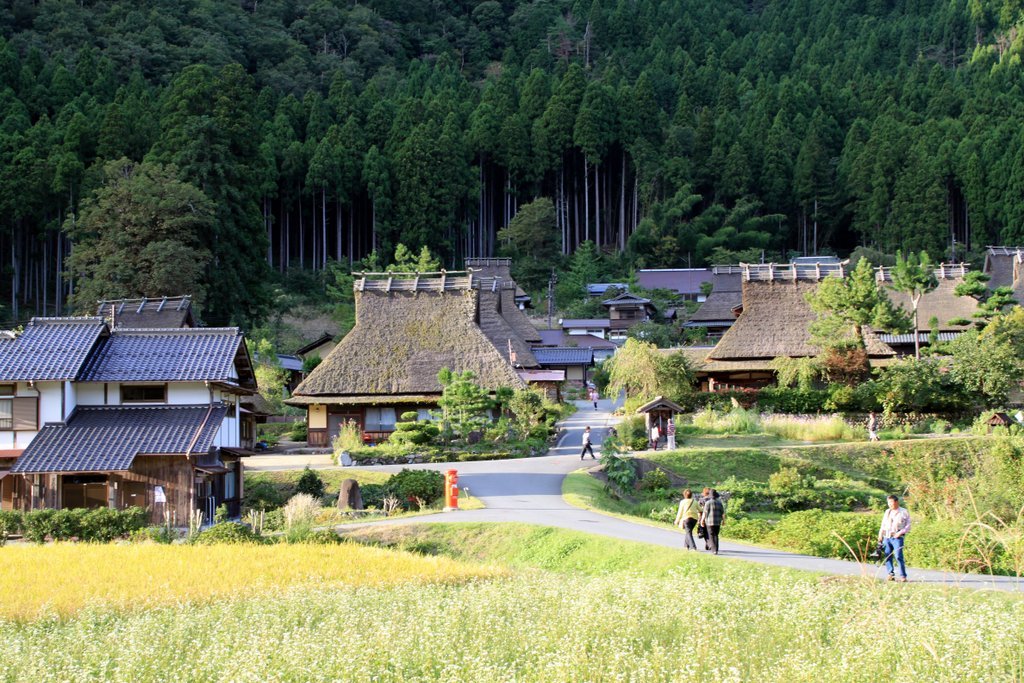
Kayabuki no Sato Kitamura was designated as an Important Preservation District for Groups of Traditional Buildings in 1993. It has since become well known throughout Japan and attracts approximately 700,000 visitors each year.
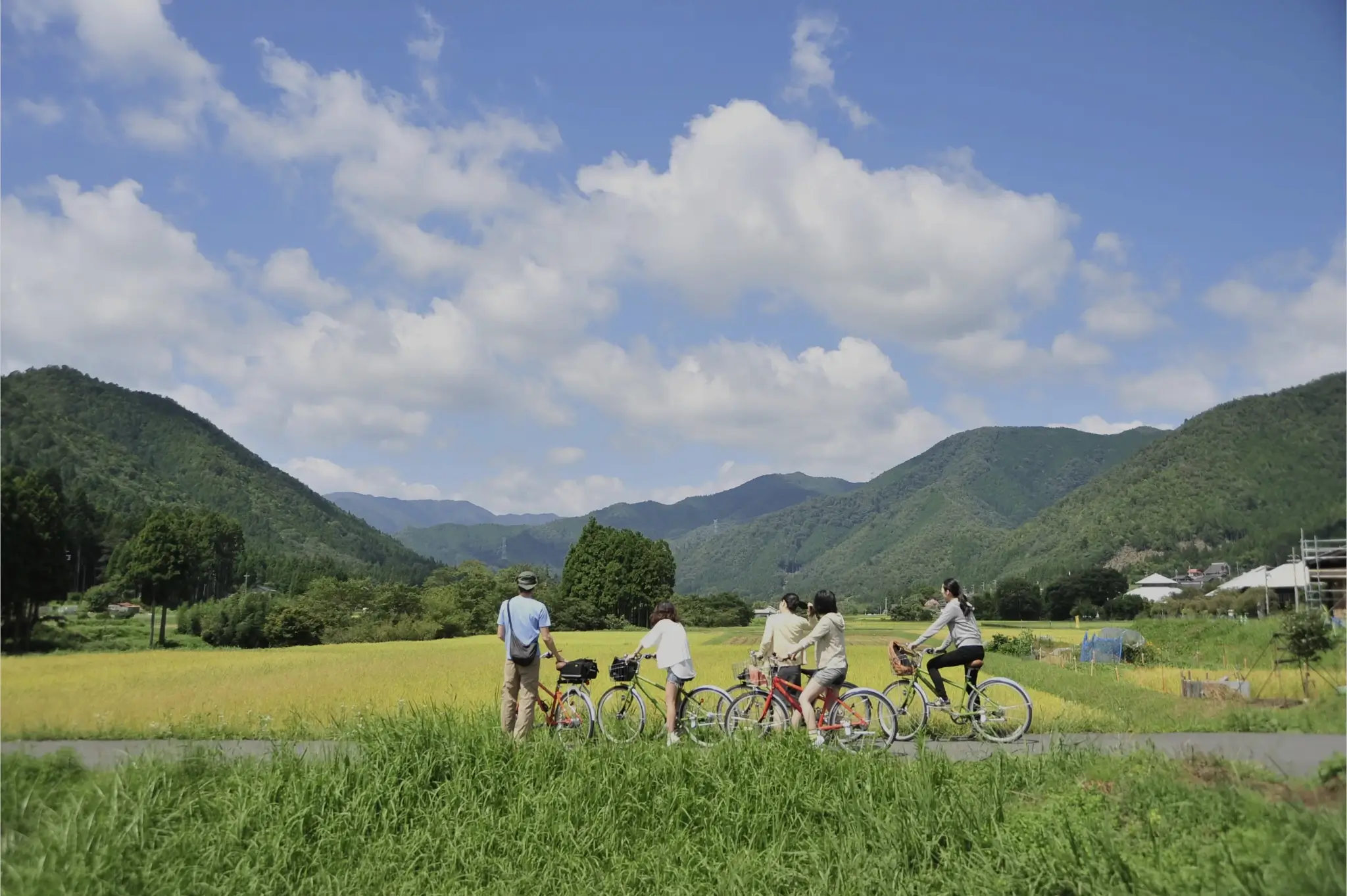
Located about one hour by car from central Kyoto, Miyama is easily accessible for those visiting Kyoto who wish to extend their journey slightly beyond the city.
Within Miyama Town, there are about 500 thatched-roof houses. Including the neighboring town of Hiyoshi, the number exceeds 1,000.
Why did people in the past build so many thatched houses?
It remains a mystery. Yet I believe they were attempting to realize a kind of utopia here.
② Miyama and the 52 Eco-Villages
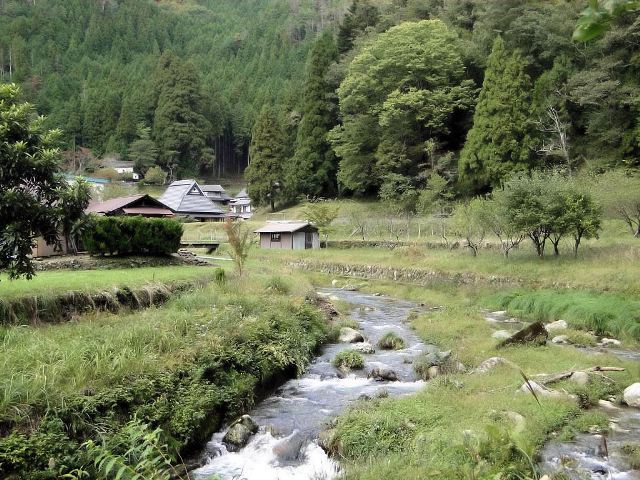
Miyama consists of 52 villages, and even today each village maintains a head and a functioning system of self-governance.
In the past, within these communities, thatched roofs were built collectively, rice fields and farmland were cultivated, and forests were carefully managed.
The villages practiced a form of direct democracy. People stood on equal footing, and goods and labor were exchanged among them. These exchanges were recorded in household ledgers and managed accordingly. In this sense, they can be seen as a prototype of what we now call a blockchain system.
The fundamental principle of the village is “to give” and “to contribute.”
Human beings cannot survive without eating every day. We cannot exist without taking from the Earth. Yet the sun continues to give energy equally to all, and the Earth continues to allow our existence and to give.
The villagers seek to learn from and practice this law of giving embodied by the Earth and the sun. They approach nature with gratitude and humility, striving to remain beings who give.
In this way, people seek to resonate not only with one another, but also with nature, with their ancestors, and with the spirit that protects the land.
③ Mountain Villages as the Foundation of Japan
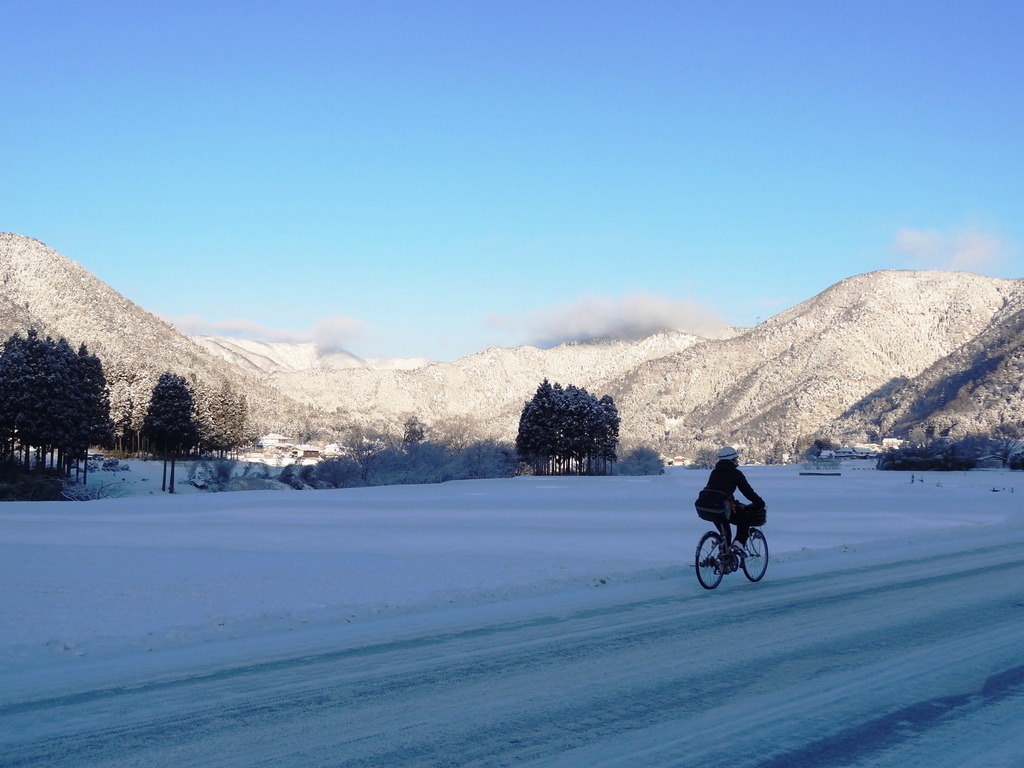
When people visit Miyama, they often feel that something is different. Discovering what that “something” is may enrich one’s life.
You may think that Tokyo or Osaka represents Japan itself. However, Japan was not built by kings or powerful leaders.
It is founded upon countless villages of around one hundred people each, like those in Miyama.
If I may use an analogy: the true nature of Japan is like the fine foam of the beer you drink. The liquid extracted from that foam is like the cities of Tokyo and Osaka.
Today, 90 percent of Japanese people live in urban areas. For the past eighty years since the war, rural regions have continuously sent their young people to the cities. As a result, many countryside villages are now aging and facing depopulation.
History shows that when times are peaceful, people gather, and when problems arise, they disperse. During the Sengoku period five hundred years ago, people were widely dispersed into mountain villages. After the Second World War, they again dispersed into rural areas.
Why is Japan one of the few countries where tap water can be safely drunk? Because countless villages have managed the mountains—the source of water—since ancient times.
Why does a lost wallet often return to its owner? Because even urban residents, if they trace back two or three generations, come from a village. The ethical consciousness cultivated there forms the foundation of Japanese society.
④ Joining the Resonance of the Village
The order of a village is not founded upon written law. It is founded upon resonance of consciousness.
In the phenomenon known as metronome synchronization, metronomes placed on a suspended board begin at different rhythms but gradually fall into the same rhythm through subtle interaction.
The village operates on the same principle.
Human beings are vibrating entities. By working, speaking, eating, and interacting through the five senses, villagers gradually resonate with one another, and their consciousness becomes aligned.
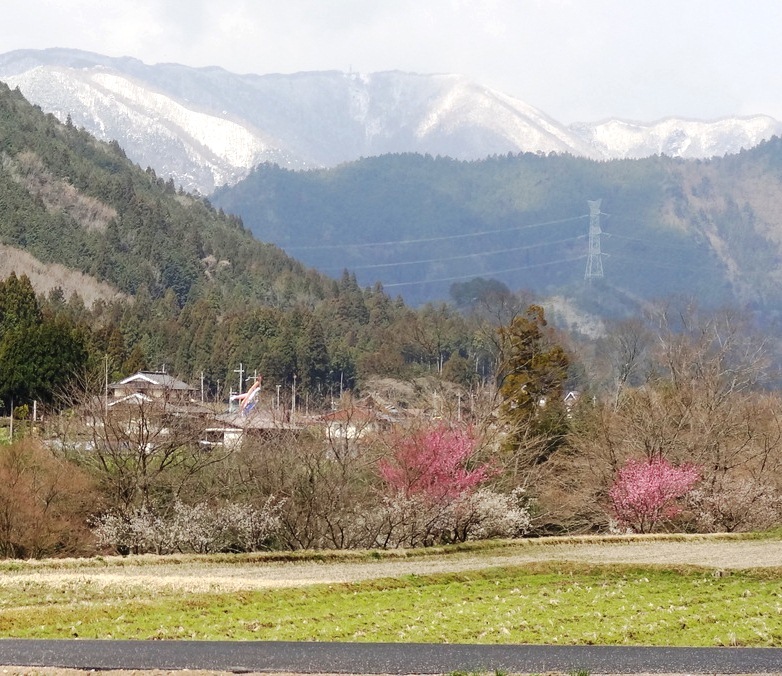
When you visit a thatched-roof village, you notice that houses face the same direction, there are no walls, and the landscape appears harmonious. This is not the result of strict regulation. It emerges from shared aesthetic consciousness.
The ultimate experience of Miyama is to participate in this resonance.
Through the internet, only sight and sound can be conveyed. To truly touch the vibration of the people requires being physically present.
When you join the heartbeat of the village, you are not passively absorbed. Your vibration influences the village’s vibration, and new forms of resonance are born. In this way, villages have continued to evolve for thousands of years.
⑤ The State and the Village
You may take the existence of a nation-state for granted. But is such an entity truly necessary?
It is often said that when a neighboring country is a nomadic power, a centralized state emerges in response.
Japan experienced 260 years of isolation. In 1853, Commodore Perry arrived with four warships and demanded that Japan open its ports.
Because Japan is an island nation, it experienced fewer existential threats to the state than many continental countries. As a result, it had fewer intense experiences of uniting solely for national defense.
It would not be an exaggeration to say that the history of Japan as a modern nation-state spans only about 170 years.
Before that, countless villages governed themselves and developed through cooperation among equals.
One cannot understand Japan by observing Tokyo or Osaka alone. By experiencing a village such as Miyama, one may perceive deeper foundations and perhaps discover hints toward a peaceful world without war.
⑥A Hundred-Person Village Makes People Happy
In the 1990s, Robin Dunbar of Oxford University proposed the Social Brain Hypothesis.
Human beings can sustain networks of trust and cooperation of up to approximately 150 individuals.
A village of around one hundred people may therefore represent the most comfortable scale of community for human beings.
Beyond that number, formal laws and punishment become necessary, and various social problems arise.
The unit of the nation-state may be something too large for the human mind to truly comprehend or control.
⑦ From Taking to Giving
When some people see a thatched roof, they immediately feel fear, imagining it could easily burn.
I once rethatched a tea house at Jingu-ji Temple, a wooden structure designated as an Important Cultural Property. Its beams were massive. When I asked why such enormous timber was used, the head priest explained that during the Sengoku period, attackers targeted temples first. The buildings needed to be imposing enough to discourage invaders.
The presence of enemies shaped architecture.
When someone fears thatch, there may be an imagined enemy within. To fear being deprived is also to carry within oneself the impulse to deprive.
In the past, villagers slept with doors unlocked and windows open. There were no walls. Fire was understood as part of a cycle rather than absolute catastrophe.
⑧ You Become the Center of Change
If you stay in one of our thatched houses and feel fear, it may be that within your heart there remains a consciousness of taking—an imagined enemy against whom you must defend yourself.
But if you sleep peacefully, you may free yourself from the illusion of the enemy. You may loosen attachment to constant self-protection and discover something more absolute within yourself.
You awaken from being one who takes to one who gives.
Within this transformation lies a hint for how humanity might evolve toward peace.
Miyama is not the most wonderful place in the world. Rather, by touching the vibration of this village, you may rediscover the beauty of your own country’s history.
Although our historical paths differ, we share a common pursuit: the search for happiness.
When you return home and become a center of resonance within your own society, that is the true form of tourism.
I traveled the world before recognizing the value of Miyama.
Now, I hope that Miyama may become a mirror that reflects the beauty already present within your heart.
Stay in a Thatched Roof House in Miyama
Experience life beneath a traditional thatched roof.
Our houses are located across the village of Miyama, where guests can enjoy the quiet rhythm of rural Japan.