Thatched Houses as Sacred Architecture
This chapter explores a distinctive idea in Japanese culture: the traditional thatched house was not built primarily for human comfort, but as a sacred structure where humans lived alongside the presence of spirits and ancestors.
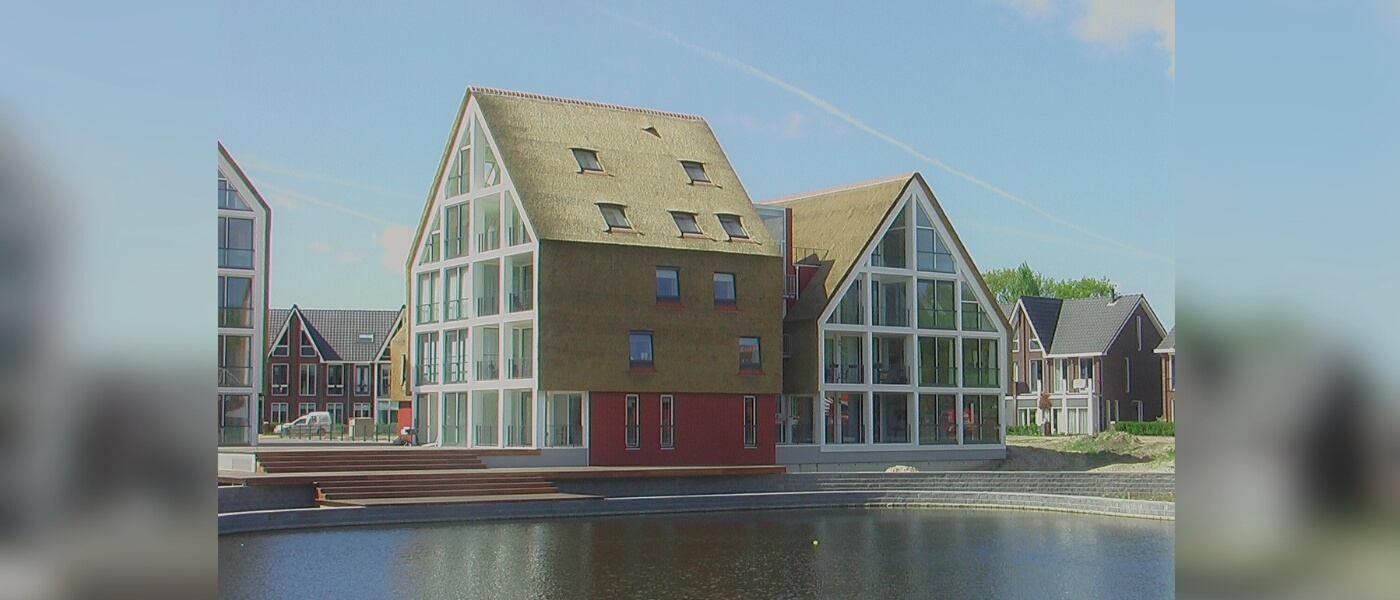
Contemporary Thatched Architecture in the Netherlands
In the Netherlands, architects have embraced thatching, creating a wide range of modern architectural designs that incorporate thatched roofs.
The Form of Thatching Around the World
Because thatch is a soft and flexible material, it can be shaped into many different forms.
In countries such as the United Kingdom, the Netherlands, and South Africa, one can see a wide variety of thatched houses.
It would not be an exaggeration to say that almost every roof is different.
In the Netherlands in particular, contemporary architects have embraced the artistic potential of thatch and are experimenting with bold and innovative designs.
However, when you come to Japan, the situation is very different.
Although there are variations from region to region, within each region the roof design is generally the same.
In the Kinki region, where we live, almost all thatched houses use the irimoya-style roof.
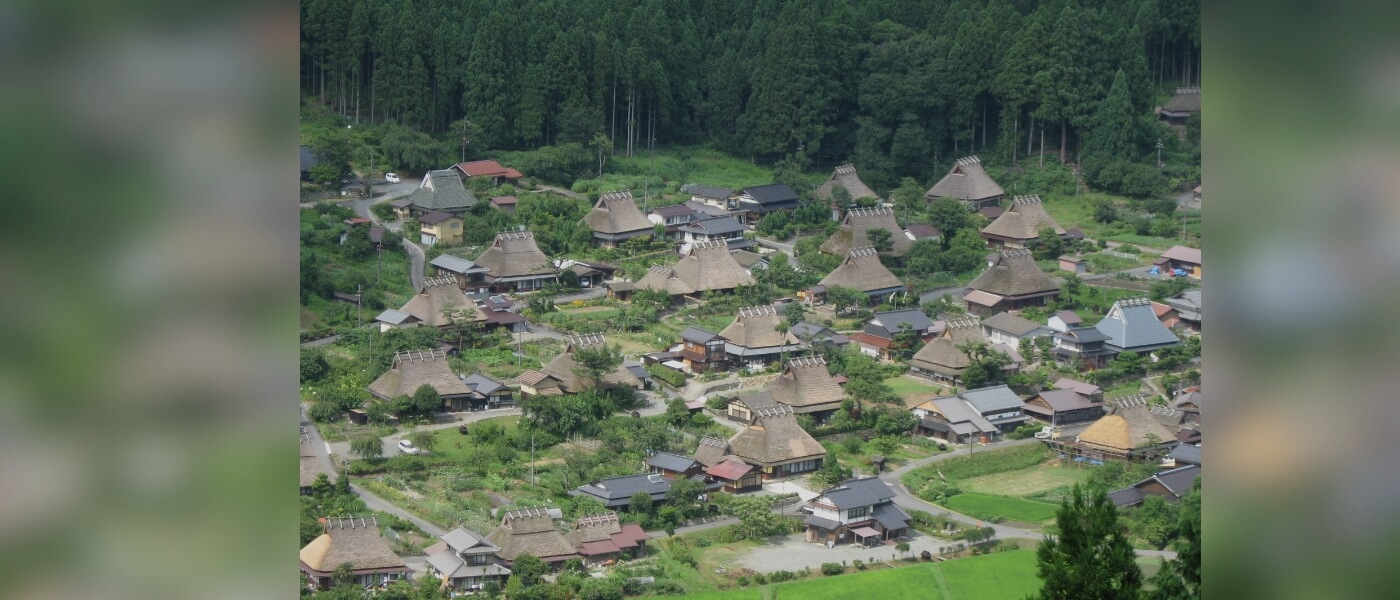
Kitamura, Miyama, Nantan City, Kyoto Prefecture
In the Kansai region of Japan, most thatched houses have this irimoya (hip-and-gable) roof style, and it is rare to see other roof designs.
Why Do Japanese Thatched Roofs Share the Same Form?
This raises an interesting question.
If thatch is such a flexible material, why do Japanese thatched houses follow such fixed forms?
The reason is that the roof expresses status and spiritual meaning, and it has a deep relationship with Shinto.
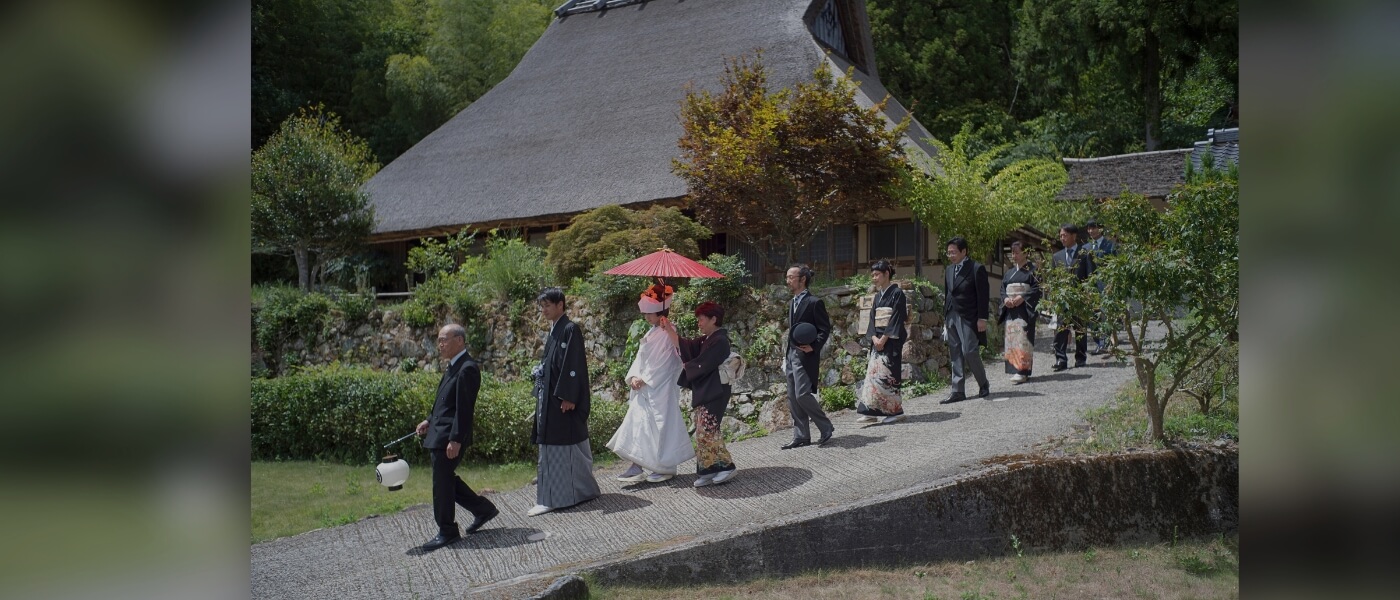
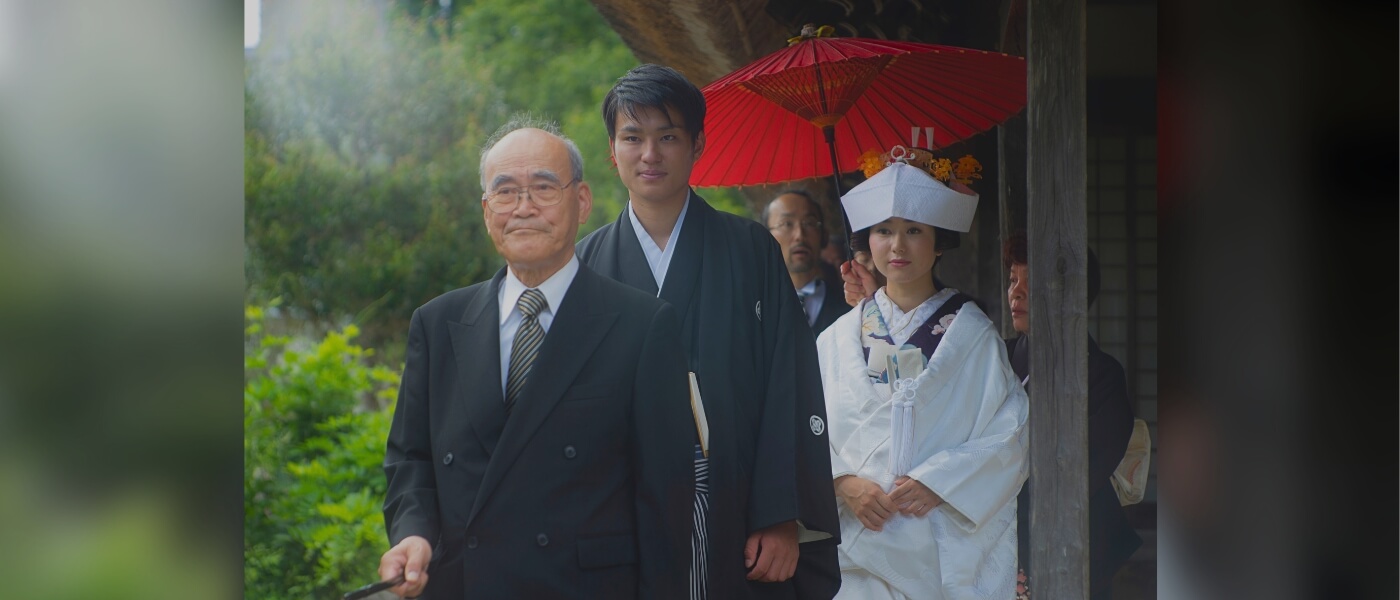
Village Wedding
A Sacred House
To put it simply, buildings known as kominka were not originally built for people to live in.
Modern people generally assume that houses are built for human comfort.
But traditional Japanese people did not think in this way.
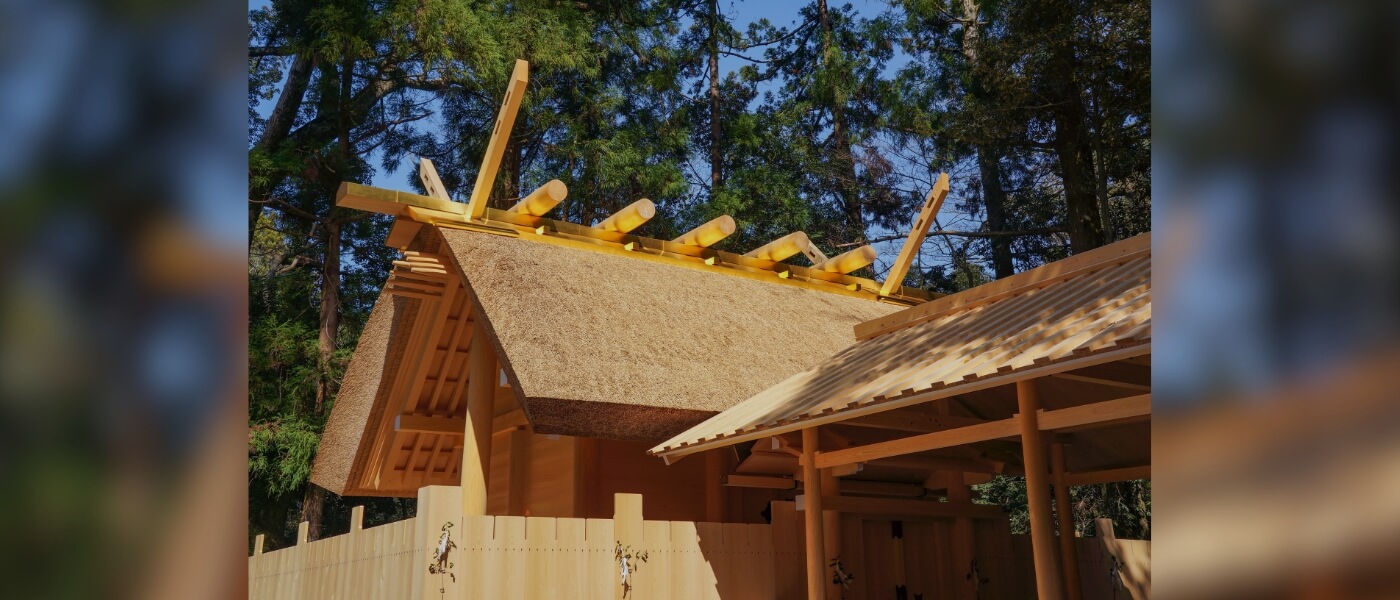
The traditional house functioned as a kind of sacred shrine-like architecture.
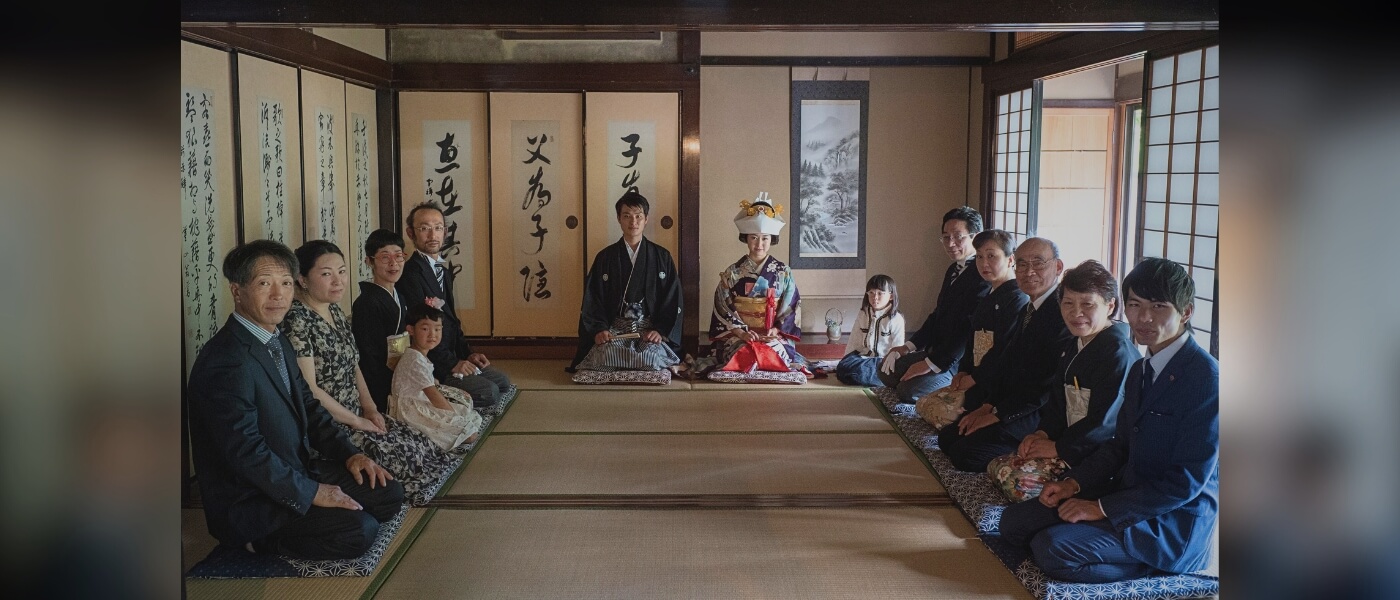
Zashiki (Formal Tatami Room)
The brightest and most spacious room at the center of the house. However, the residents did not sleep there. Weddings, funerals, and gatherings with guests were traditionally held in the zashiki.
People did not occupy the best room in the house for themselves.
The brightest room with the best sunlight was called the zashiki, yet the owner of the house did not normally use this room.
Instead, it was considered a sacred space for spirits and ancestors.
Weddings and funerals were held inside the house, and during those occasions the zashiki served as the central ceremonial space.
Meanwhile, the family slept together in a smaller and darker room located behind it.
In other words, it would be more accurate to say that people were only temporary lodgers within a sacred structure.
As I will explain later, traditional Japanese people did not believe that human beings were the only presence existing in this world.