Traditional Village Cooperation Systems in Japan
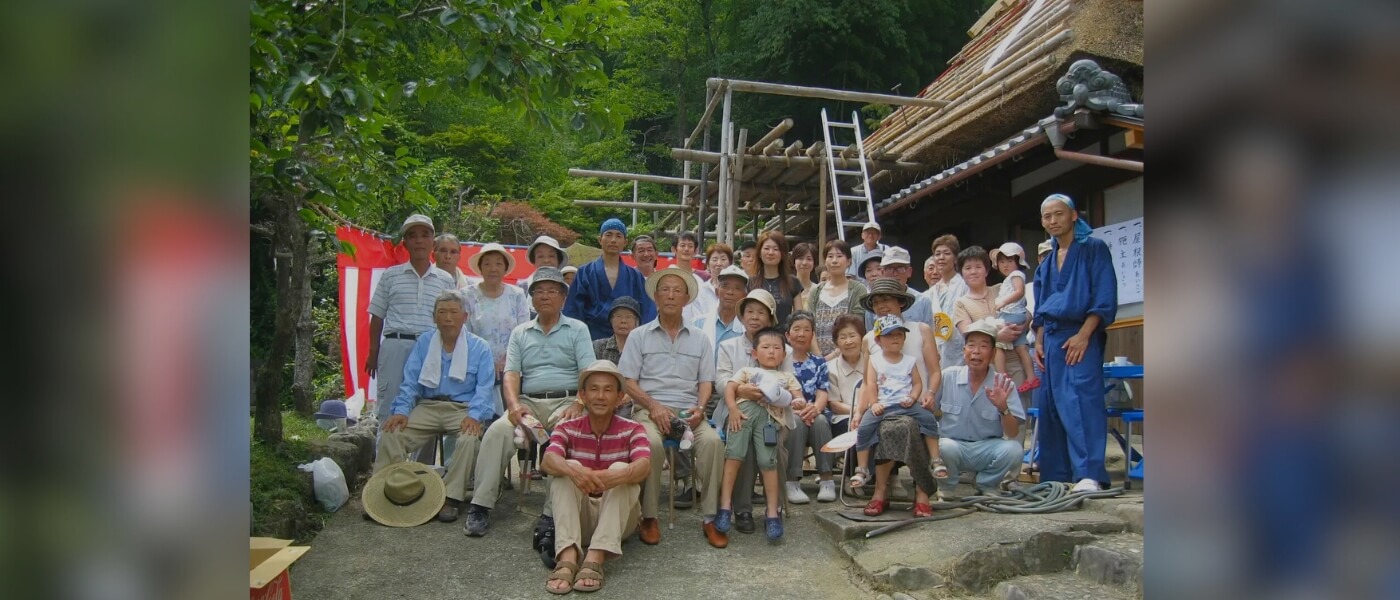
Community and Cooperation in Rural Japan
This chapter explains the social system that allowed thatched houses to spread throughout Japan. Long before modern finance or digital networks existed, village communities developed their own decentralized systems for sharing resources and labor.
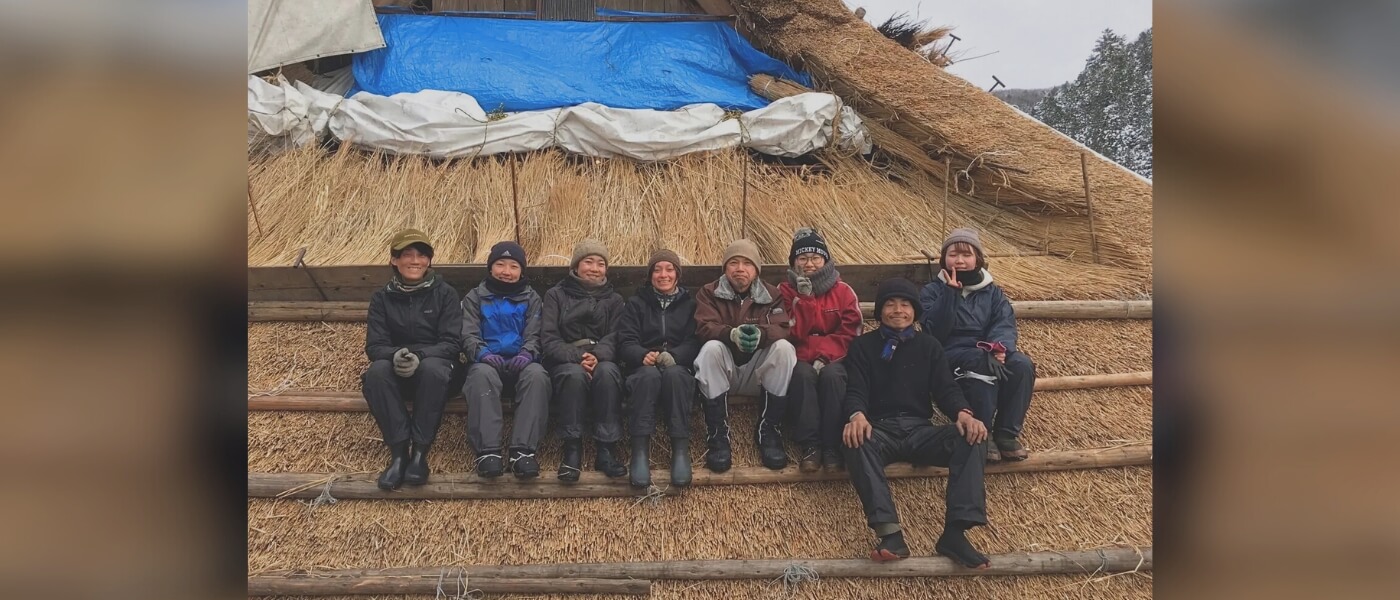
I recruit short-term part-time workers when there is a large job site, but most of the applicants are young women.
The Emergence of a Village-Based Support System
Around the year 1700, thatched houses began to increase rapidly throughout Japan.
This sudden spread was made possible by a system developed within village communities — a method for lending and borrowing both materials and labor.
I often describe this as an analogue form of a blockchain system.
(For a detailed explanation, please see the video linked here.)
In a typical village, around thirty households formed a cooperative group.
Each household contributed materials such as thatch harvested from fields, bamboo, and rice-straw ropes that were handmade during the winter.
These materials were lent to whichever household needed to replace its roof.
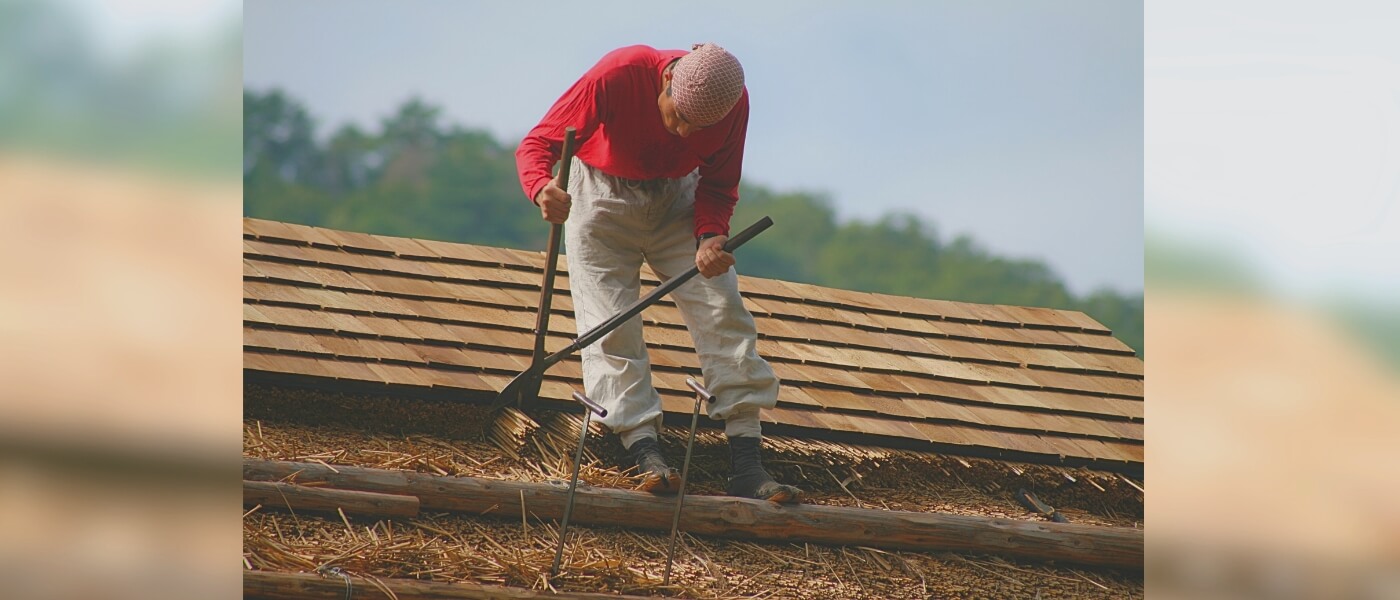
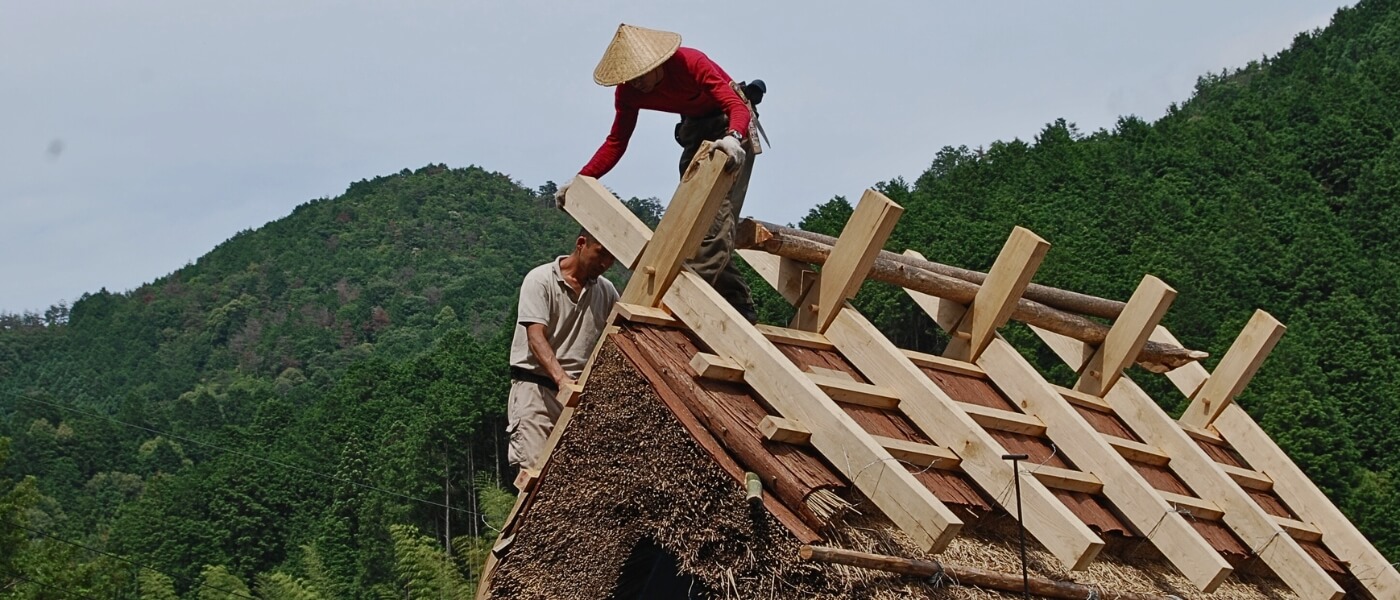
The household repairing its roof would then hire professional thatchers using the materials gathered from the community.
Village members also provided labor for many tasks that did not require professional skills: carrying bundles of thatch, cutting materials, cleaning, or transporting old thatch away.
Each household kept a ledger.
When materials or labor were lent, the lending household recorded it.
When materials were borrowed, the borrowing household also recorded the amount received.
Later, when the lending household needed to replace its roof, the debt had to be repaid in the same form.
Money did not play any role in these exchanges.
The entire system depended on trust among villagers, which allowed materials and labor to be mobilized whenever needed.
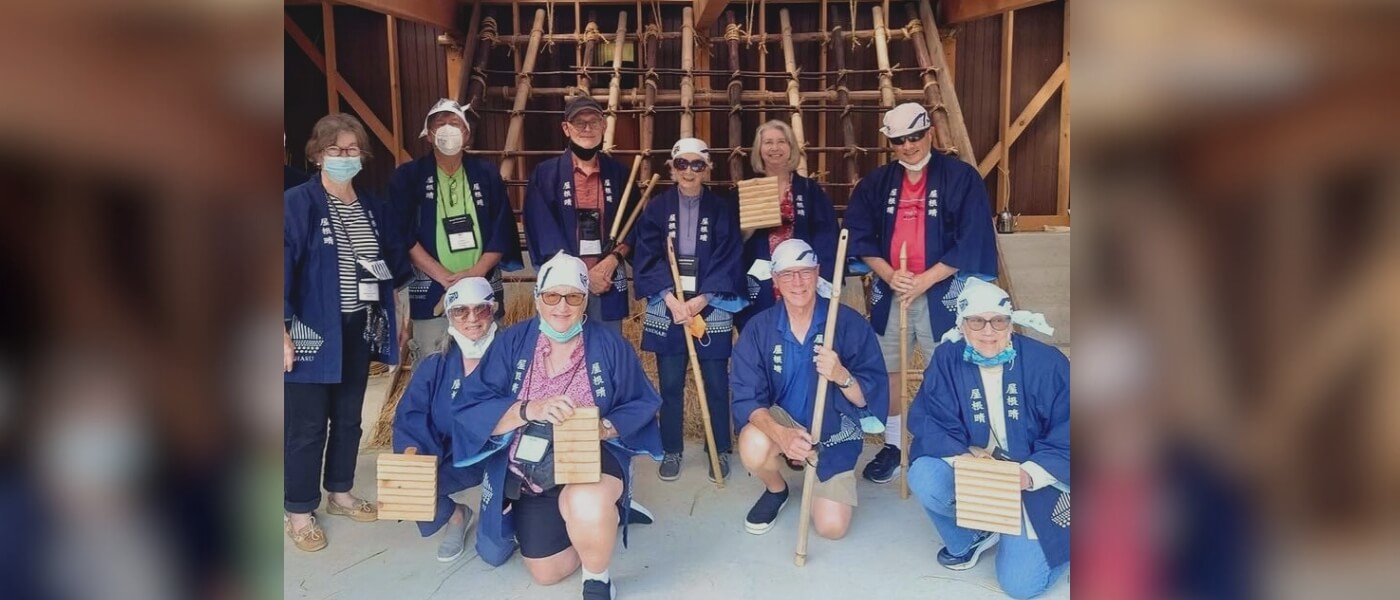
American group participating in our thatching experience
Using a model, we recreate and learn about the cooperative work once carried out in villages between local residents and professional thatchers.
Yui and Tanomoshikō
In Shirakawa-go, a famous village known internationally, this cooperative system was called “Yui.”
In Miyama, where I live, the same system was called “Tanomoshikō.”
It continued to function until about forty years ago.
The origins of this system may go back roughly five hundred years.
During the Sengoku period, when people dispersed into mountain villages and began clearing land for settlement, mutual assistance must have been essential for survival.
Over time, the same system was applied not only to roof thatching but also to agriculture and forestry, allowing village life to develop and stabilize.
A Decentralized Society Built on Trust
One remarkable feature of this system was that there was no central authority managing it.
Everyone in the community was equal.
I often say that Japan was not built by kings or warlords.
Rather, it was formed by countless small villages of around one hundred people each, where strong relationships of trust developed among the villagers.
Through systems like this analogue blockchain, resources and labor were continuously invested in the community.
The relationship between rulers and subjects was not the defining structure of society.
Instead, people maintained relationships based on relative equality.
Even today, traces of this mentality remain in Japanese culture.
Many Japanese people feel uncomfortable receiving help without offering something in return.
There is a strong sense that favors must be repaid.
For example, at weddings or funerals, it is customary to give money as a gift.
However, the host often returns roughly half of the amount.
Practices like these reflect the long history of a society built upon mutual obligation and balanced relationships. Over centuries, this mindset became deeply ingrained in Japanese culture.