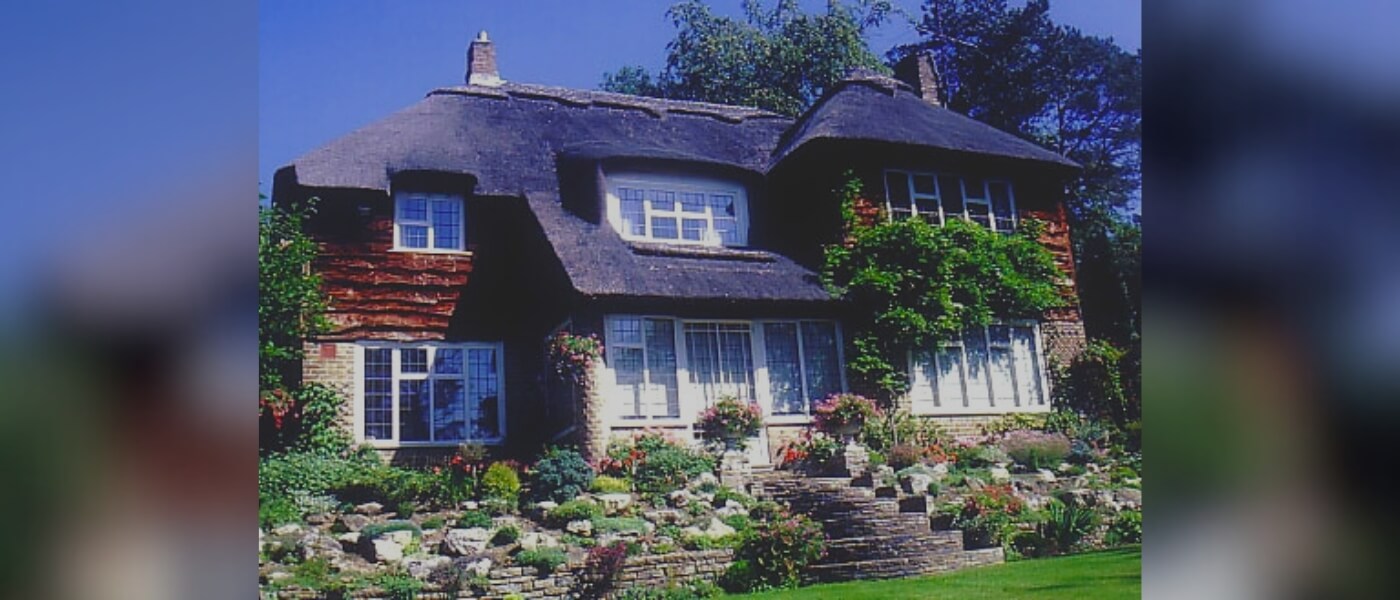
Luxury Thatched House in England
In England, many thatched roofs still remain and are carefully preserved.

Chapter 7
Modernization and the Decline of Thatching
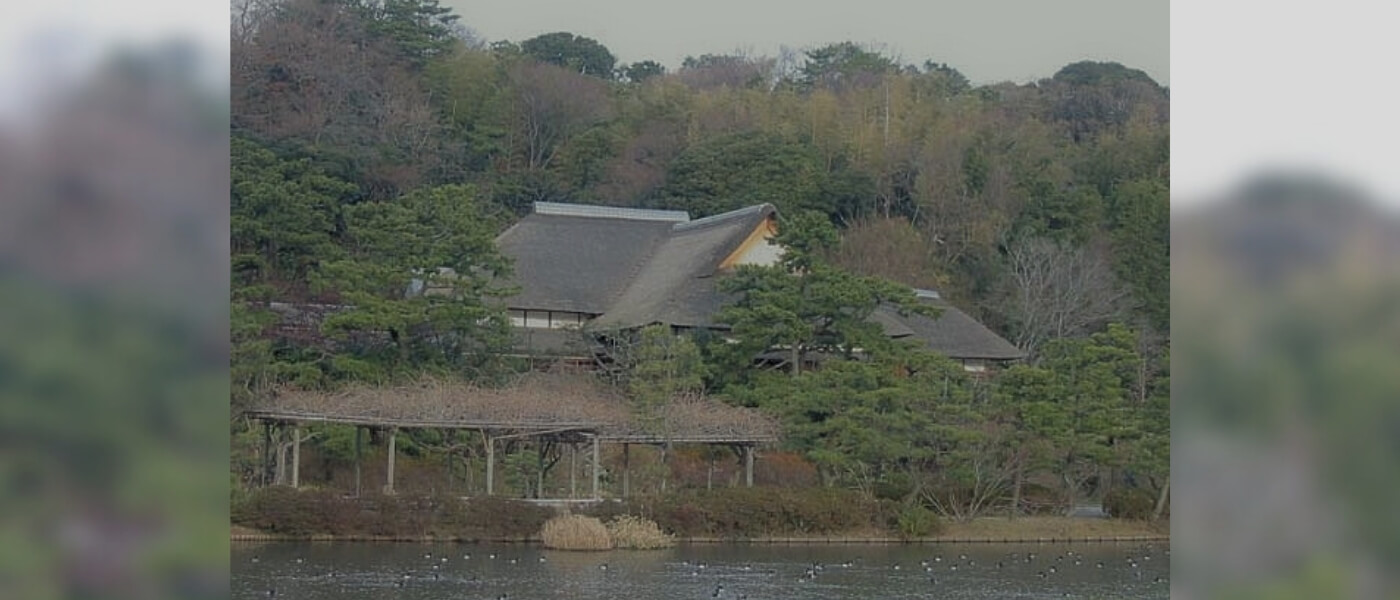
Sankeien Garden, Kanagawa Prefecture
This chapter explains how modernization transformed Japanese society and gradually dismantled the communal systems that had supported thatched-roof culture for centuries.
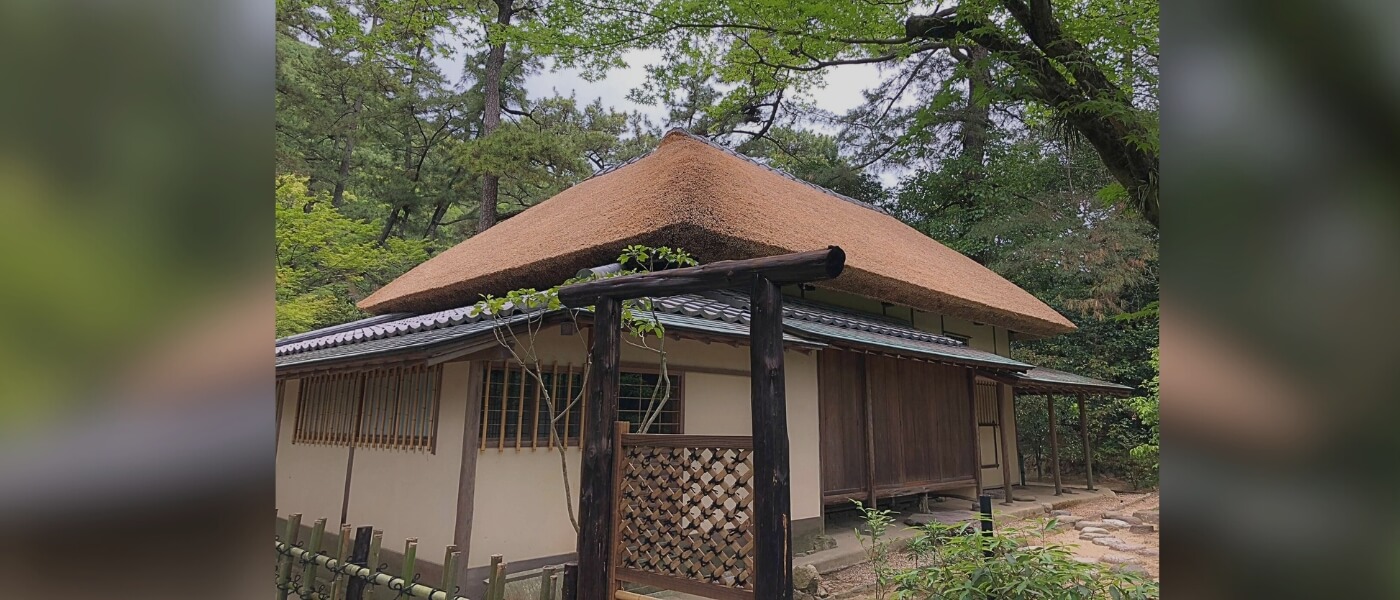
Higurashi-tei Tea House, Ritsurin Garden, Kagawa Prefecture
An Edo-period tea house.
The Golden Age of Thatching in Japan
Around the year 1850, the number of thatched houses in Japan reached its peak.
It is said that there were several hundred thousand such houses across the country.
During the Age of Exploration, Marco Polo described Japan in his book The Travels of Marco Polo (1298) as Cipangu, a land rich in gold where even buildings appeared golden.
One interpretation suggests that this impression may have come from the countless houses with wheat straw thatched roofs that already existed at the time.
When seen from ships approaching the islands, the roofs shining under the sun may have appeared golden.
This suggests that thatching culture had already been widespread in Japan for centuries.
(Unfortunately, wheat straw thatched roofs have now disappeared in Japan.)
Many of the thatched houses still seen in Miyama today were built between about 150 and 200 years ago, during the period when thatching culture was at its peak.
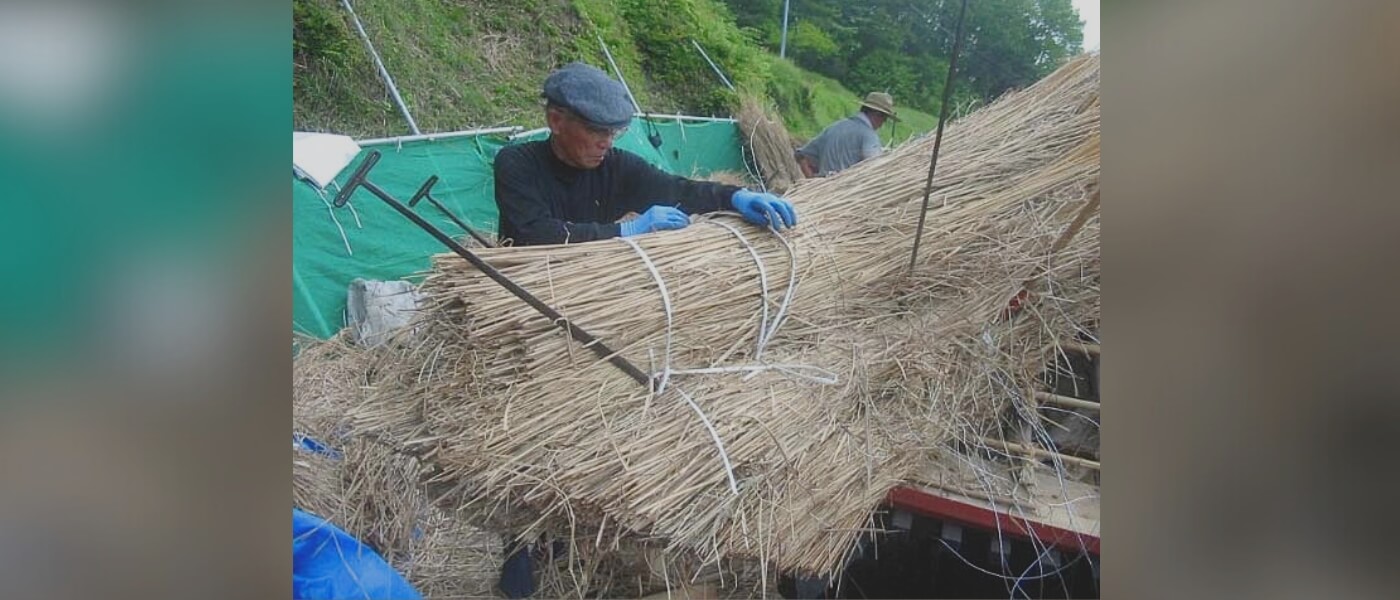
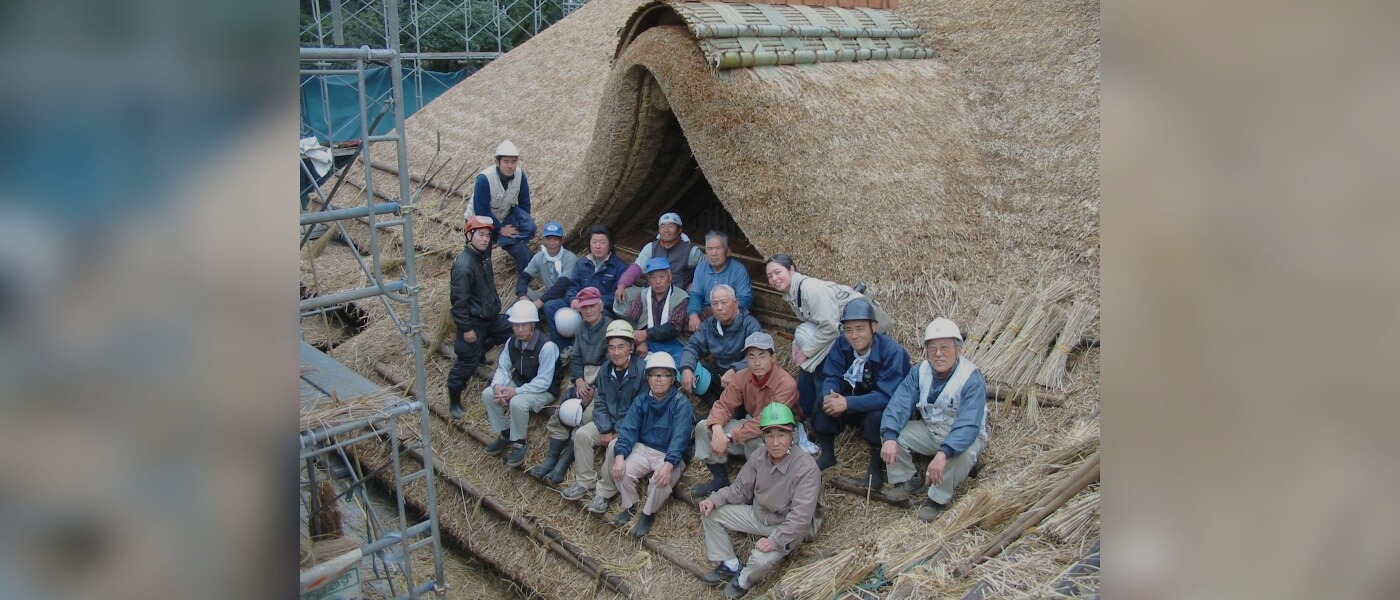
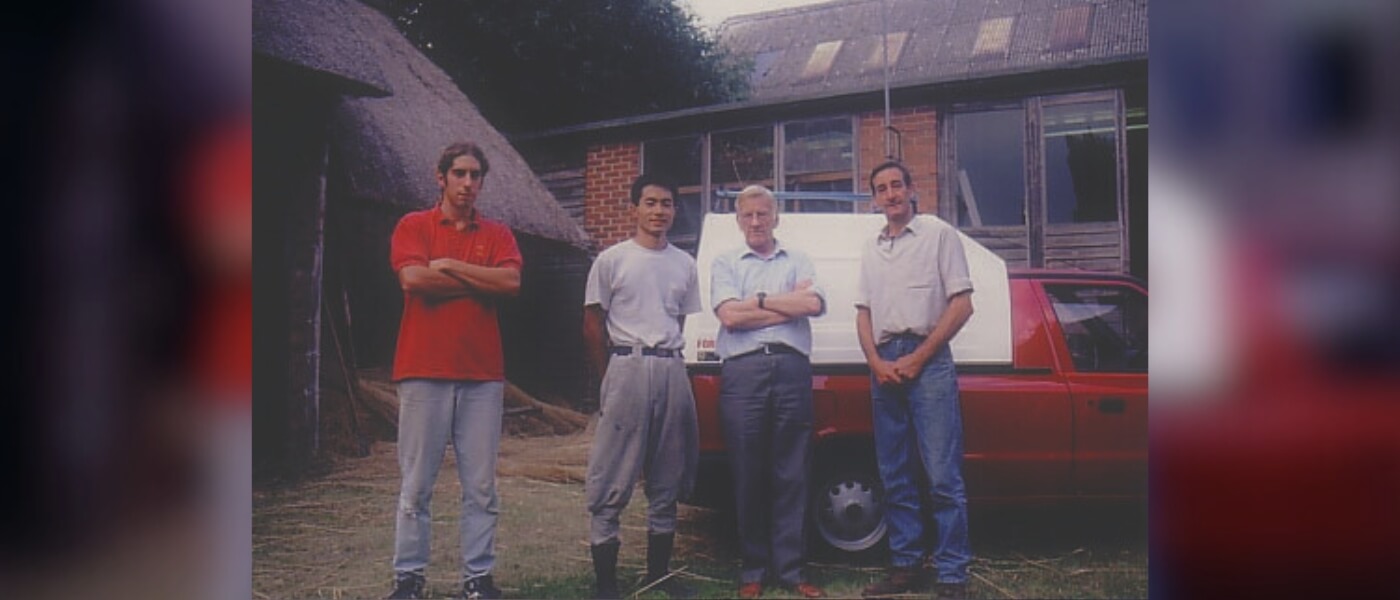
Masashi Okamoto, Master Thatcher from Okayama Prefecture
He possessed extremely high-level skills and passed them on to younger generations. The photograph shows him attaching the corner eave detail, one of the most difficult parts of the roof.
The Transformation of Japanese Society
Around 1960, Japanese society began to change dramatically.
The monetary economy spread rapidly, and the period of high economic growth began.
Earlier, I explained that villages had developed something like an analogue blockchain system.
This system did not rely on money, yet it allowed communities to build trust and concentrate materials and labor when necessary.
However, money itself was an even more revolutionary invention.
Through money, people could exchange value with others living on the other side of the world.
At the same time, industrialization and the development of petroleum-based materials created an era of unprecedented material prosperity.
Village life also changed.
In the past, villagers had sustained themselves through agriculture and forestry.
But gradually, in order to earn money, people needed to work for companies.
As a result, the shared rhythm of village life began to disappear.
People’s daily schedules and lifestyles diverged, and the analogue blockchain system that had once supported the community ceased to function.
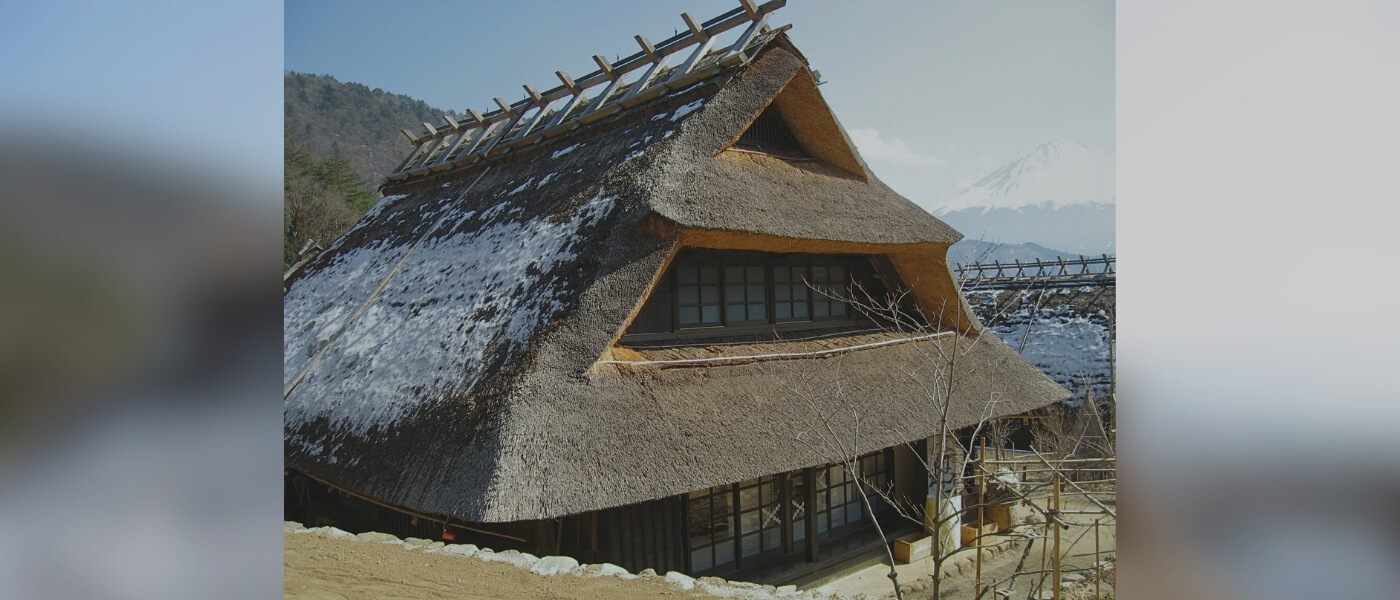
“Kabuto-zukuri,” Yamanashi Prefecture
In this region, houses were modified with windows in the roof so that silkworms could be raised in the attic. “Kabuto” refers to the helmet worn by warriors.
The Disappearance of the Thatching System
During this same period, a new construction method spread throughout Japan.
Instead of replacing a thatched roof, people began covering it with corrugated metal sheets, an industrial product.
This method was inexpensive and required little maintenance.
Young thatchers in their twenties and thirties quickly understood the direction society was taking.
Nearly 100 percent of them left the profession and became company employees.
The thatch fields on the slopes of the mountains around each village were also transformed.
Instead of growing thatch grass, people planted cedar trees, because forestry offered a more reliable source of income.
Young people raised in mountain villages left for the cities in their teenage years to receive education and become company workers.
For nearly eighty years, rural mountain regions have continued to lose their younger generations.
As a result, depopulation and aging have become severe problems.
As society became centered on money, the communal structures that had supported thatched roofs collapsed. Across Japan, the number of thatched houses has continued to decline.
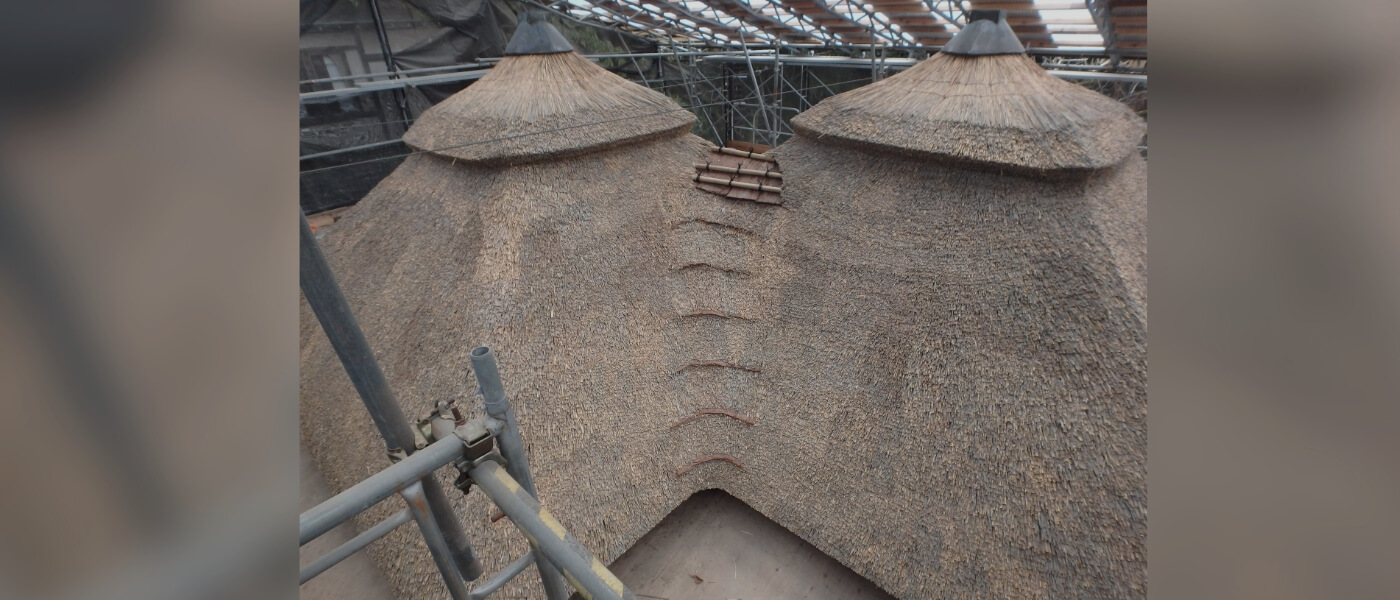
Kenrokuen Garden, Kanazawa, Ishikawa Prefecture
The True Reason Thatching Became Expensive
My own master was born in 1932.
In his generation, a thatcher only needed to own his tools.
Materials were gathered by the house owner through the community network of lending and borrowing.
Labor was also organized by the owner, who asked neighbors in the village for help.
However, my generation changed this system.
We began providing both materials and labor as professional contractors.
Today, when a homeowner repairs a thatched roof, the entire cost must be paid with money.
If we convert all the labor that was once provided by the community into monetary value, the cost becomes extremely high.
In Japan today, people often say that thatched roofs disappeared simply because they are too expensive.
This explanation is partly true.
But the real reason is different.
Thatched roofs did not suddenly become expensive.
In the past, people had developed ingenious ways to maintain them without spending large amounts of money.
What disappeared was the social structure that supported those methods. The rapid pace of economic and social change also contributed to this transformation.
Japan and Britain: Different Paths of Modernization
In Britain, many old thatched houses still survive.
Some are maintained by private owners, and many others are protected by organizations such as the National Trust, which was founded about 150 years ago.
Today, more than five million members support the preservation of historic buildings and landscapes throughout Britain.
Since the Industrial Revolution began about 260 years ago, Britain has undergone modernization and industrialization gradually over a long period of time.
While transforming society, there was still enough time to preserve older traditions and allow them to coexist with new systems.
Japan followed a different path.
Using Britain as a model, Japan transformed its entire society in about fifty years. In order to achieve such rapid change, many older systems had to be abandoned.
The Loss of Cultural Awareness
As the world entered an age of material prosperity, modern Japanese people gradually lost the ability to understand the beautiful relationship with the earth that existed behind the culture of thatched roofs.
Rapid social change also produced another consequence.
Many Japanese people came to assume that preserving culture is primarily the responsibility of the government.
Unlike in Britain, there is relatively little tradition of citizens themselves protecting national heritage.
Japan is actually a very fortunate country.
Throughout its long history, Japan has been occupied by another nation only once.
When a country is occupied, the invading power often destroys or erases its culture first.
Because Japan has rarely experienced this, many Japanese people do not fully understand what it means to lose cultural identity.
In contrast, many people on the Asian continent have experienced this repeatedly throughout history.
For that reason, they are often very sensitive to the disappearance of culture.
Ironically, it is often people from overseas who recognize the beauty and value of Japan’s traditions. That recognition from abroad is my only hope.
Stay in a thatched house in Miyama → Explore the Houses