Beyond Money: The Wisdom of the Thatched Roof
The invention of the automobile was revolutionary. Today, cars run on electricity without relying on oil. But in the past, vehicles even ran on charcoal. If we compare the invention of modern money to a gasoline-powered car, the communal systems once created by villagers can be compared to charcoal-powered vehicles — an older model of technology.
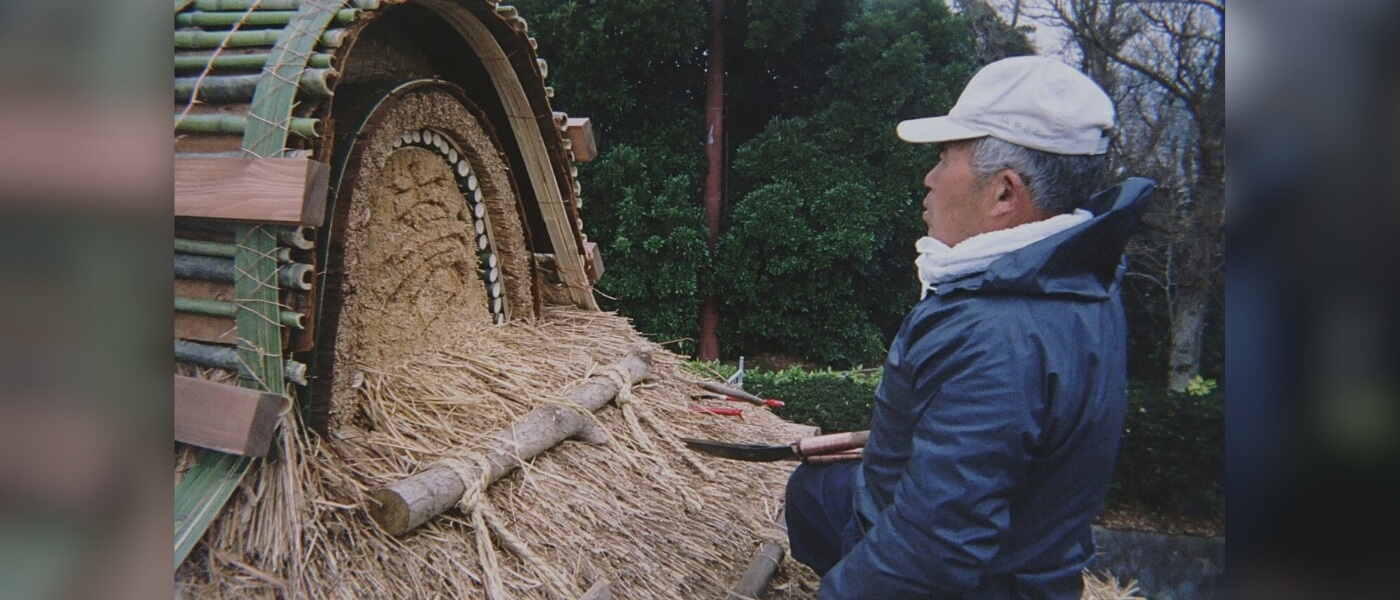
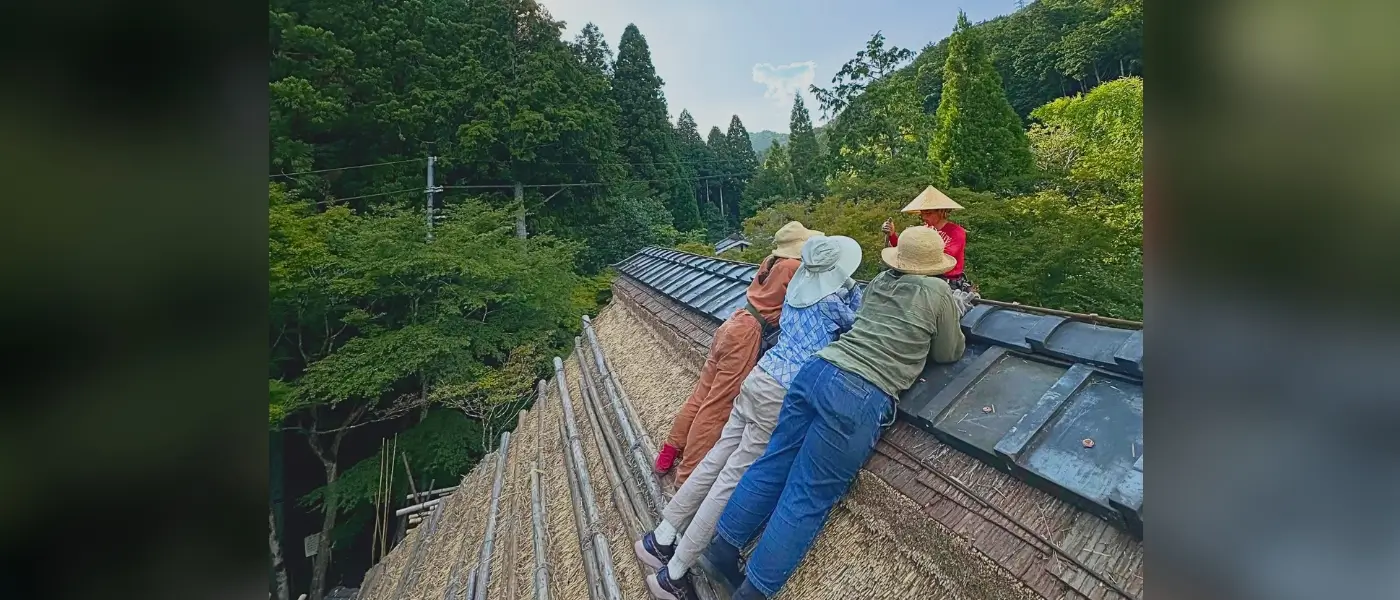
Shigeo Suzuki, an outstanding master thatcher from Ibaraki Prefecture
He creates a special ridge ornament called “kiritobi”. About 100 years ago, thatchers from the north came to this region for winter work, making it a highly competitive area. In order to survive, craftsmen refined their skills. As a result, unique techniques still remain in this region of Japan. I met him in 2005 and received the transmission of these techniques from him.
The Limits of Money
However, if the day comes when oil is exhausted, the knowledge behind charcoal-powered vehicles will inevitably become valuable again.
The development of money has been a remarkable invention. It has allowed human activity to expand across the entire globe.
Through money, people can exchange value even with someone living on the other side of the earth.
Yet money is not a perfect system.
It functions within a delicate balance.
Money can concentrate wealth.
It tends to reduce all value to a single measurement.
It encourages short-term profit.
It can become detached from real substance.
And it often amplifies human desire.
Moreover, the system of money is closely tied to the existence of the nation-state.
If people around the world begin to question whether a nation-state is truly necessary for human happiness, the monetary system itself may begin to lose its foundation.
Village-Scale Society
I personally believe that human beings do not need a nation-state in order to live.
A family and a village of about one hundred people are enough.
I explain this idea in more detail in “About Miyama.”
The Philosophy of the Thatched Roof
When humanity eventually creates a system that goes beyond money and moves to the next stage of civilization, I believe the world will need to learn from the wisdom that the Japanese people cultivated over many centuries.
One symbol of that wisdom is the Japanese thatched roof.
A thatched roof is not merely an old building technique.
It embodies a philosophy.
It represents living with nature.
Giving rather than taking.
Participating in cycles rather than resisting them.
And sustaining life through community.
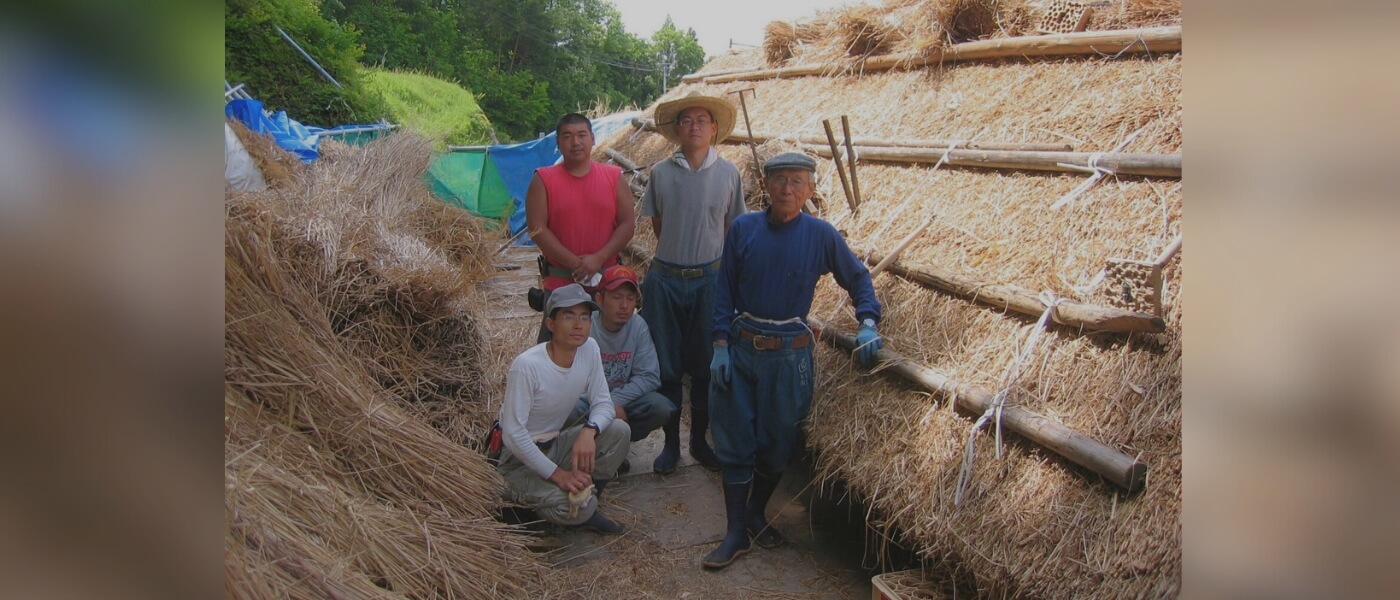
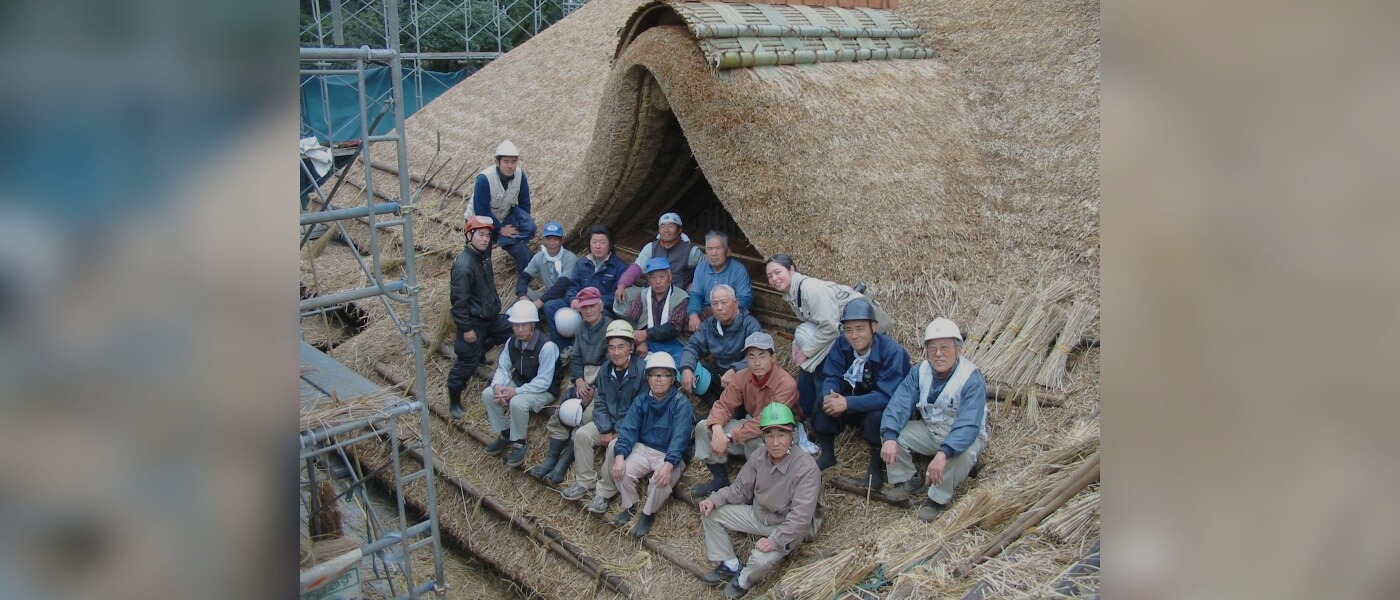
Masashi Okamoto and young thatchers, Okayama Prefecture
A Small Experiment for the Future
I have spent more than thirty years working as a thatcher.
Yet today, thatched houses in Japan are disappearing rapidly.
For this reason, I began doing more than simply repairing roofs.
I started purchasing disappearing thatched houses, restoring them, and creating places where people from around the world can stay and experience them.
In these houses, people from different countries gather.
They share the same roof.
They share meals.
They sit together around the same fire.
Through this simple experience, people can quietly encounter the relationship with the earth that gave birth to the thatched house.
I believe this is a small experiment for the civilization of the future.
If humanity is to create a society once again that lives in harmony with nature, supports one another, and learns to give rather than merely take, the hints for such a future already exist somewhere on this planet.
The thatched roofs that remain in the mountain villages of Japan may be one of those hints.
Thatching is not a relic of the past. It may be a blueprint for a future civilization.