Project Info
Project Description
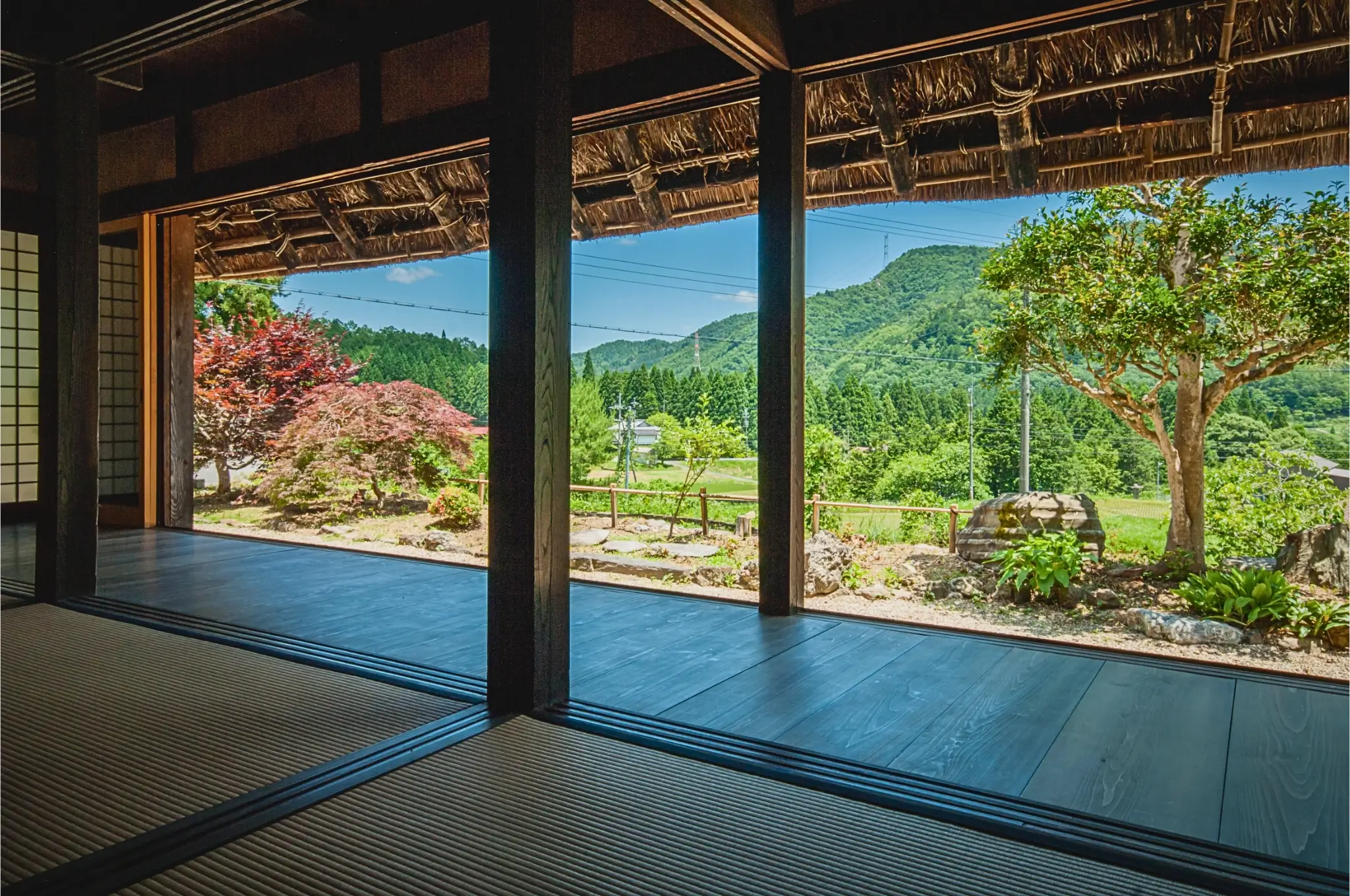
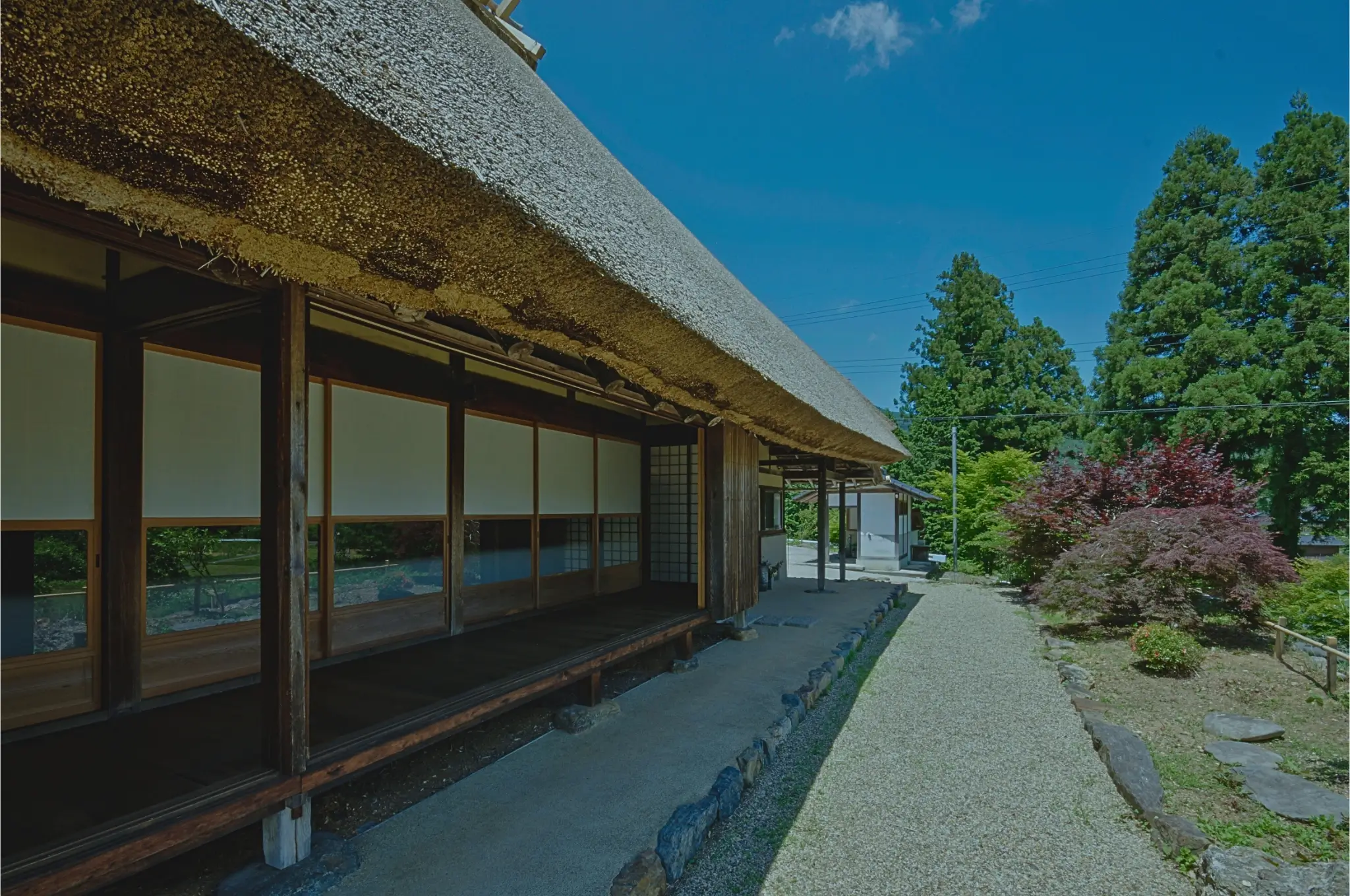
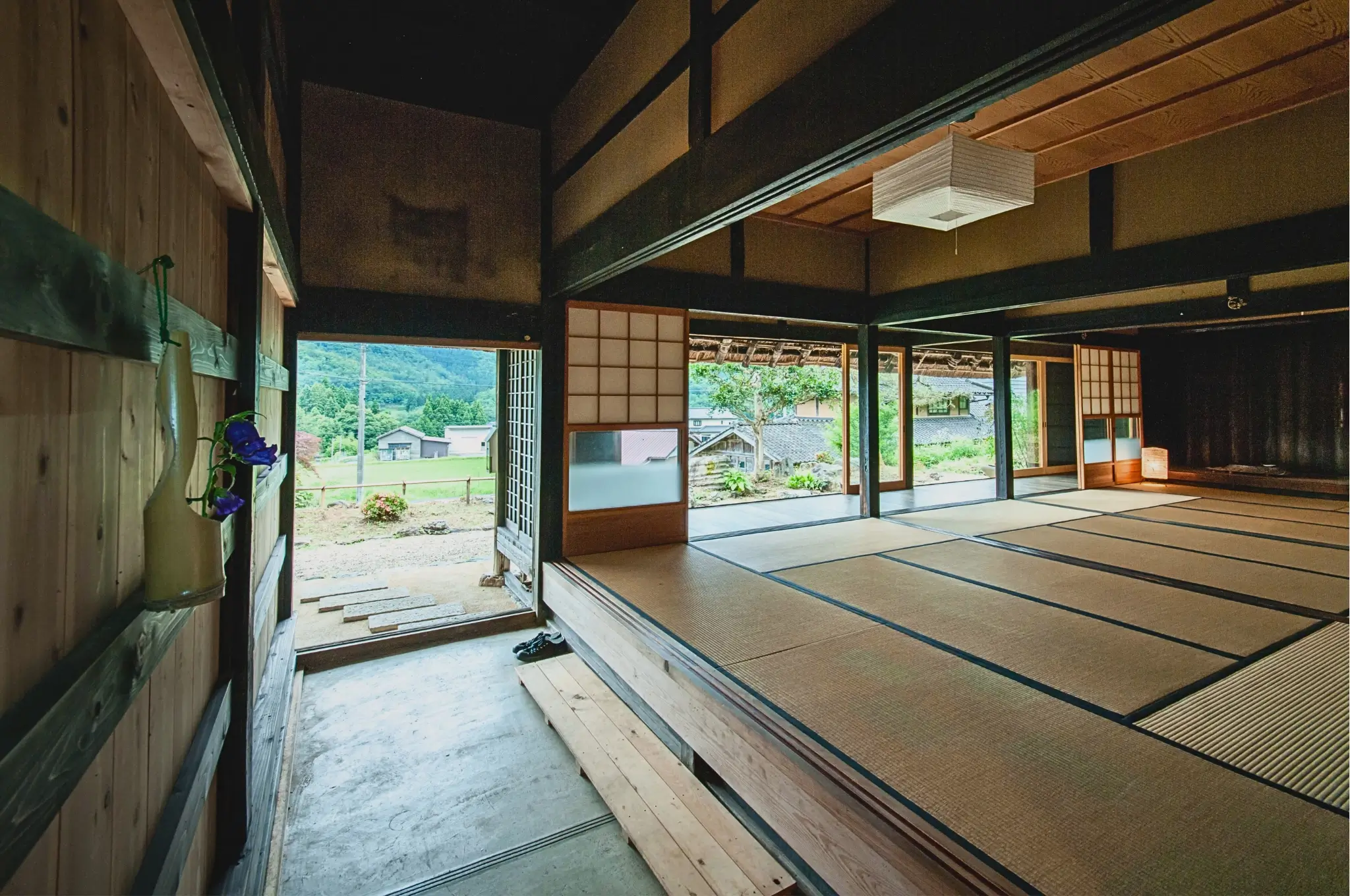
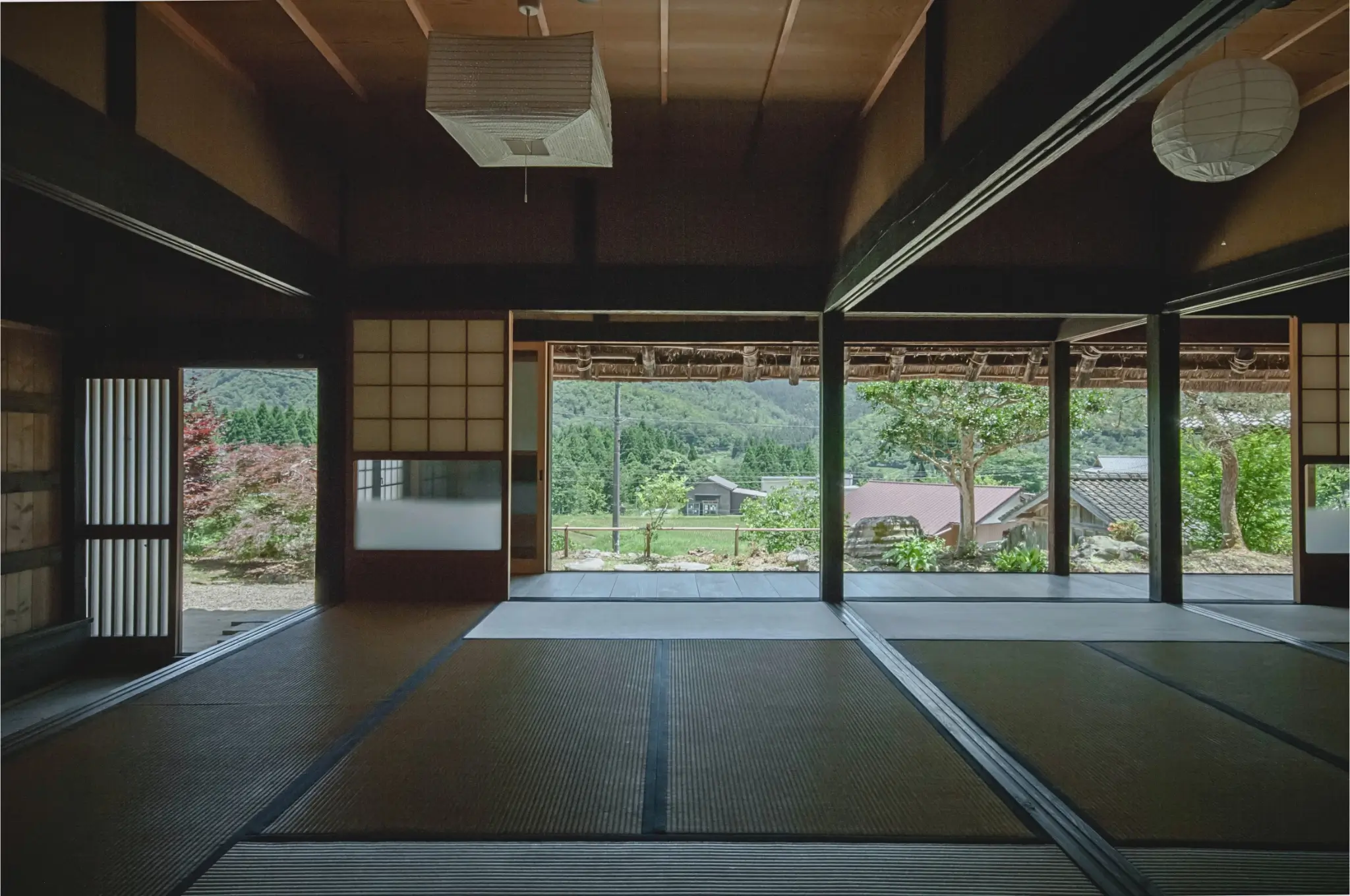
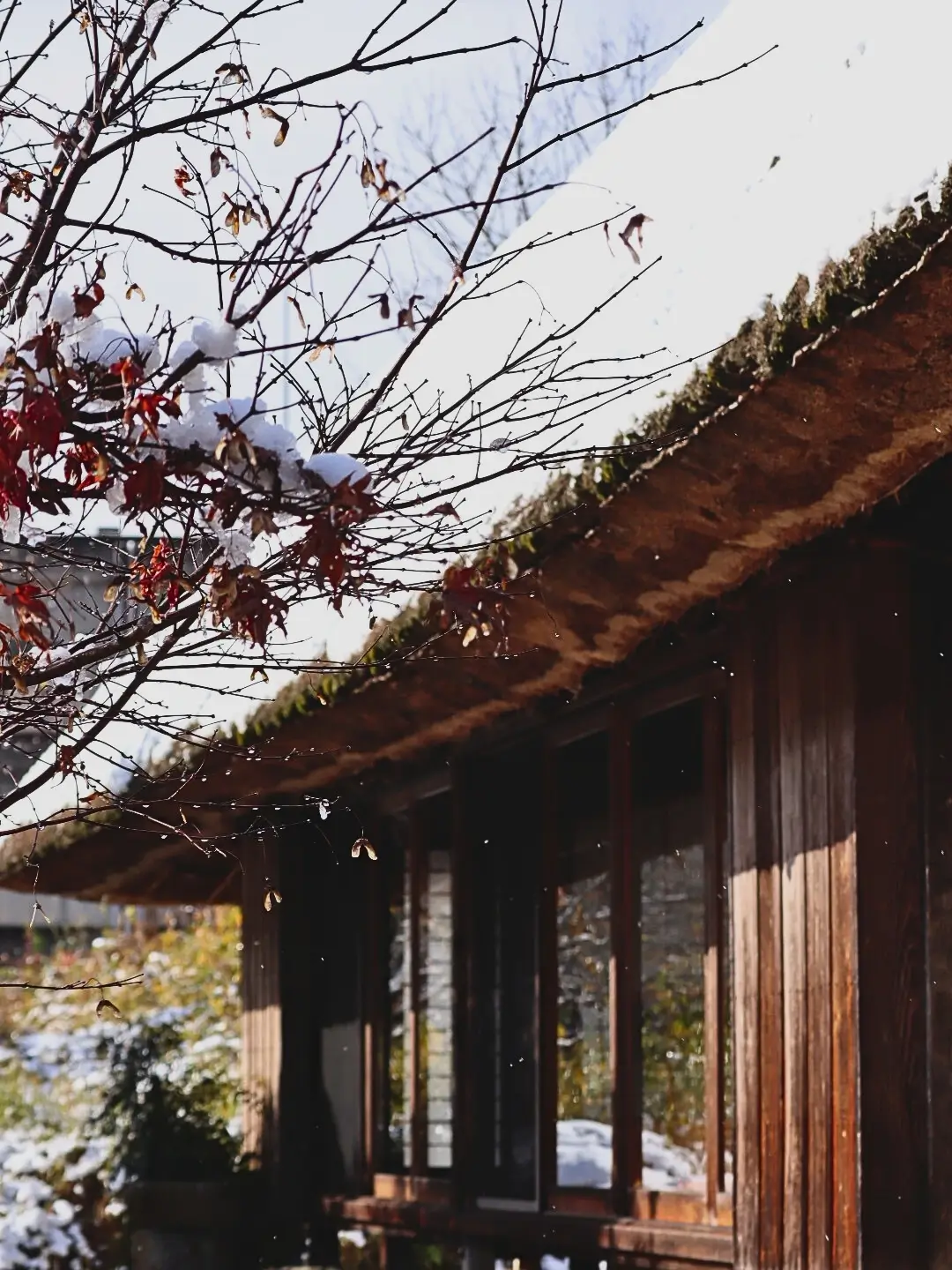
One of Mitoya’s greatest charms is its engawa veranda, where you can still see the thatched roof above—something that has become increasingly rare in Japan today. Sitting on the engawa, you can feel the true presence of a traditional thatched-roof farmhouse, with the deep eaves of straw extending overhead in a way that is both beautiful and calming.
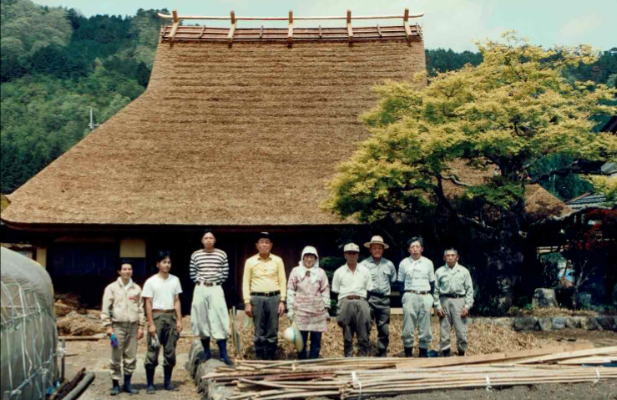
Mitoya’s roof is built in a traditional style known as “fukioroshi,” where the thatch is laid all the way down to the edge of the eaves. This style, passed down through generations, creates a powerful silhouette and protects the house naturally with its deep overhang and soft shadows.
In Miyama, nearly 500 thatched-roof houses still remain. However, sadly, about 95% of them are now covered with corrugated metal sheets, meaning the original beauty of the thatch can no longer be seen from the outside.
In fact, until around 60 years ago, most thatched houses looked just like Mitoya, built in the “fukioroshi” style. But as electricity entered everyday life and people began spending more time indoors, there was a growing desire to make the interior brighter. As a result, it became common to cut back the thatched eaves and add lower roofs made of tiles or metal to allow more sunlight into the rooms. This renovation style spread quickly and became the trend of the era.
Over time, true “fukioroshi” thatched roofs became rare, and today they are considered a precious remnant of Japan’s disappearing rural landscape.
At Mitoya, the engawa is more than just a veranda. It is a place to sit quietly, gaze out at the scenery, feel the breeze, and listen to nature. And perhaps the greatest luxury of all is to lie down and take a peaceful nap there, wrapped in the shade and calm created by the thatched roof above.
Another detail that makes Mitoya truly special can be seen when you look up from the engawa at the roof structure beneath the thatch.
Today, most thatched-roof houses use straight cedar or cypress rafters, grown through modern plantation forestry. These trees are uniform, easy to process, and widely available.
However, the rafters visible from Mitoya’s engawa are made from naturally curved pine wood. This kind of timber was commonly used before plantation-grown cedar and cypress became accessible.
The presence of these curved pine rafters is not only visually striking—it is also clear evidence that Mitoya is truly an old farmhouse, built more than 200 years ago.