Project Info
Project Description
A Village Beyond Jurisdiction — The Spirit of Autonomy Living in Miyama
For many years, I have carried a question about the thatched roofs of Miyama.
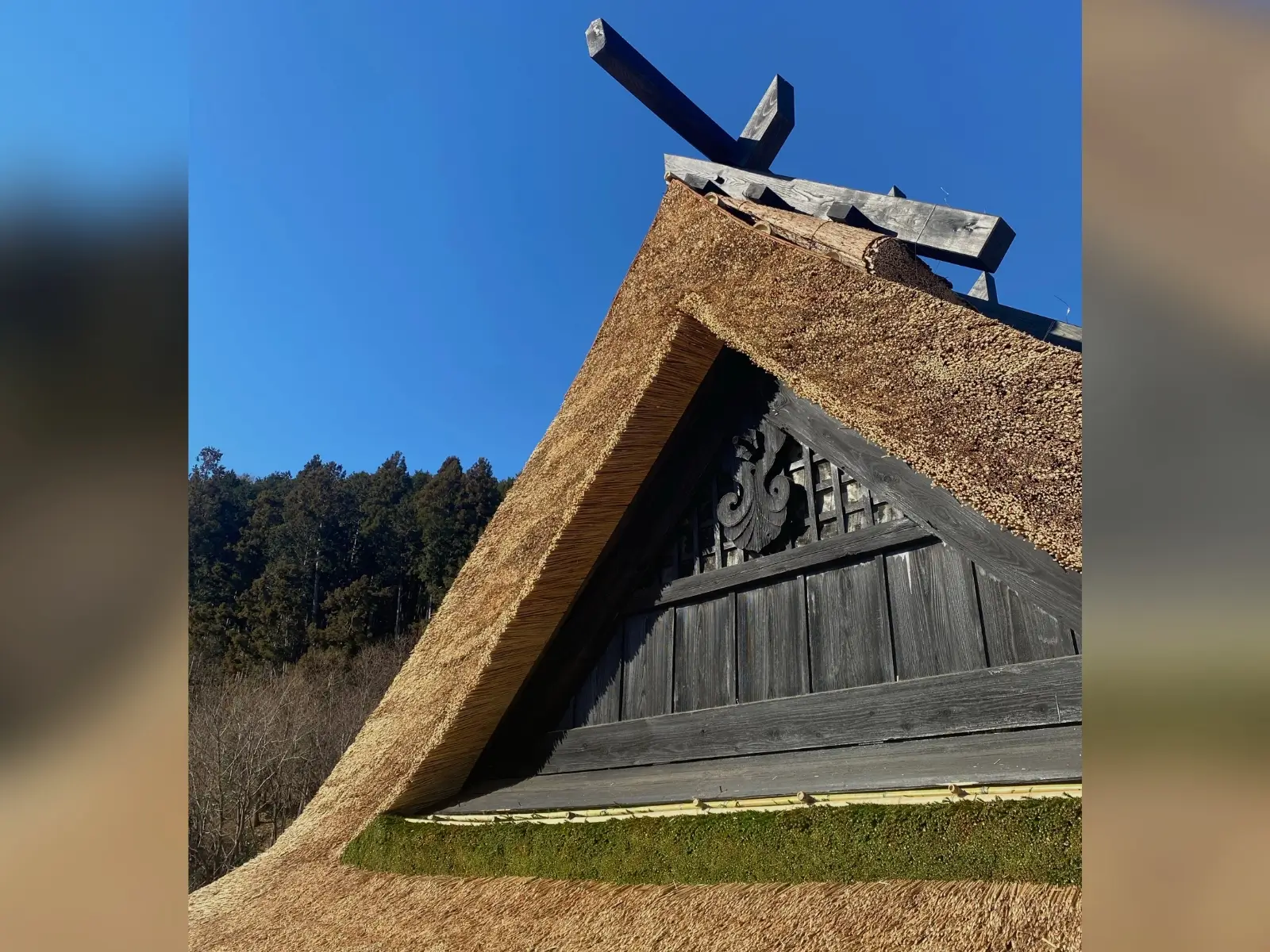
Every house has a large triangular gable.
During the Edo period, the Tokugawa shogunate promoted frugality and austerity, and it prohibited ordinary farmers from adding decorative gables to their homes. The intention was to restrain common people from building houses that appeared too grand.
Throughout my work as a thatcher across Japan, I rarely saw large gables on the roofs of ordinary farmhouses. Only in Miyama and the Keihoku region could such prominent gables be found. Even historic houses from the 1600s and 1700s — such as the Ishida Residence and the Kobayashi Residence, now designated Important Cultural Properties — bear large gables.
I began to form a hypothesis.
Was this region, perhaps, a kind of extraterritorial domain beyond the effective reach of the shogunate or central authority — a community that functioned with its own autonomy?
Even today, police officers assigned to local outposts quickly become close to the people of the village. I began to imagine that during the Edo period as well, officials of the ruling domain may have quickly established friendly relations with the villagers, allowing the community to maintain and quietly manage its own self-governance.
In school, we were taught history as if Oda Nobunaga, Toyotomi Hideyoshi, and Tokugawa Ieyasu had single-handedly created Japan. But in truth, long before them — since the Jōmon period — Japan consisted of countless small villages of roughly one hundred people, each practicing its own form of自治, where people lived with a sense of sufficiency and stability.
Were the warlords of the Sengoku era not simply fighting territorial disputes according to their own logic? For the villagers, such conflicts must have been nothing but a nuisance. The rice tax they paid was, in effect, extraction to sustain military power.
Through my work in thatching, I came to hold this perspective on history.
Even today in Miyama, there are fifty-two settlements, each with its own district head, and local自治 continues to function. This living tradition of self-governance has been handed down through generations.
That, I believe, is something truly remarkable.