The History of Japanese Thatching
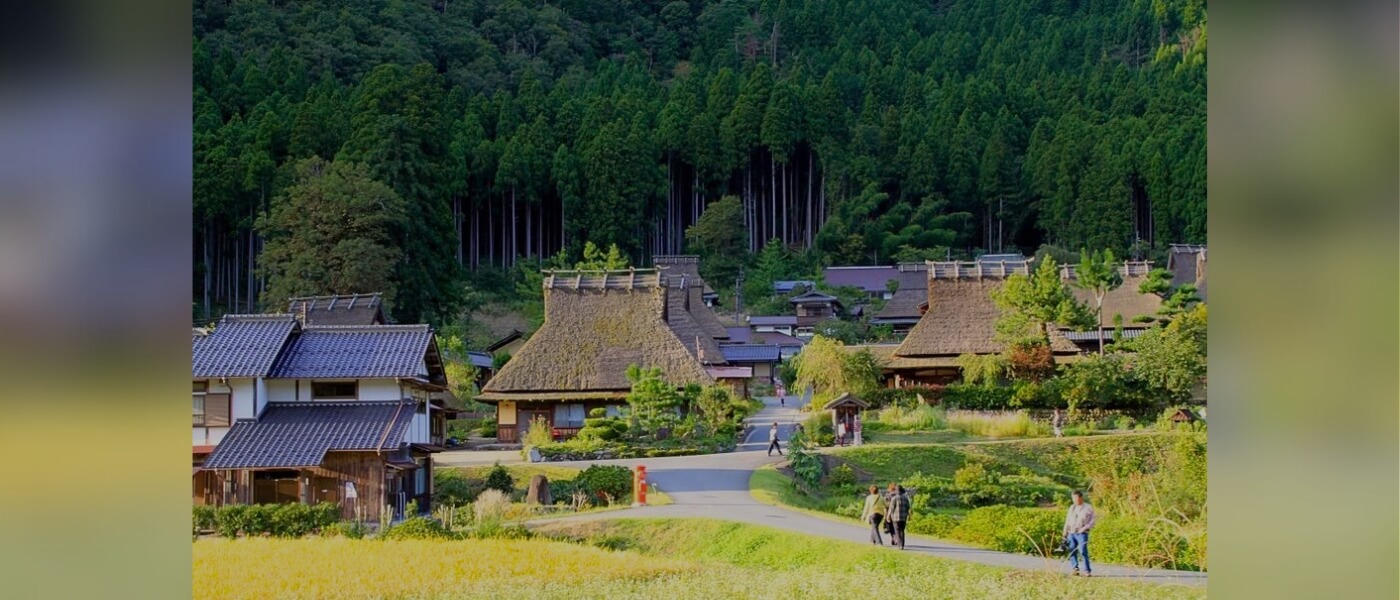
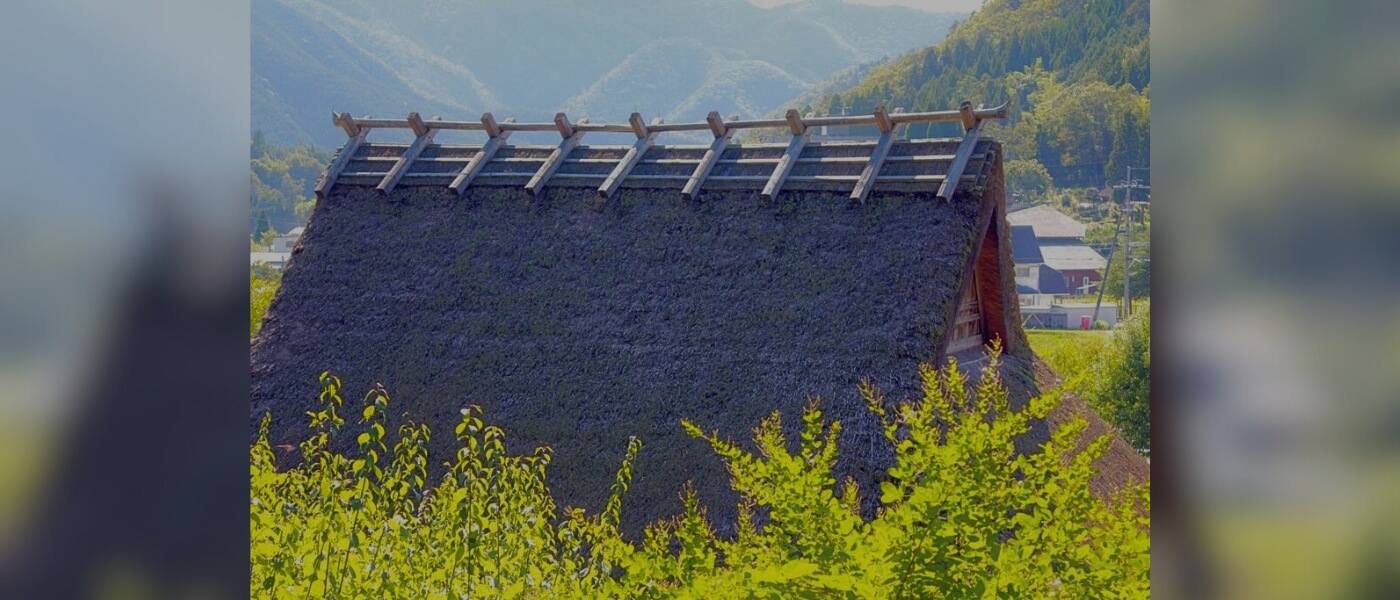
Kayabuki no Sato, Kitamura, Miyama, Nantan, Kyoto Prefecture
This chapter traces the origins of thatched roofs in Japan, from prehistoric dwellings to the communal systems that once sustained village life, and finally to the rapid social changes that led to their decline.
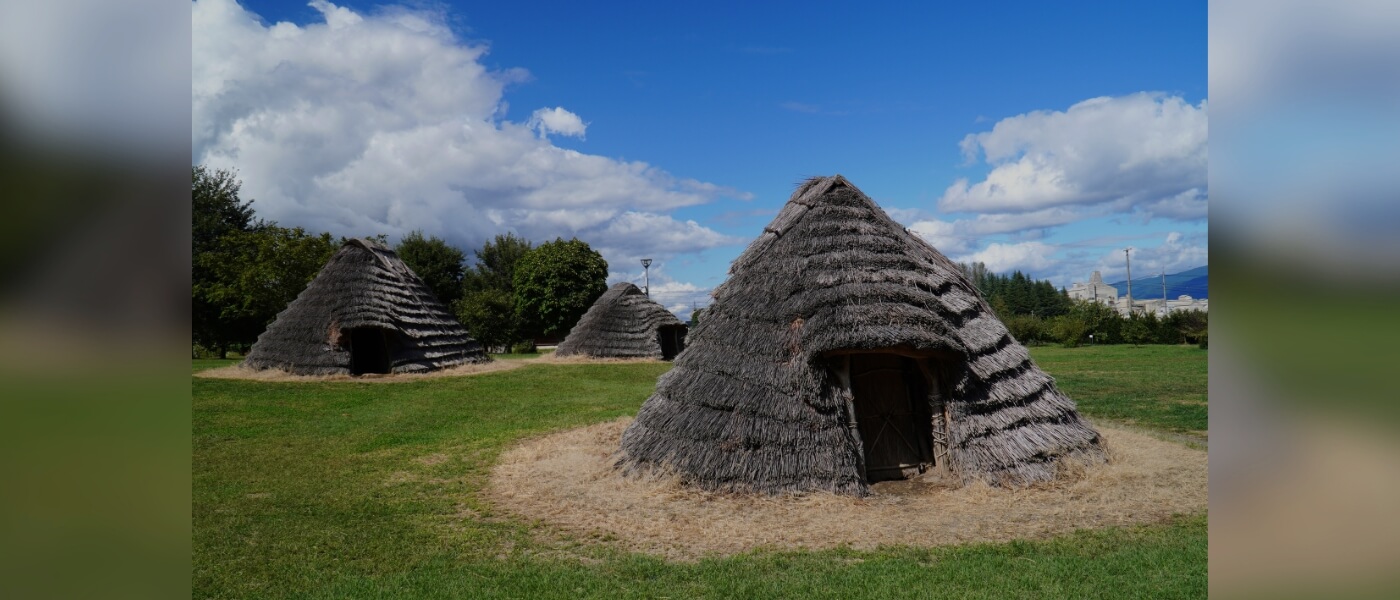
Hiraide Archaeological Site, Shiojiri City, Nagano Prefecture
The Jomon period, from about 16,000 to 3,000 years ago, is often described as a peaceful era without warfare. Archaeological remains of communal settlements have been discovered throughout Japan.
Origins in Prehistoric Life
The origins of thatched roofs are too ancient to know with certainty.
However, the act of making roofs from grass is common throughout the world, and it must have begun when human beings first left caves and started building shelters for themselves.
In Japan, primitive dwellings known as pit houses have been excavated from archaeological sites dating back about sixteen thousand years.
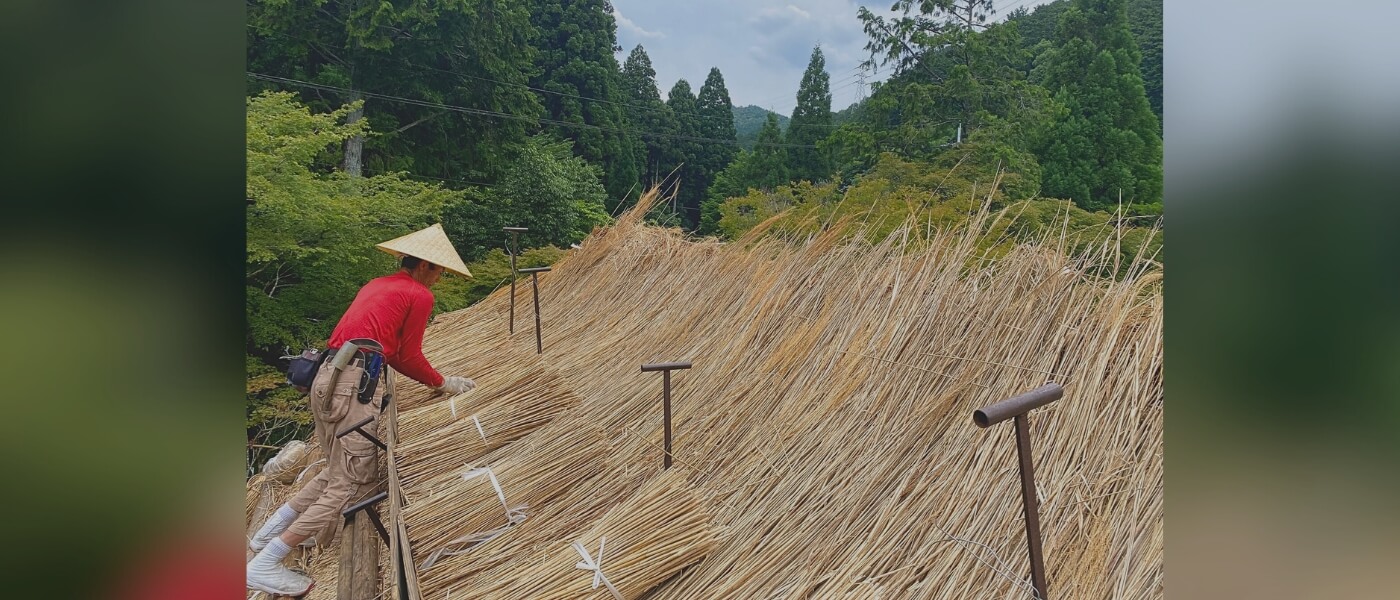
People dug slightly into the ground, set wooden posts into the soil, and thatched the roof with grass.
There is also a theory that soil was sometimes placed on top of the thatch.
A fire was placed at the center of the building.
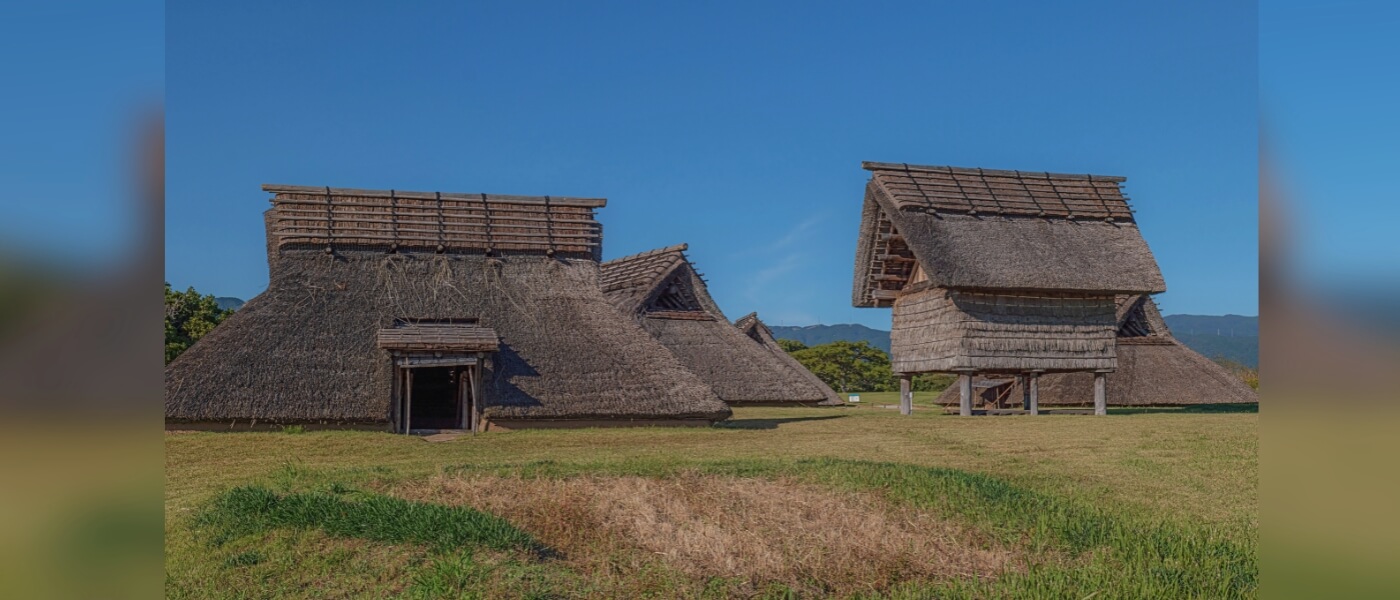
Yoshinogari Archaeological Site, Saga Prefecture
A settlement site from the Yayoi period (about 2,200–1,700 years ago). It is one of the largest archaeological sites in Japan. Around 100 buildings—many with thatched roofs—have been reconstructed.
In prehistoric times, the Japanese lived in such structures in communities based mainly on hunting and gathering.
It is often said that for more than ten thousand years people lived in a peaceful society that coexisted with nature.
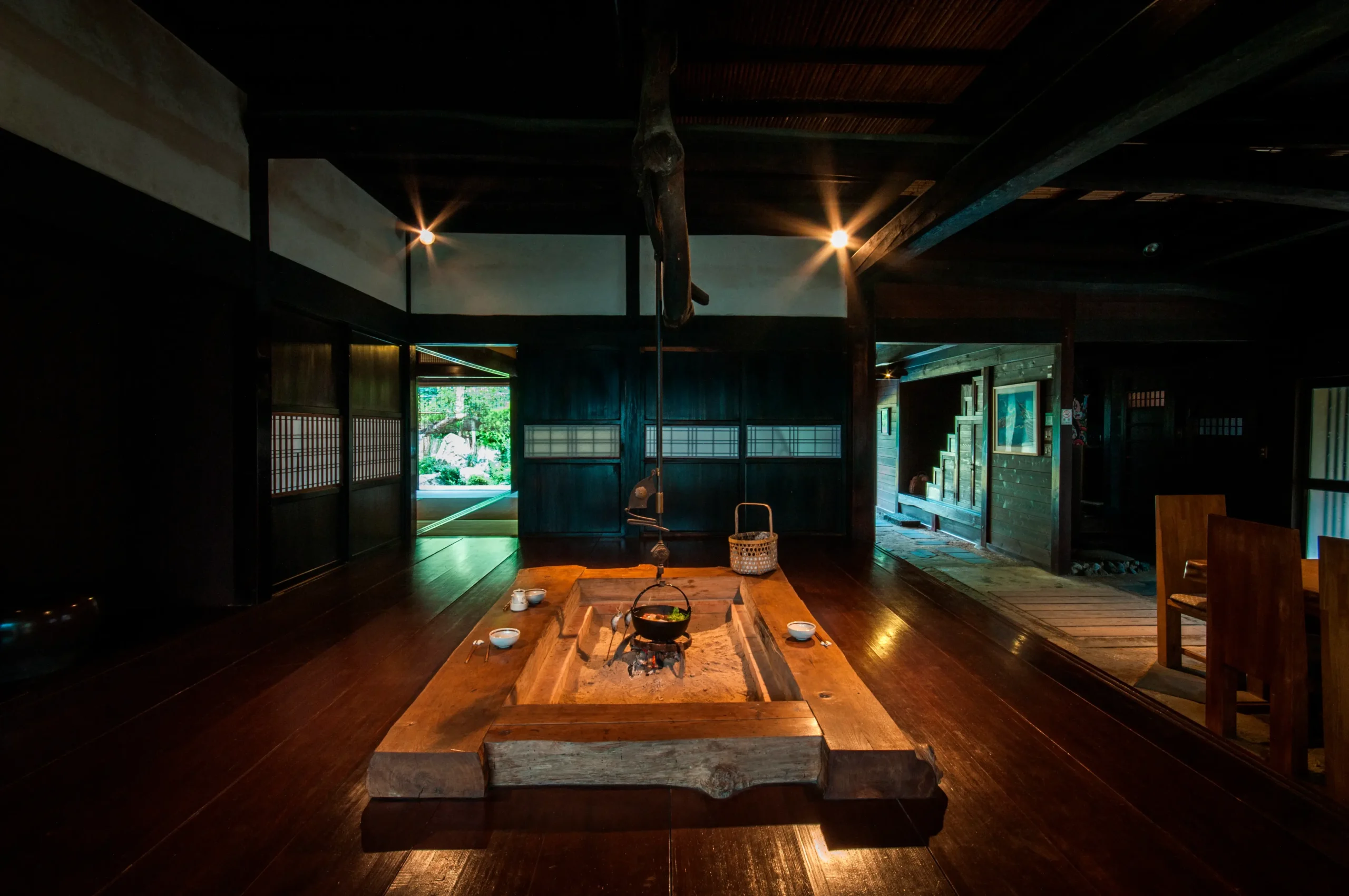
Irori Hearth, Miyama FUTON & Breakfast
You can stay here and experience this traditional hearth.
Life Around the Hearth in Rural Japan
The Japanese sensitivity toward nature continues from those ancient times.
Even today, thatched kominka always contain an irori, a sunken hearth.
This reflects the ancient pattern of life in which the fire at the center formed the heart of the dwelling.
From Pit Houses to Kominka
Rice cultivation is believed to have begun in Japan about 2,300 years ago.
In Japan, roof shapes tend to be similar within each region.
The original form may lie in the prehistoric pit dwelling.
Modern kominka resemble pit houses with pillars added above ground.
As agricultural society developed, civilization gradually became more complex.
However, ordinary people did not yet live in the large and solid thatched houses we see today. Most likely they lived in simple and modest structures.
The Birth of Mountain Villages
About five hundred years ago, Japan entered the period known as the Sengoku era, when regional warlords fought over territory.
At that time many people who had concentrated in cities dispersed into the mountains across the country because of the danger of attack and shortages of supplies.
Warriors who lost battles in particular formed villages deep in the countryside.
Water could be obtained in these mountainous regions.
During this period, the mountain villages that are now scattered throughout Japan were formed.
Peace Under the Tokugawa
In 1603, Tokugawa Ieyasu unified the country, and a period of peace lasting about 260 years began.
Even so, people suffered repeated famines and natural disasters, and ordinary villagers must have lived modest lives.