Japanese Mythology and the Daijōsai Ritual
This chapter introduces the spiritual worldview found in Japanese mythology and explains how it is expressed through sacred architecture, especially through the thatched ritual structures built for the imperial Daijōsai ceremony.
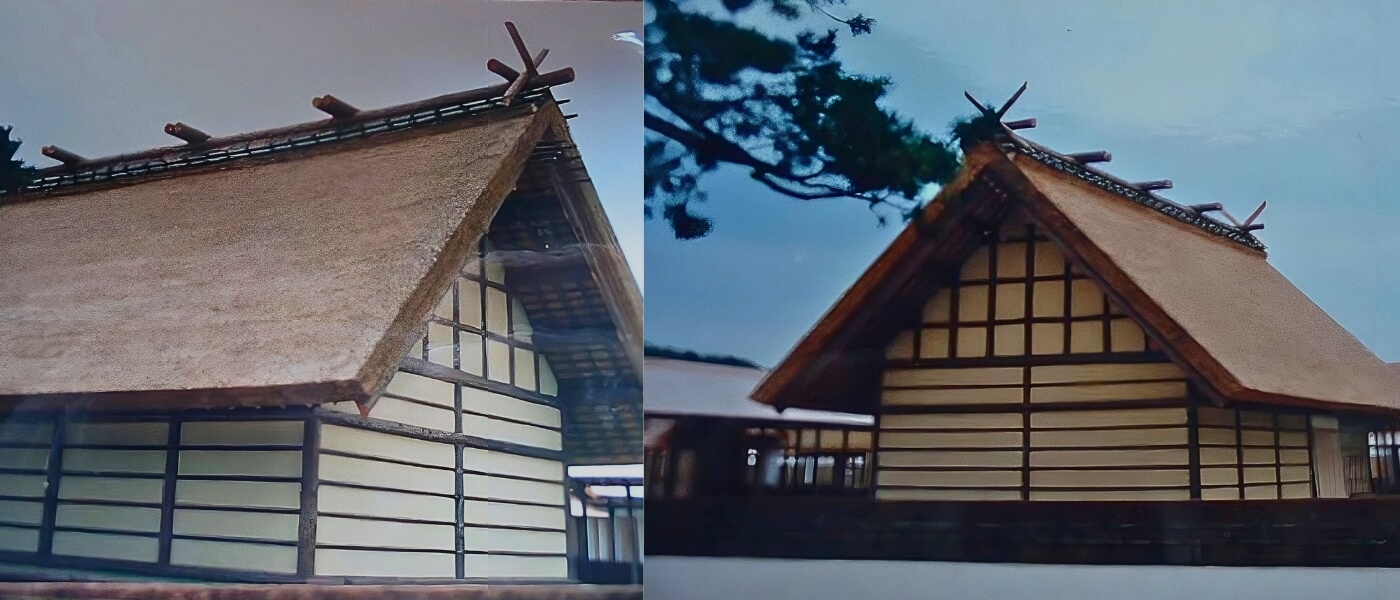
Daijōsai Shrine, built for the enthronement of Emperor Akihito (the 125th Emperor)
This photograph shows the shrine that was built only for the Daijōsai ceremony held on November 22–23, 1990, when Emperor Akihito (now the Emeritus Emperor) ascended the throne. The photo was entrusted to me before his death by Masashi Okayama, who participated in thatching the roof at the time. Because the structure was dismantled soon after the ceremony, it survives only in photographs. According to one interpretation, the fact that it is dismantled immediately symbolizes that it is an especially sacred ritual, different from ordinary ceremonies. Unfortunately, for the Daijōsai ceremony held on November 14–15, 2019, for the enthronement of Emperor Naruhito (the 126th Emperor), the roof was made of wooden boards rather than thatch. I cannot help but feel regret that no voices of doubt were raised among the public about this change.
Japanese Mythology and the World of Spirits
To speak about thatched architecture in Japan, it is necessary to introduce Japanese mythology.
In Japan there are many unique beings known as kami — spiritual presences believed to dwell within nature.
In Japanese mythology these kami appear in many stories in anthropomorphic form.
For people who come from monotheistic traditions, this worldview may be difficult to understand.
However, the word kami in Japan carries a meaning closer to spirit than to a single supreme god.
For this reason, in the explanation that follows, I will use the word spirit.
In Japanese mythology, there were originally spirits called Kunitsu-kami, who governed the earthly world.
Later, heavenly spirits known as Amatsu-kami descended from the heavens and decided to govern the earth.
The Kunitsu-kami then yielded the earth to them.
This symbolic event is known as “the transfer of the land” (Kuniyuzuri).
The representative deity among the Amatsu-kami is the sun goddess Amaterasu Ōmikami, and the Emperor of Japan is believed to be her descendant.
The Inner Shrine of Ise (Naikū) is dedicated to Amaterasu Ōmikami.
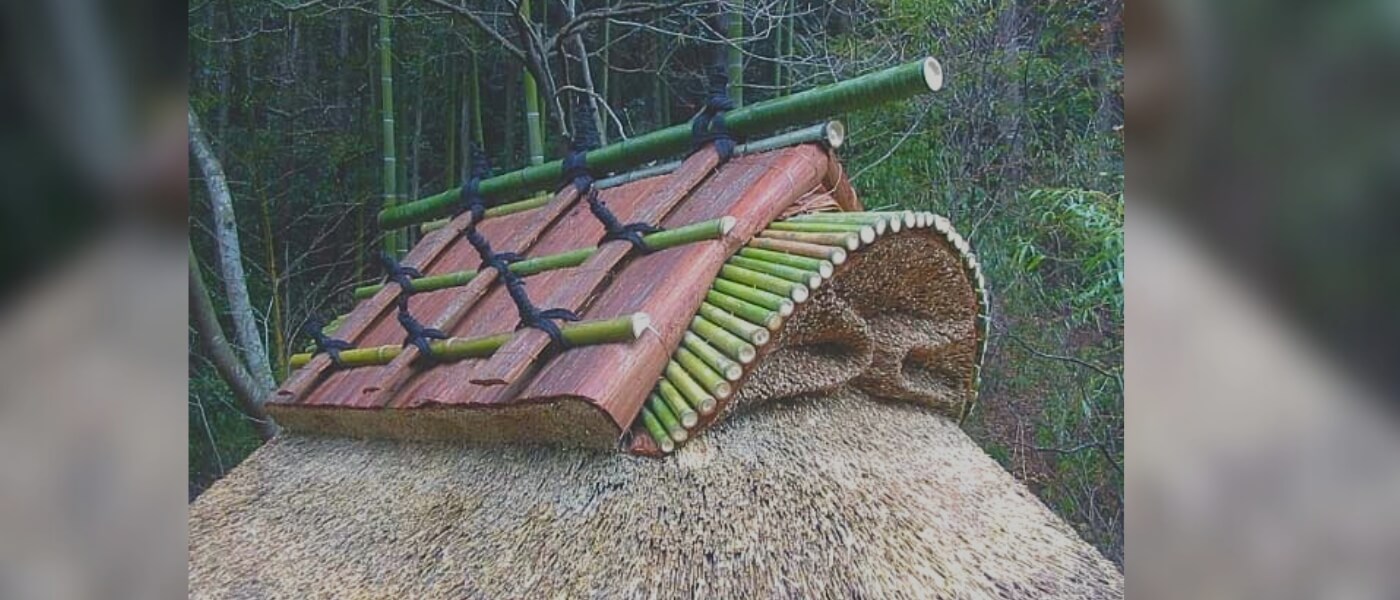
“Ooicho”
A traditional decorative element that remains only in the Kanto region. Its carved shape is formed with scissors as a symbol wishing for the prosperity of the household.
The Daijōsai Ritual
When a new Emperor ascends the throne, two sacred thatched buildings are constructed.
They are called Yukiden and Sukiden.
The ritual known as Daijōsai is not simply a harvest festival.
It is a ceremony in which the new Emperor becomes united with Amaterasu as her descendant.
In other words, it is not merely a political ceremony.
It is a ritual reenactment of mythology.
At the center of this ceremony stand the two buildings, Yukiden and Sukiden.
After the ritual is completed, both buildings are immediately dismantled. For this reason, few Japanese people are even aware that these structures exist.
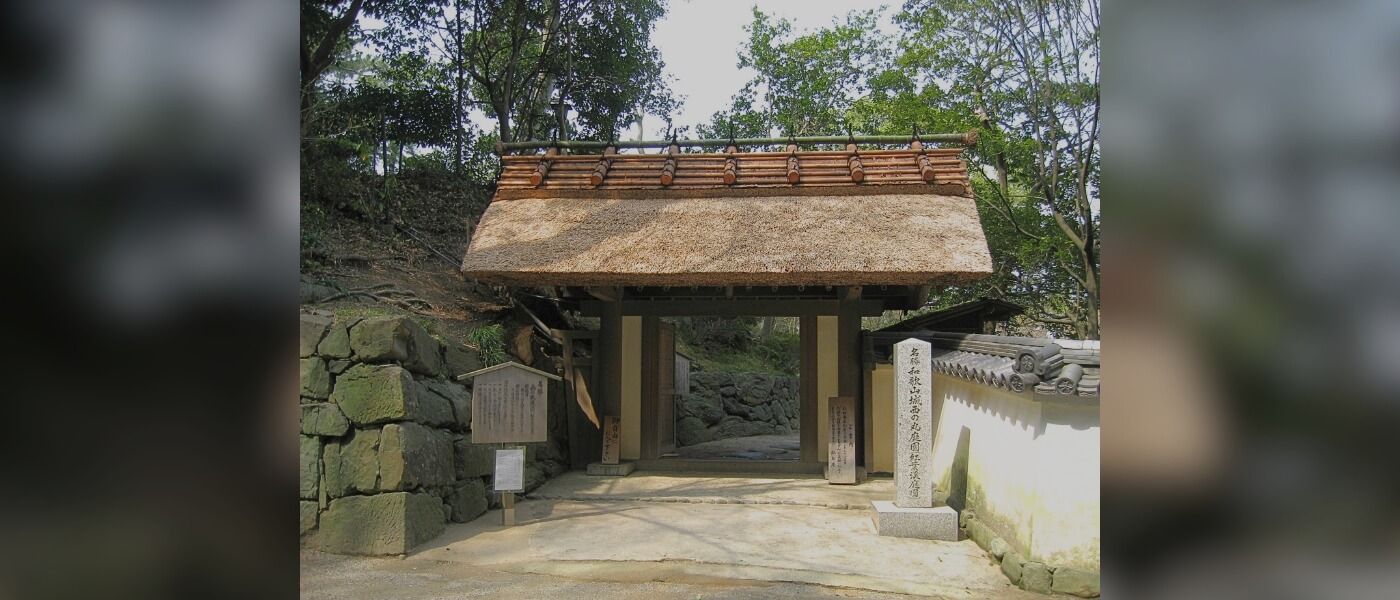
Momijidani Garden Gate, Wakayama Castle
Why Are These Buildings Made with Thatch?
Why did these sacred buildings need to be constructed with thatch?
There is no clear historical answer. However, my own interpretation is as follows.
When the heavenly spirits decided to govern the earth and the earthly spirits yielded it to them, the heavenly spirits had two possible choices.
One choice would have been to rule the earth according to the laws of heaven — to dominate and conquer it.
The other choice was to respect the rules and laws of the earth itself, and to relate to the world with humility.
The heavenly spirits chose the latter.
Building structures using materials that originate from the earth itself — wood and thatch, which are the remains of plants — symbolizes respect for the natural laws of the earth.
The heavenly spirits then brought rice to the land prepared by the Kunitsu-kami, and together they sought to develop the world further in harmony.
In this vision, the Kunitsu-kami and the Amatsu-kami do not defeat one another. Instead, they overlap and coexist.
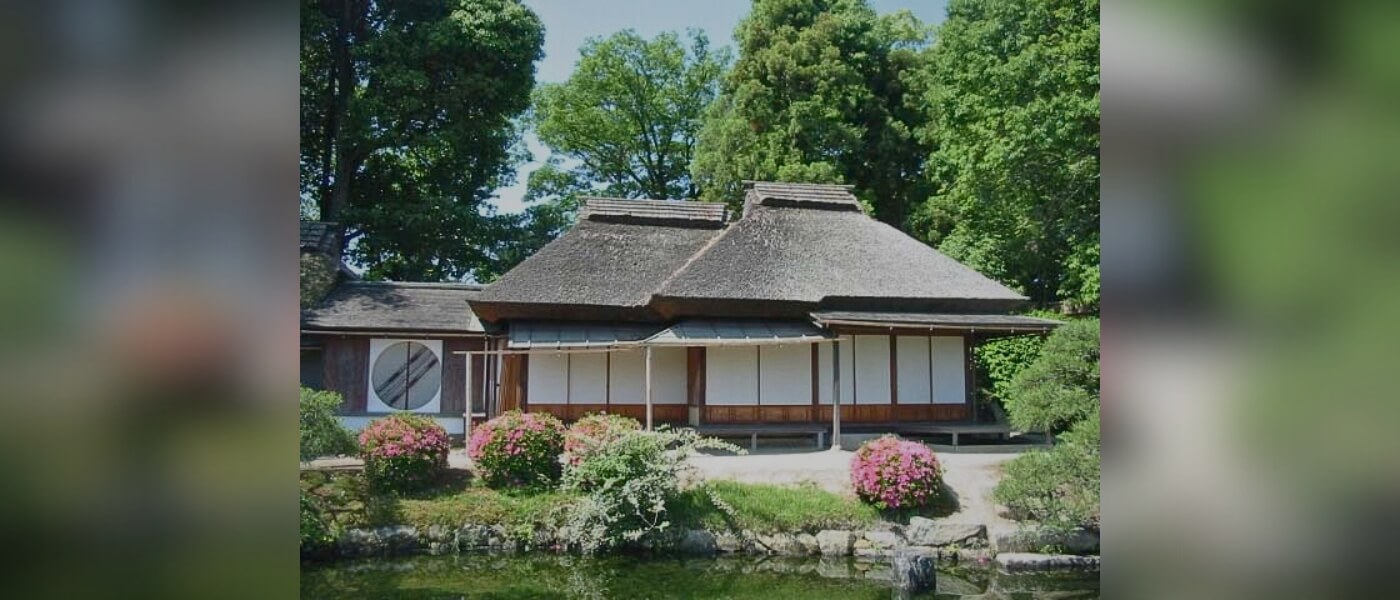
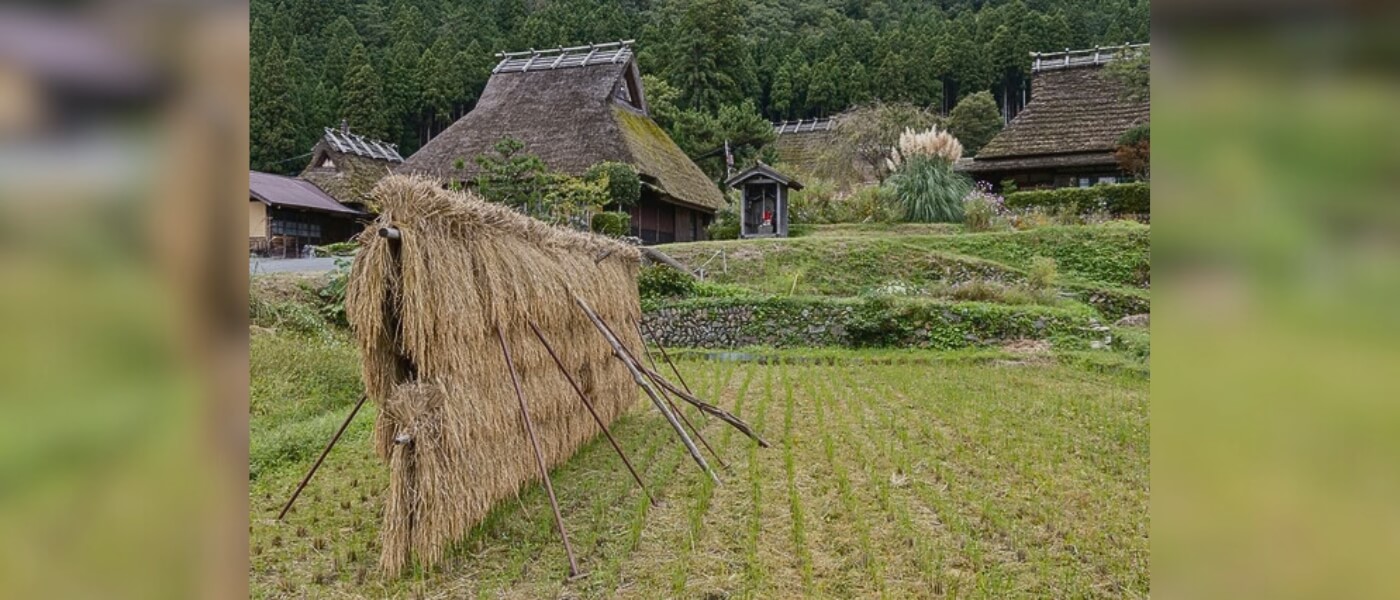
Korakuen Garden, Okayama Prefecture
The Meaning of Thatch in Traditional Japanese Architecture
The fact that the Yukiden and Sukiden are newly constructed each time an Emperor ascends the throne reflects the deeper meaning of thatched architecture in Japan.
Perhaps the reason that thatched buildings spread so widely throughout Japan was that ordinary people, not only the Emperor, also shared this mythological worldview.
They believed that by respecting the rules of the earth and allowing spirits to coexist harmoniously, human life could continue to develop.
Earlier I said that kominka are sacred shrine-like architecture.
The world, in this view, exists through the activity of many different spirits.
People expressed their gratitude for this by building sacred thatched structures.
These structures were places where families and spirits could exist together, and where people could pray.
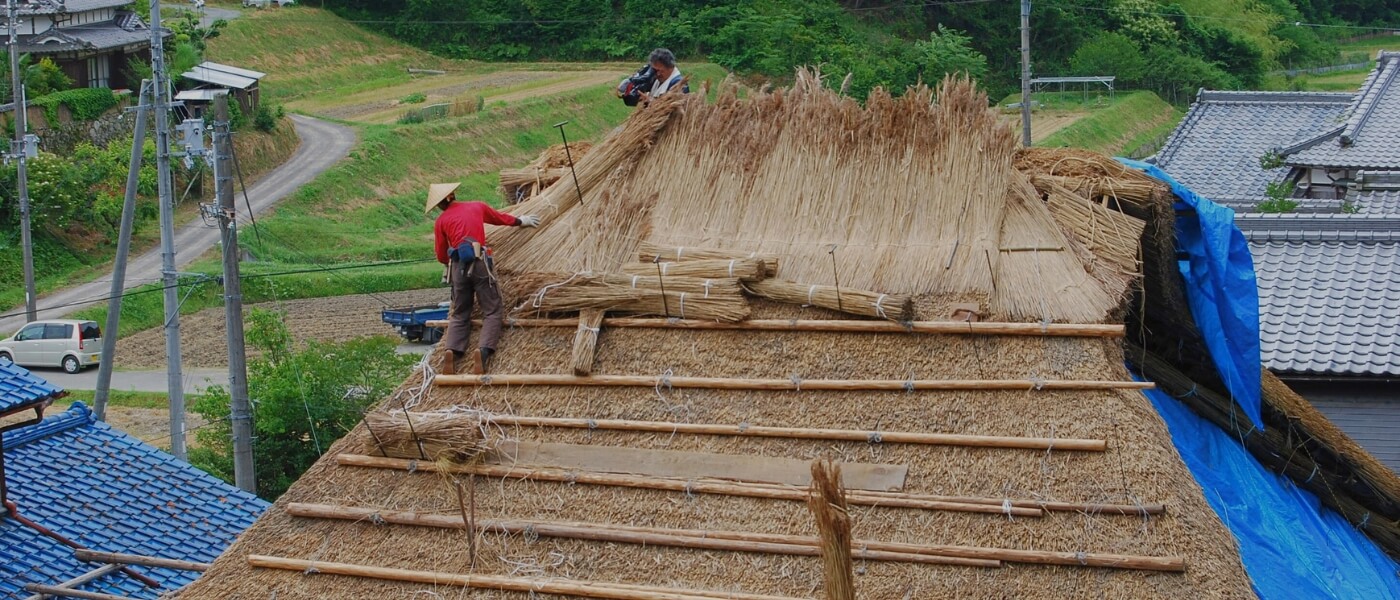
The Silence of Thatched Space
There is another characteristic of thatched houses.
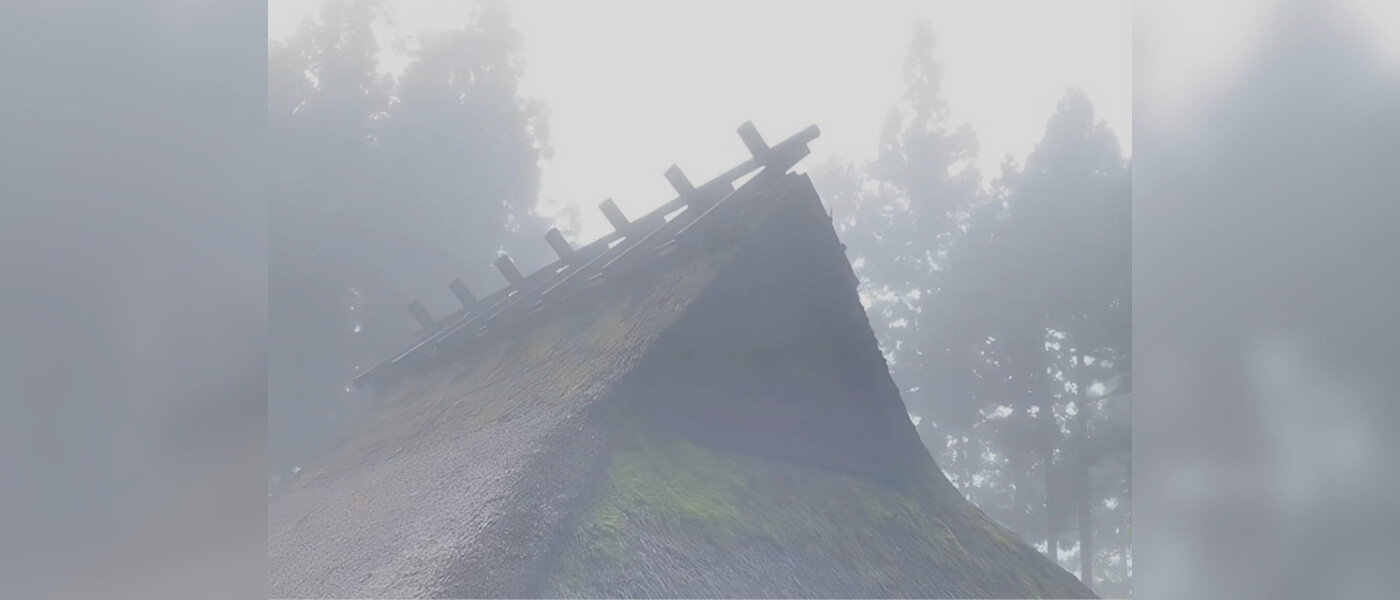
Even when rain falls, the roof makes almost no sound.
Mobile phone signals sometimes have difficulty entering such buildings.
It may even be possible that thatched structures soften or absorb invisible waves such as sound, radio signals, or electromagnetic fields.
Perhaps thatch was necessary in order to create a space of complete stillness, where the Emperor and the spirits could confront one another in a pure state.
When the present Emperor ascended the throne in 2019 during the Enthronement of Emperor Naruhito, the Yukiden and Sukiden were again constructed.
However, on that occasion they were built with wooden shingles rather than thatch.
The reason is unknown, but for those of us in the thatching profession it was deeply disappointing. Our entire industry had prepared for the possibility of participating in the project, yet in the end we were not called.
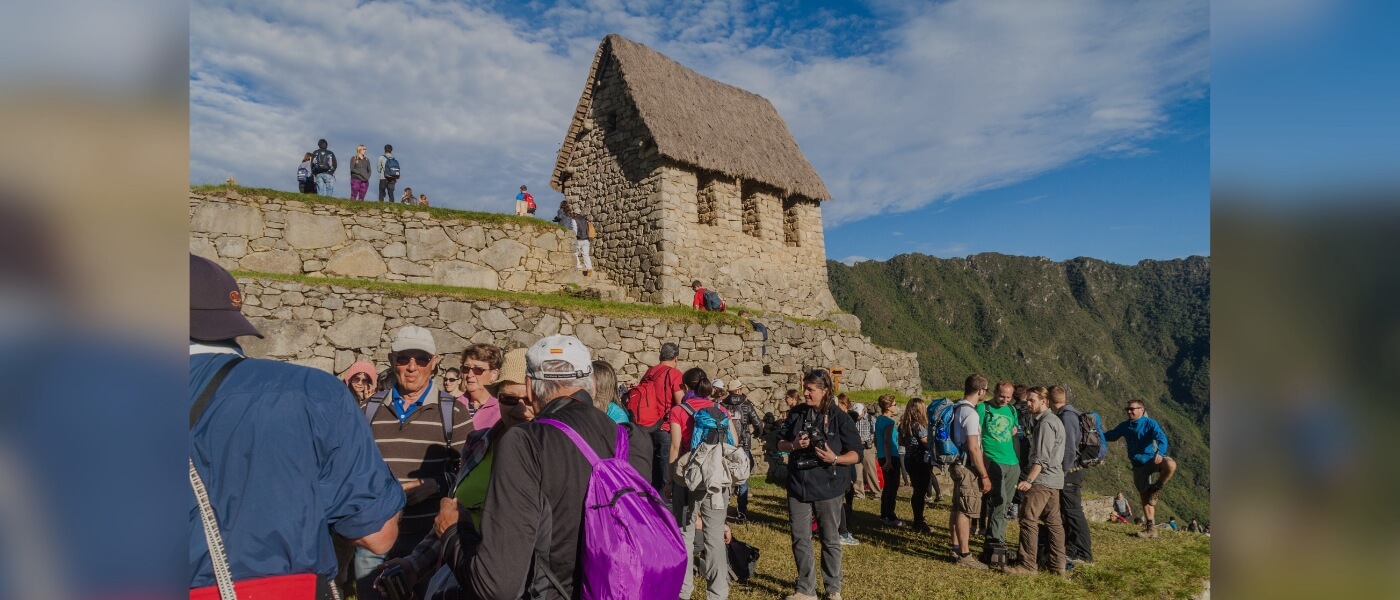
Machu Picchu, Peru
Machu Picchu (a 15th-century Inca city in Peru) was a religious city centered on the sun god, and it is believed that many of its buildings had thatched roofs. I feel there is something in common with Japan, and it gives me a sense of mystery.