Project Info
Project Description
◆ Overview | Thatching Experience in Miyama
Have you ever thought, “There’s no way a beginner could thatch a roof”?
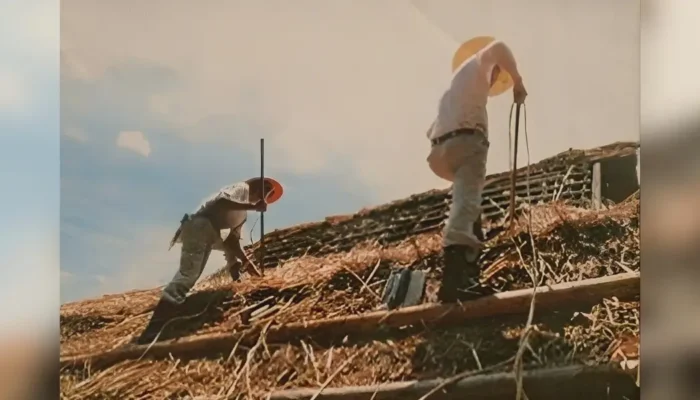
In fact, in old rural villages, thatching was never done by professional craftsmen alone.
In Miyama, thatching was a collaborative community effort between skilled thatchers and local villagers known as “Tettai” (a local dialect word meaning helpers).
This workshop recreates that traditional teamwork style.
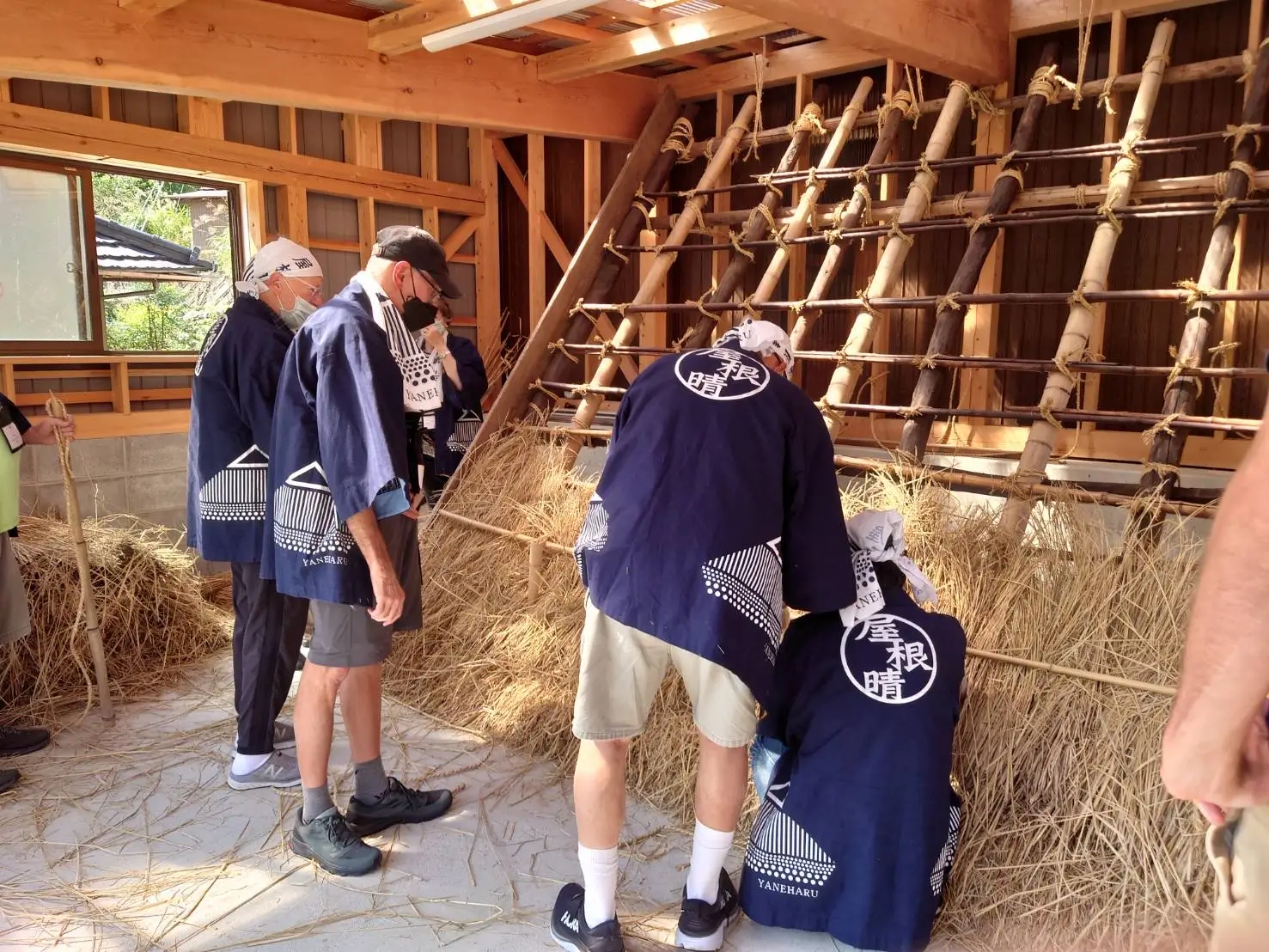
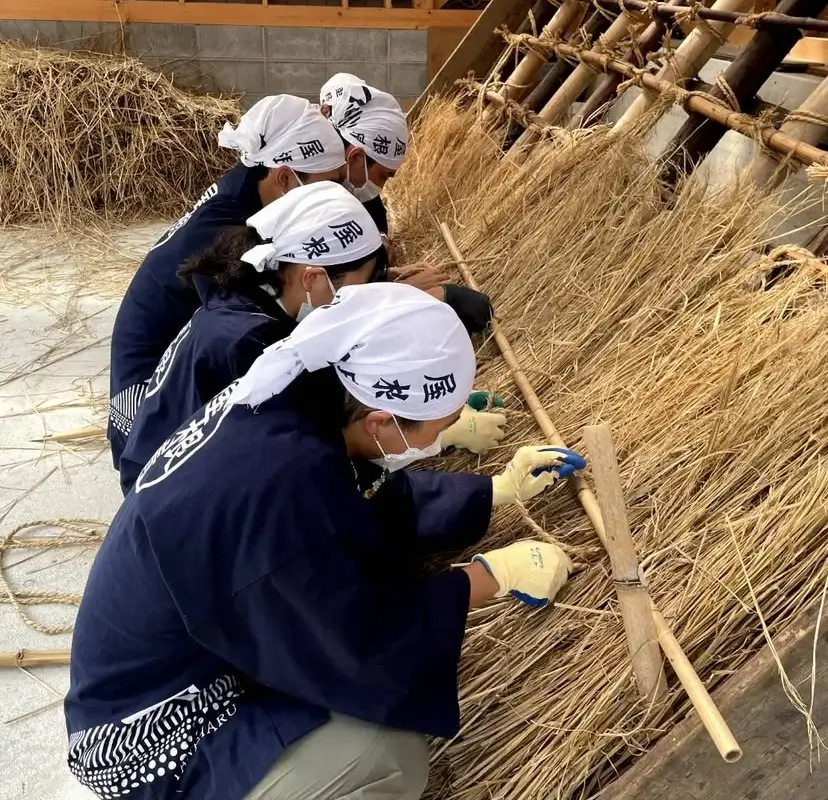
Participants are divided into two groups—The Thatchers Team and The Villagers Team—each with their own role, just like in the past.
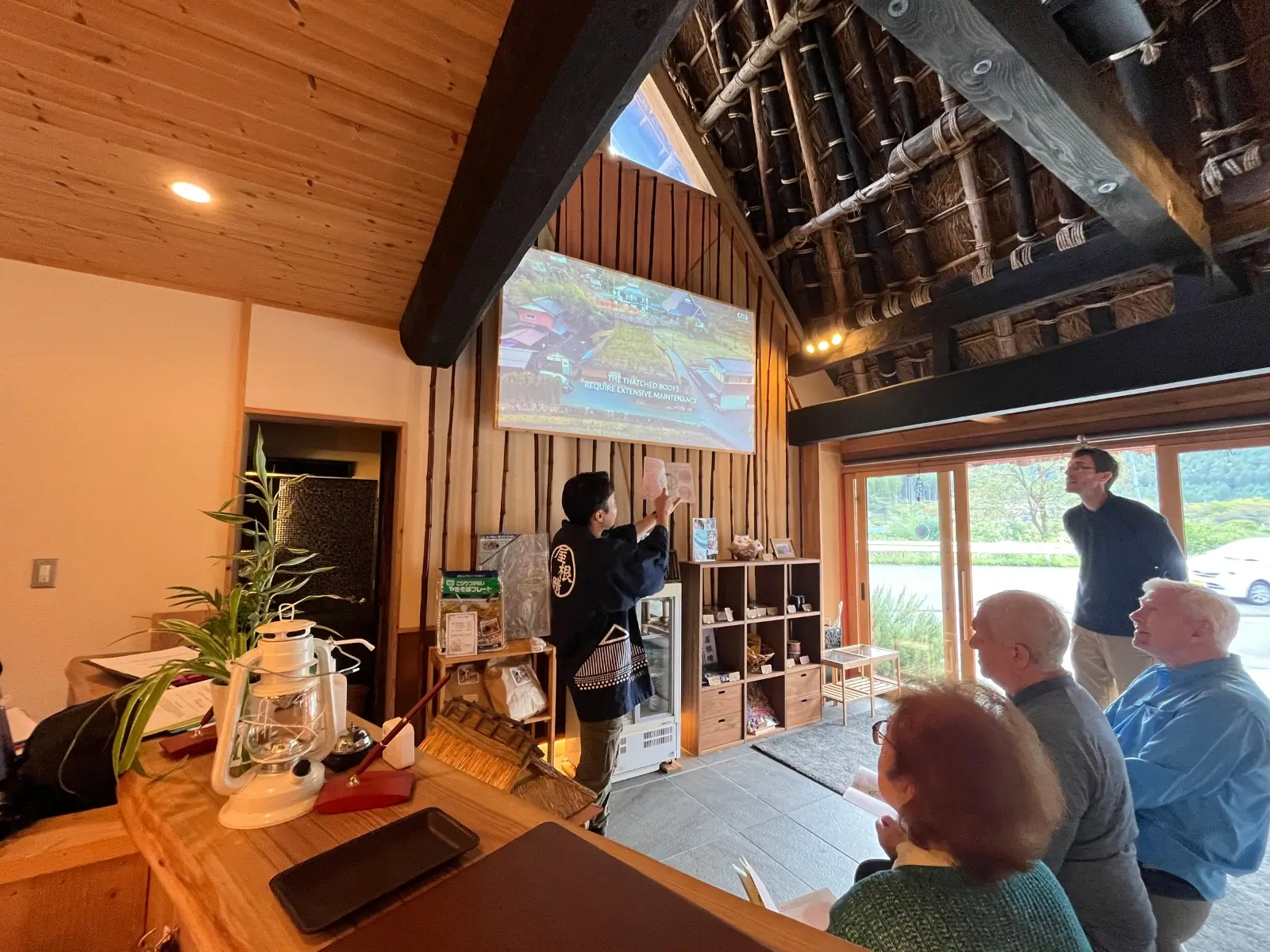
Before starting, we provide a simple lecture about the history of thatched roofs, how the work was traditionally organized in Miyama, and important safety instructions.
◆ Teamwork Like the Old Days (Tettai Culture)
In this experience, you will not simply “watch” a craftsman work.
You will become part of the process.
Participants are divided into two teams:
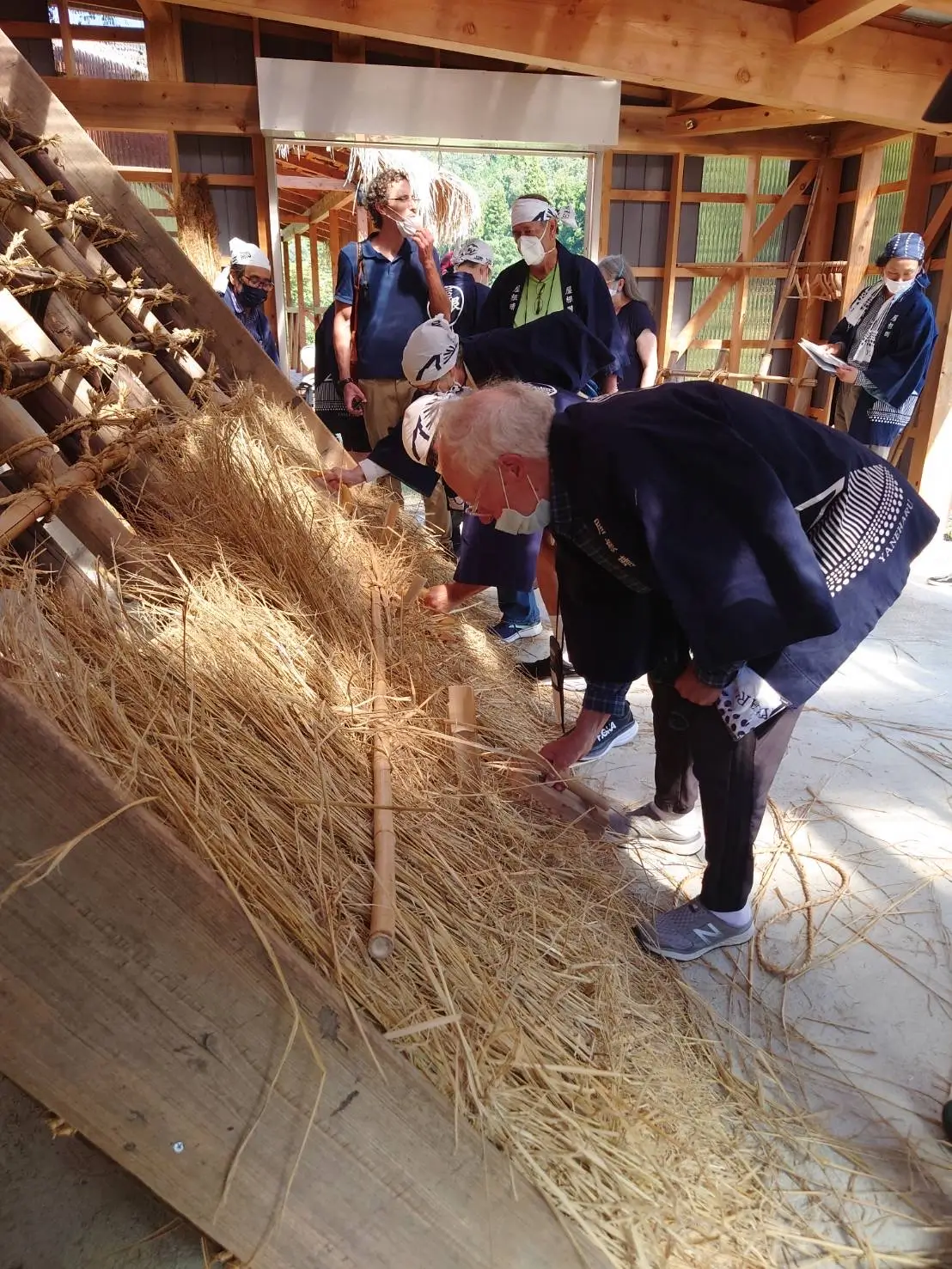
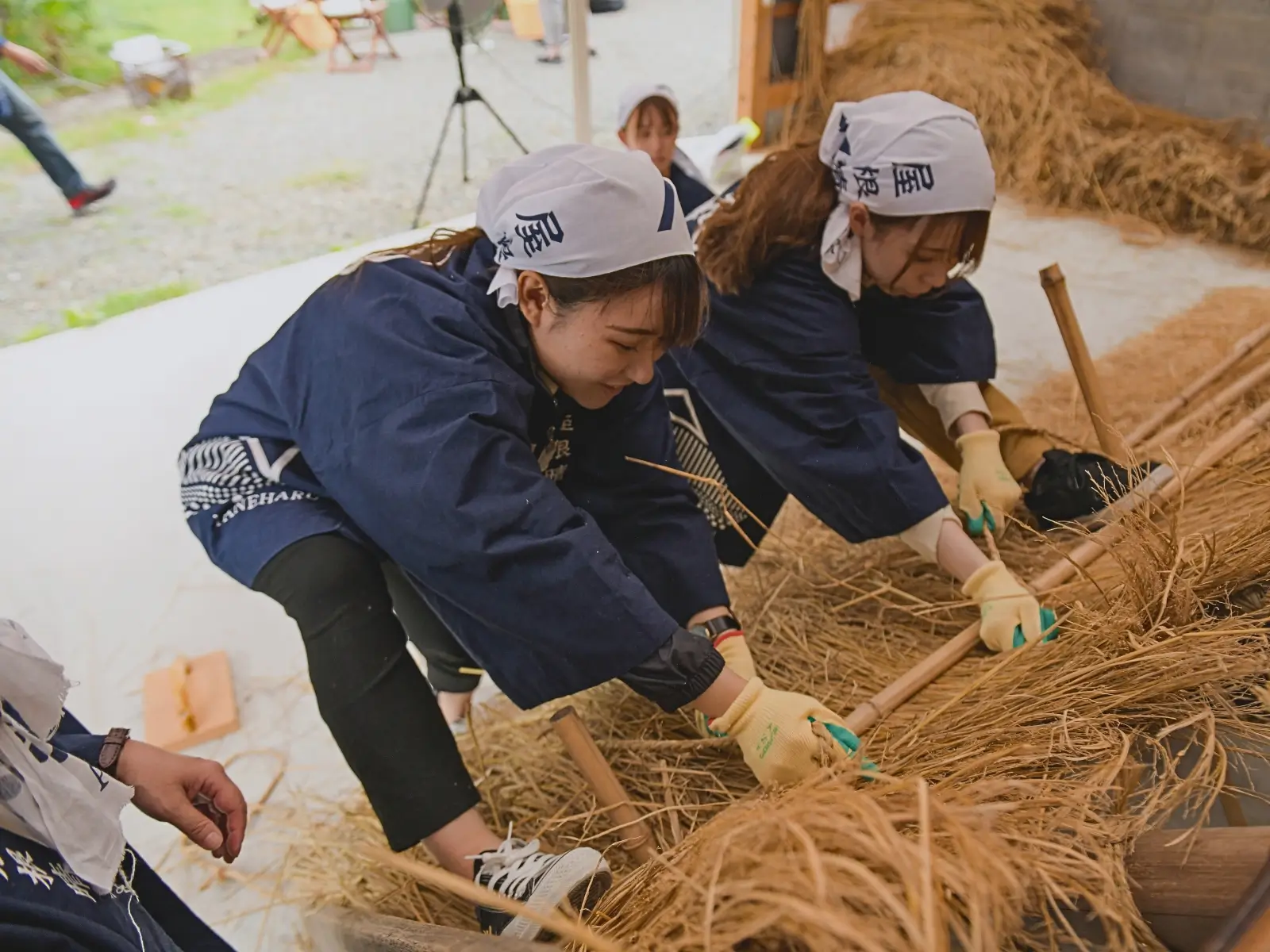
• The Thatchers Team (working on the roof surface)
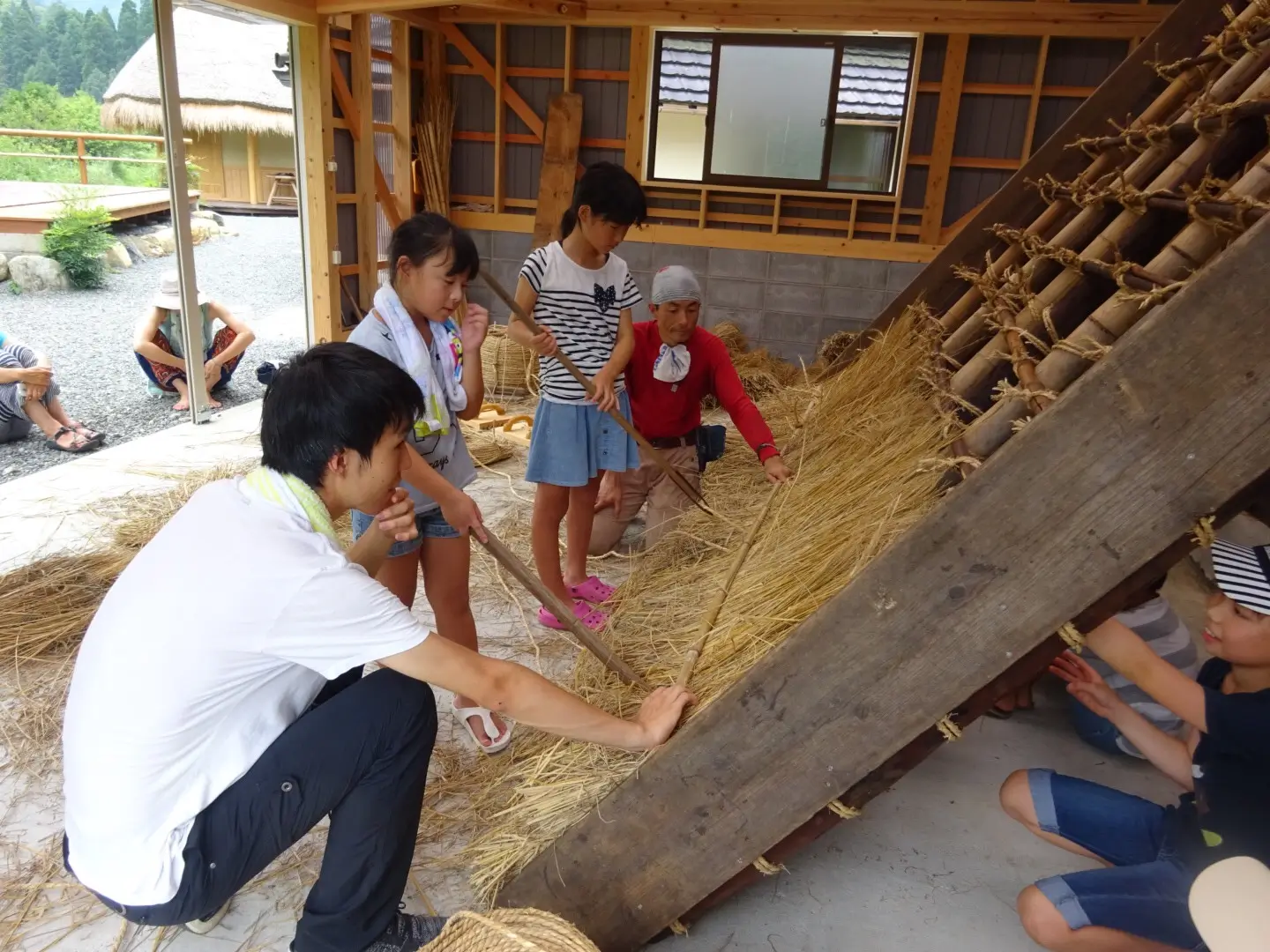
• The Villagers Team (working inside the roof structure)
This is one of the most iconic ways thatching was traditionally done in Miyama.
After completing the process, many guests say, “Now I finally understand how it works!”
◆ All-Weather Experience Facility (Rain is OK)
Our thatching experience takes place in a covered, all-weather workshop space.
Even if it rains, the experience can still be held safely.
Inside the facility, we have installed a special practice roof model that allows guests to experience the real structure and method of traditional thatching.
◆ The “Needle and Rope” Method (Like Sewing a Roof)
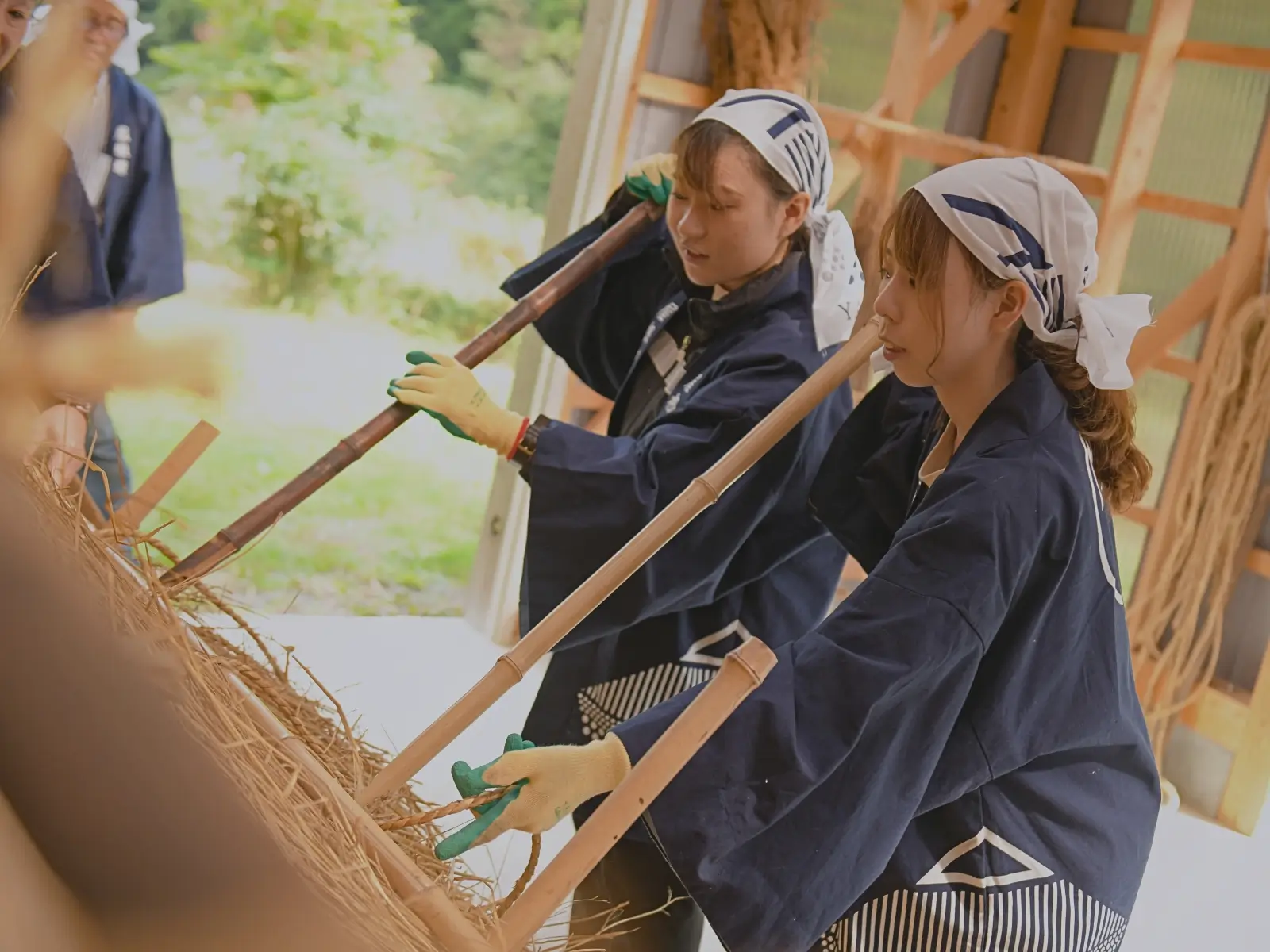
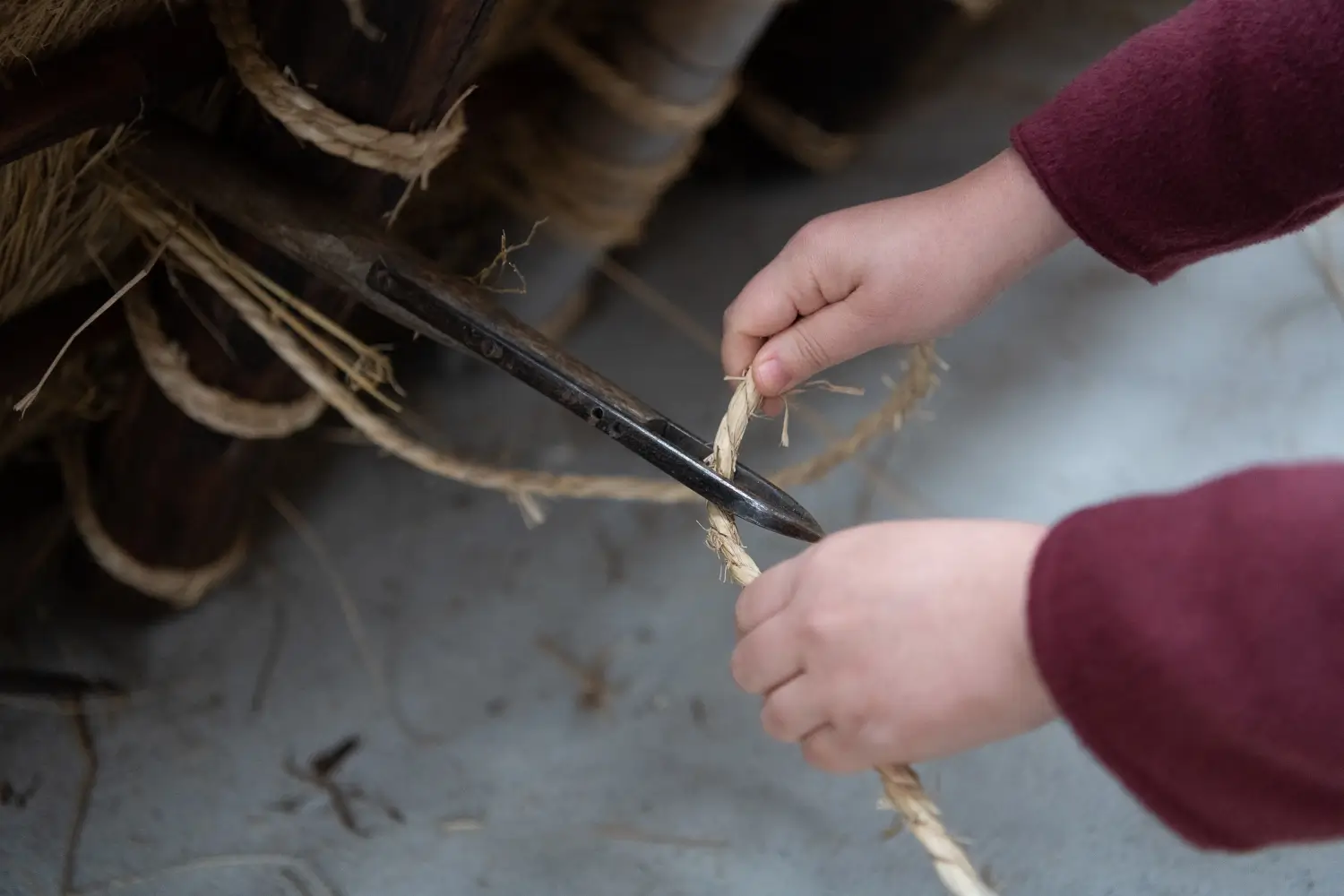
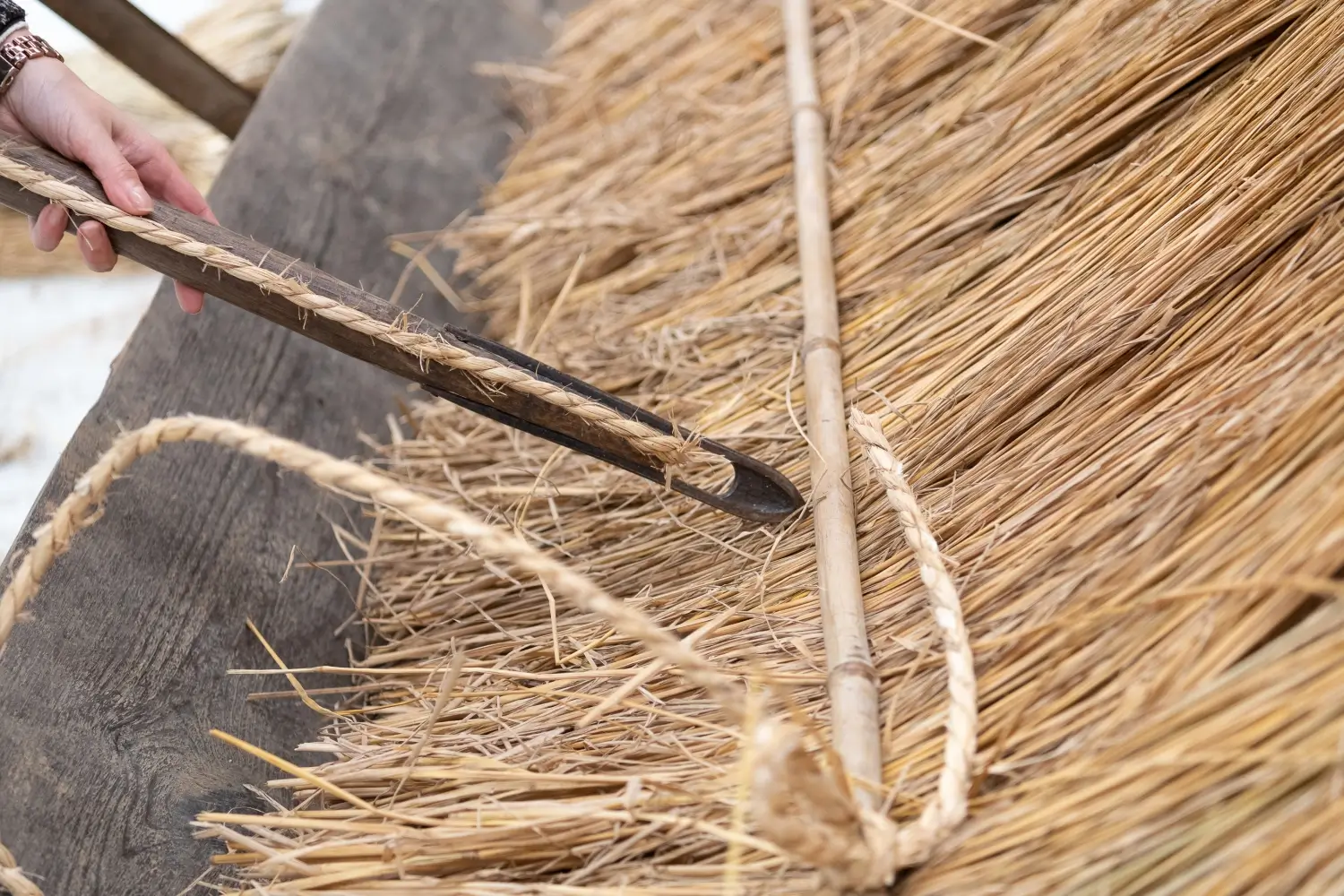
The Thatchers Team uses a special tool called a “needle.”
A rope is passed through the hole of the needle and inserted into the roof.
The mechanism is surprisingly similar to sewing with a needle and thread.
Meanwhile, the Villagers Team enters the inside of the roof structure and pulls out the rope from the other side, following the craftsman’s instructions.
This cooperative method is a perfect example of how villagers and craftsmen worked together in traditional Miyama.
◆ Fun Fact: Shirakawa-go Does It the Opposite Way
Interestingly, in Shirakawa-go, the process is reversed.
The needle is inserted from inside the roof structure outward.
In that case, villagers working inside the roof must be careful not to get stabbed by the needle.
(Yes—it really happened!)
Through this workshop, you will also learn how thatching traditions differ from region to region across Japan.
◆ Safe Tools for Children & Beginners
Professional thatching tools are extremely heavy and require strength and experience.
For this workshop, we provide lighter and safer tools that even children can use comfortably.
You can experience the essence of thatching without needing professional-level power.
We also use lightweight rice straw, making the activity easy, safe, and enjoyable for first-time participants.
◆ Why Thatch Roofs Are So Thick (Up to 60cm)
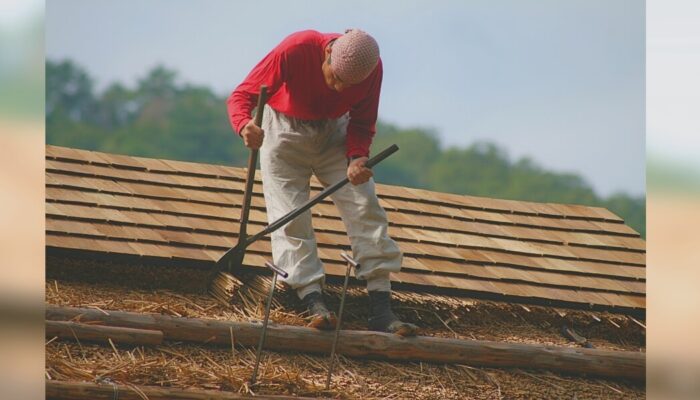
Real thatched roofs can be as thick as 60 cm.
Professional thatchers use a heavy wooden tool (often made from zelkova wood) and shape the roof by swinging it with full force and using centrifugal power.
In this workshop, we recreate the method in a beginner-friendly way, so you can understand the structure, thickness, and logic behind real thatched roofing.
◆ Gifts & Certificate of Completion
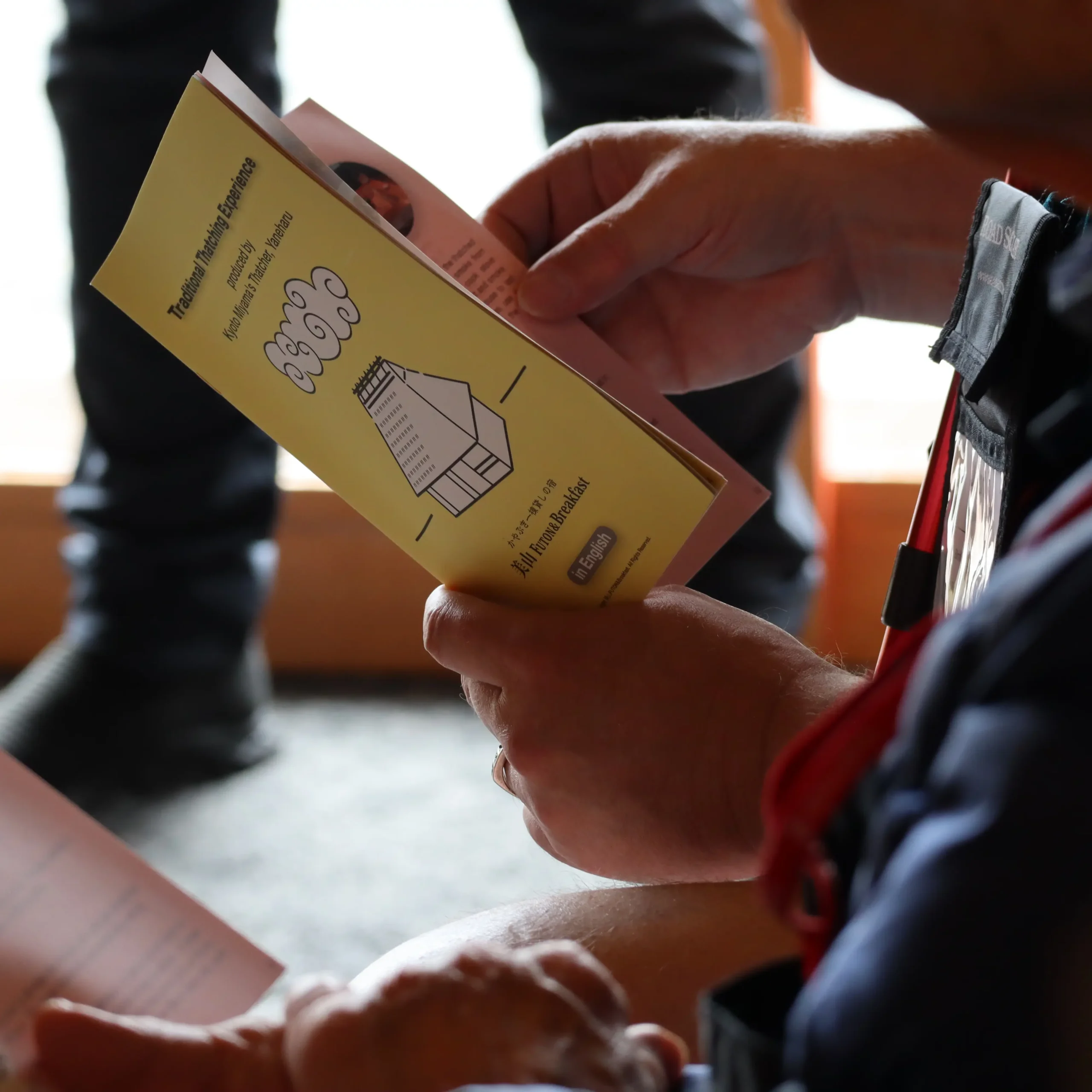
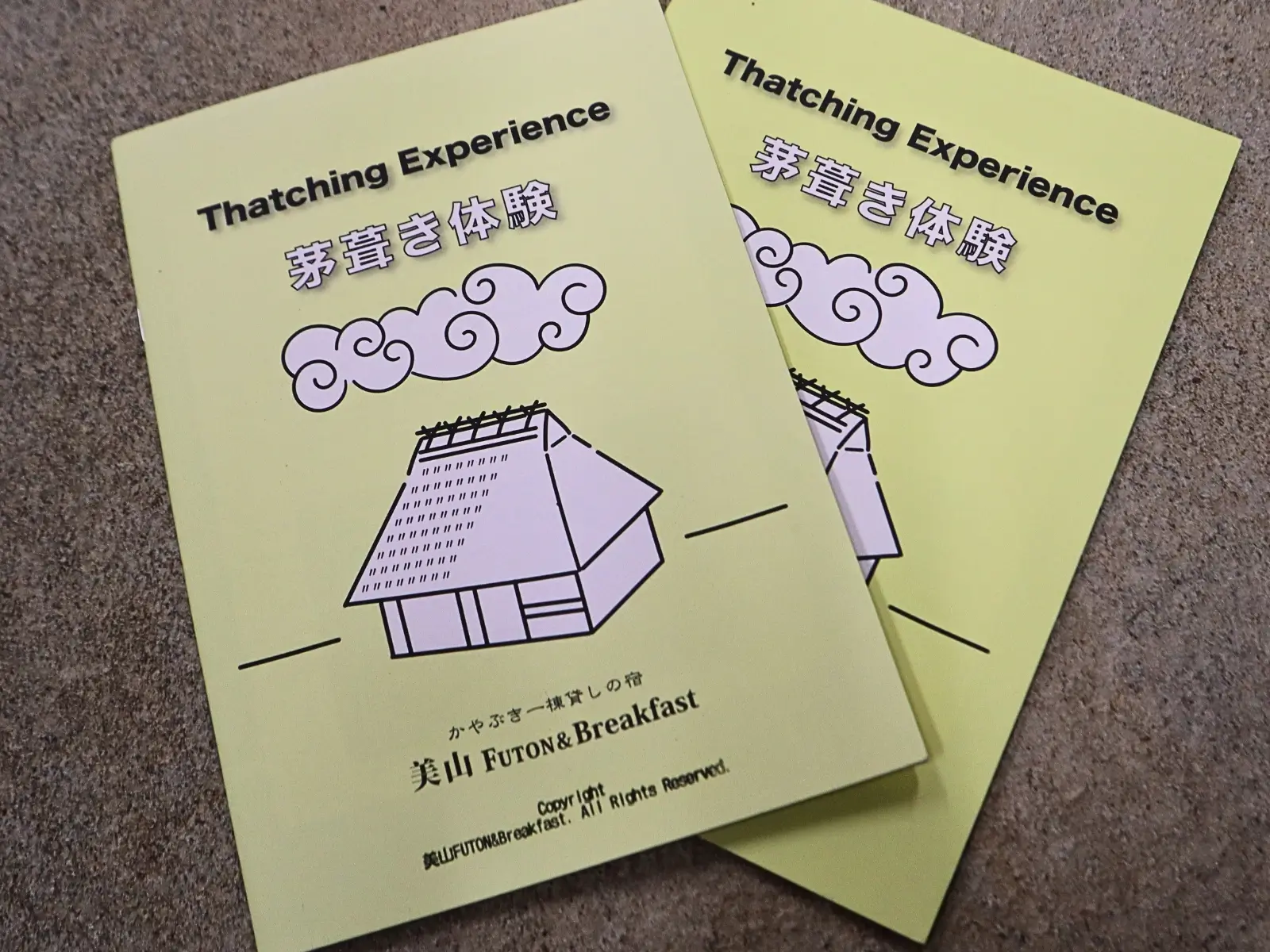
We provide a special textbook-style guide for all participants.
After completing the workshop, you will receive:
• Original guidebook (textbook)
• Commemorative photo
• Certificate of completion
• Tenugui (traditional Japanese hand towel)
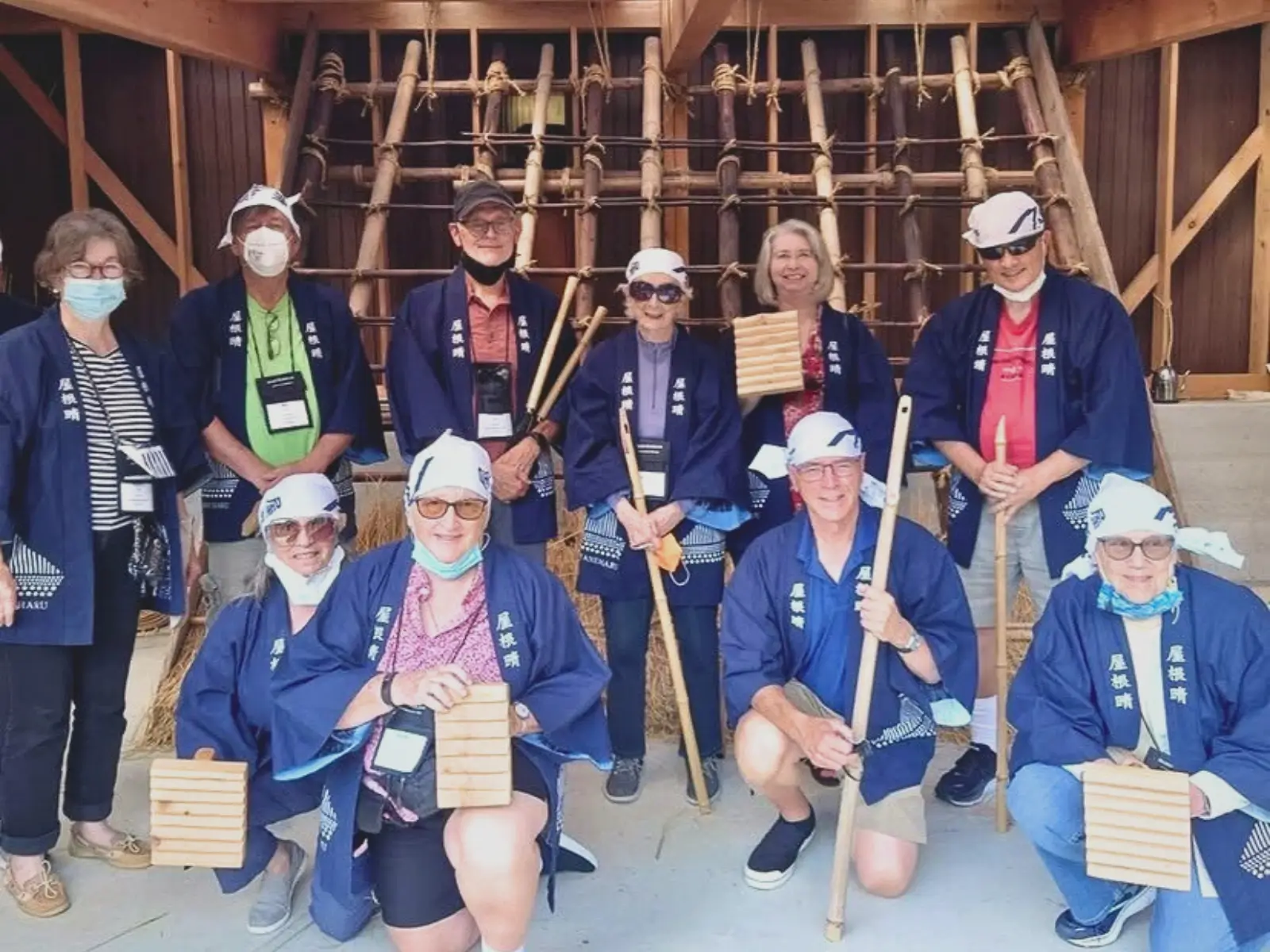
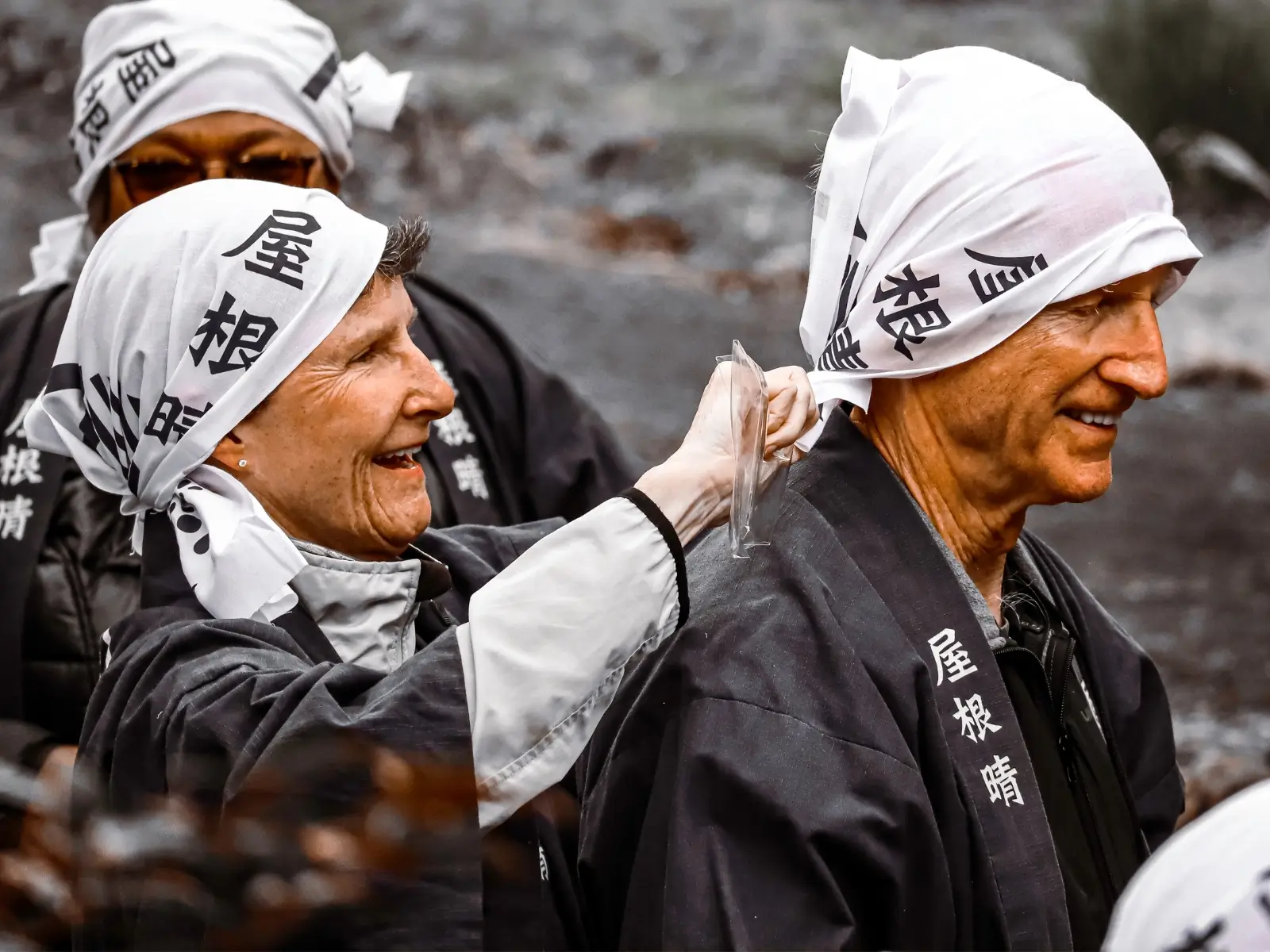
At the end, we will take a memorable group photo in authentic craftsman-style clothing, just like real thatchers.
◆ Workshop Details (Season / Price / What's Included)
● Available Season
Mid-March to late November
Preferred start time between 10:00 and 15:00
● Price
Adults: JPY 6,000 (JPY 6,600 incl. tax)
Elementary school students: JPY 4,000 (JPY 4,400 incl. tax)
*Price varies depending on group size.
• Groups of 1–3 people: JPY 20,000 per group (JPY 22,000 incl. tax)
• Groups of 11 or more: Group discount available (please inquire)
● Included in the Fee
• 2-hour workshop experience
• Tool rental
• Insurance
• Original guidebook
• Tenugui
• Commemorative photo
• Certificate of completion
• Consumption tax
◆ Schedule
● Meeting & Check-in
Please check in at the Miyama FUTON & Breakfast Check-in Center.
● Introduction & Explanation
After a short explanation of the workshop, we will watch a short video.
Then you will receive the guidebook and wear a traditional happi coat and tenugui.
● Thatching Experience Begins
Move to our specially built practice roof structure and begin thatching.
Our instructor will guide you step by step, so even beginners can participate safely.
● Photo Time & Q&A
Enjoy a quiz time and short break.
At the end, we take a commemorative photo and present your certificate.
● Finish
The workshop ends on site, and you may leave freely.
◆ Important Notes Before Booking
■ Age Requirement
From 3rd grade elementary school and above.
■ Clothing & Items
Please wear comfortable clothes and shoes that can get dirty.
A limited number of rental items are available.
■ Cancellation Policy
Cancellation fees apply as follows:
• Up to 24 hours before: Free
• Within 24 hours: 50%
• Same-day no-show: 100%
■ Weather Cancellation
The workshop may be canceled in case of heavy rain, typhoon, or strong winds for safety reasons.
■ Lunch Option
A picnic lunch is available for JPY 1,500 per person (incl. tax).
Advance reservation required.
◆ How to Apply / Inquiry
Please apply via the “Contact” page.
In the message field, please include the following information:
• Applicant name (Required)
• Phone number (Required)
• Email address (Required)
• Number of participants (Required)
• Preferred date and time (Required)
• Other requests (Optional)
We will contact you after receiving your inquiry.
◆ Private & Customizable Workshop
This is a private workshop limited to one group per session.
• Reservations accepted up to 1 week in advance
• Group size and schedule can be customized
• Depending on reservations at nearby accommodation facilities, your preferred time may not be available
Thank you for your understanding.
◆ Location
This workshop facility is located next to “Miyama EISA.”