Project Info
Project Description
Satoyama: The Solar Economy of a Village
What Is Satoyama
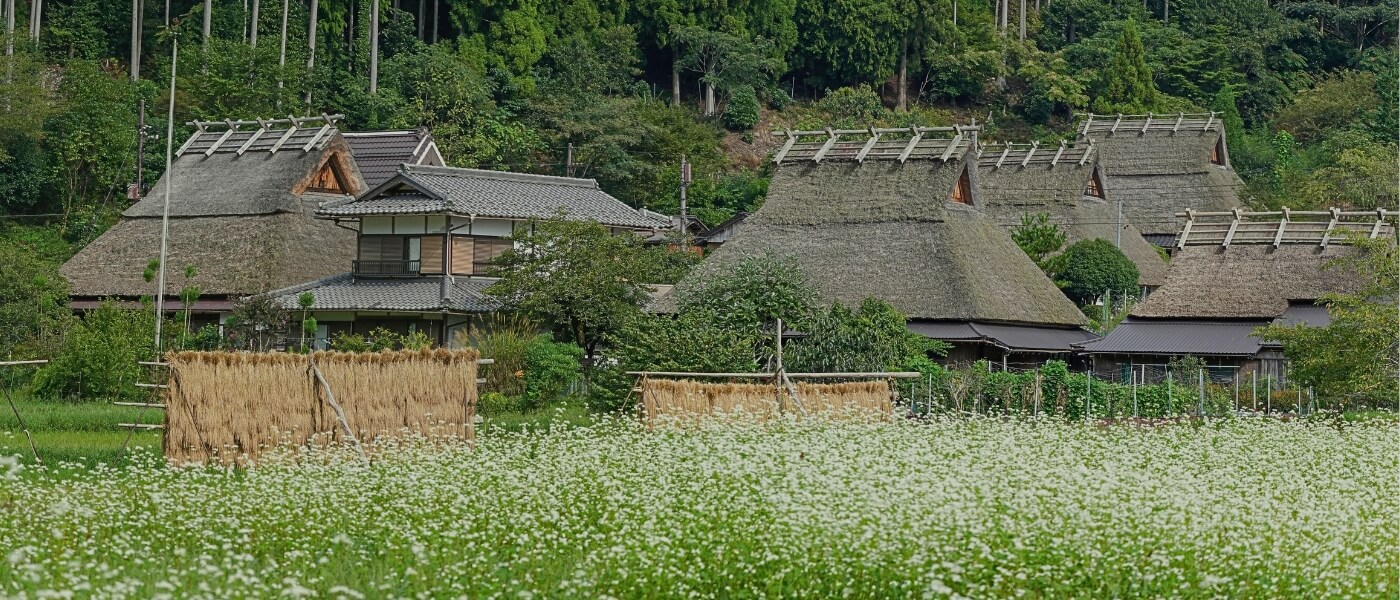
Miyama is made up of 52 villages.
Each village is still managed through local autonomy.
The place where this way of life unfolds is called satoyama.
The history of village formation in Japan is extremely old.
It is so old that it is difficult to define a clear beginning.
However, when we look back at Japanese history, we can see that people have long tended to live in groups.
This can even be observed in archaeological sites from the Jomon period.
Japan is a country prone to natural disasters such as earthquakes and floods.
People needed to cooperate in order to survive.
It may also be related to the Japanese tendency to feel anxiety more easily.
When times became peaceful, people would again gather and live together.
About 500 years ago, Japan entered a period of instability known as the Sengoku era.
Warlords fought over territory, and people’s lives became uncertain.
During this time, many people dispersed into mountain villages.
Some defeated warriors fled into remote mountains and built new settlements.
It is said that many of the villages now called satoyama were formed during this period.
A System of Shared Labor and Shared Resources
In satoyama, labor was shared among people.
For example, during rice planting season, people did not work alone.
Instead, they worked in groups, completing each household’s rice field one by one.
The concept of ownership as a formal system was established in Japan during the Meiji period.
However, even today, there remains a strong sense that nature belongs to everyone.
Land has an owner, but the idea is closer to that of a caretaker than an absolute owner.
Even owners do not believe they can do anything they want with the land.
The Matsutake System
Until about 20 years ago, there was a system for harvesting matsutake mushrooms.
The village divided the forest into zones and auctioned harvesting rights.
Even landowners were prohibited from entering during that period.
The winning bidder paid money to the village, which became communal funds.
This system benefited both individuals and the village.
Although it has disappeared, the idea of prioritizing the community remains.

Ownership and the Changing Village
People who move from cities often have a different understanding of ownership.
They tend to prioritize individual rights.
Villagers, however, accept decisions that benefit the community.
This difference sometimes creates conflict.
Land is increasingly passed to younger generations who did not grow up in the village.
This may become a future challenge.
Comparison with Danish Ecovillages
In 2018, I visited four ecovillages in Denmark.
These villages are formed by people who share a common philosophy.
Residents are carefully selected.
However, in Japan, land can be freely bought and sold.
Villages cannot control who enters.
Village rules are not protected by law.
Collective Work and the Forest Economy
In traditional Japan, forestry was close to collective production.
Villagers planted and maintained forests together.
They performed tasks such as pruning, thinning, and clearing.
These activities were called hiyaku.
Income from the forest supported public infrastructure.
This system adapted flexibly to changing times.
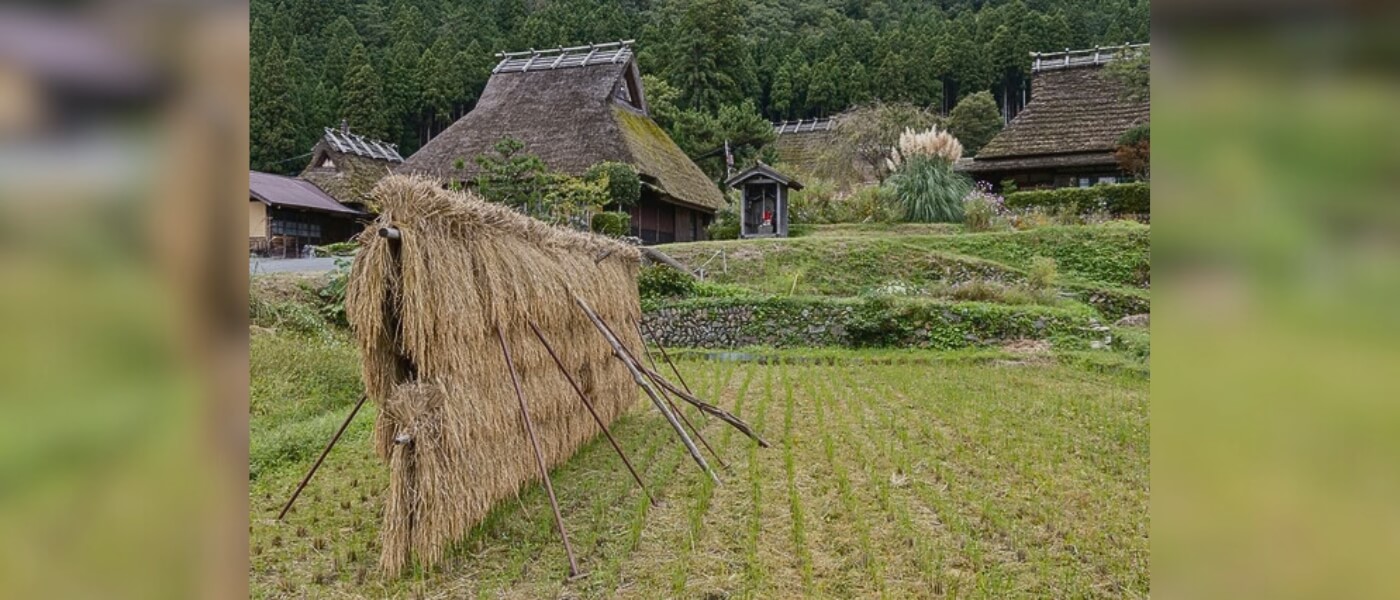
Satoyama as a Living System
Satoyama is not just a landscape.
It is a system of life built on cooperation.
People used natural resources while adapting to change.
Mountains, fields, rivers, and villages were connected.
Nature was not something to control, but something to live with.
Satoyama is a living relationship between humans and nature.
The Solar Economy of a Village
Today, business is often defined by people, goods, and money.
However, traditional villages operated differently.
People invested their labor into nature.
The sun added its energy to this process.
Trees, grass, and crops grew through sunlight.
Human labor and solar energy combined to create value.
This can be understood as a solar economy.
The Symbol of the Thatched Roof
In Japan, the sun goddess Amaterasu has long been worshipped.
This reflects a society dependent on solar energy.
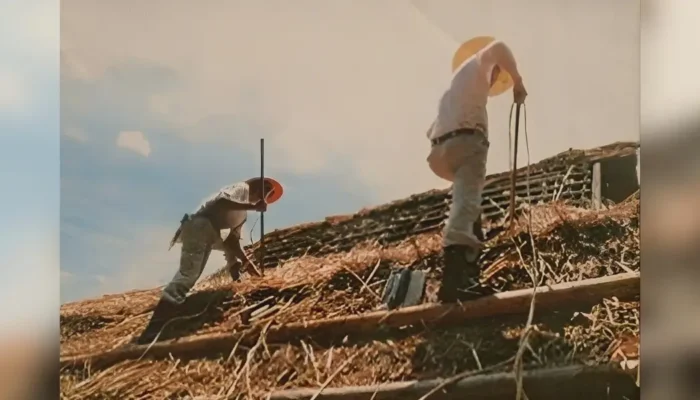
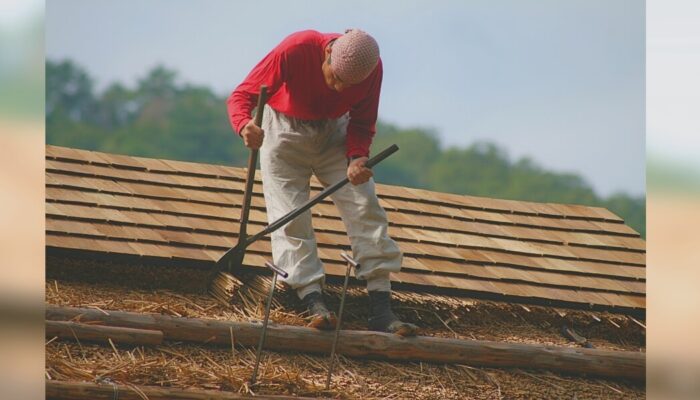
The thatched roof embodies this relationship.
Thatch, wood, and rice all grow through sunlight.
The roof is not just a technique.
It is a symbol of the connection between nature and human life.