Project Info
Project Description
The Reality of Japanese Thatchers
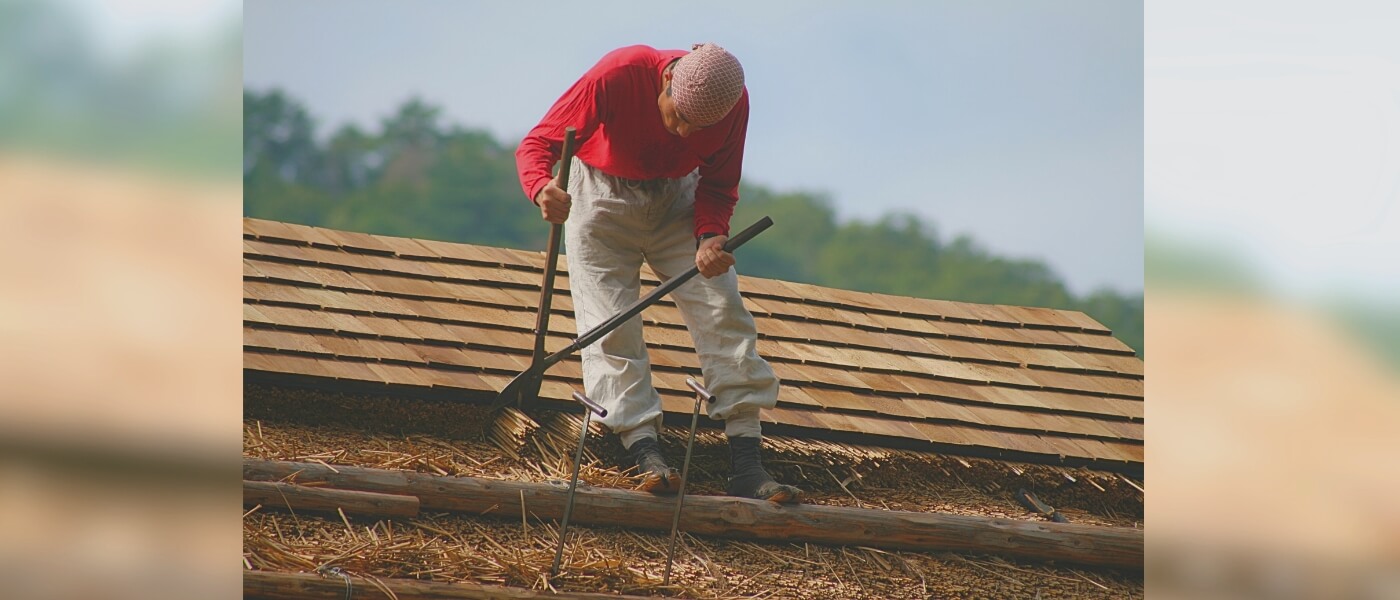
Life Around the Roof
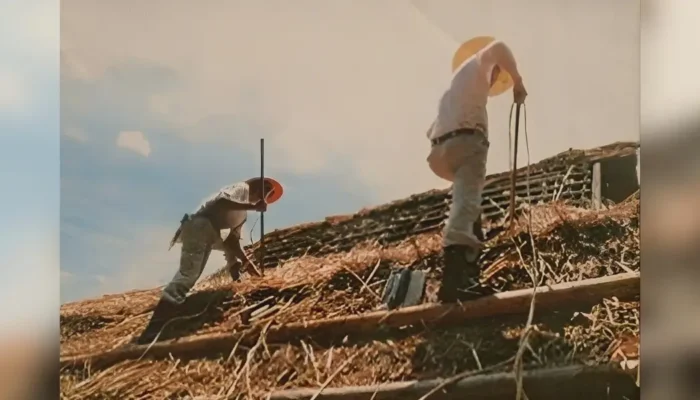
In the past, master thatchers walked to their work sites and stayed within the villages where they worked.
Later, with the arrival of bicycles and motorized bicycles, they began commuting.
Even so, they would eat breakfast at the client’s house.
As cars became common, this eventually turned into full commuting.
Masters knew the local community and family relationships in great detail.
They had plenty of time each day to talk with villagers.
Thatchers were given the first bath and treated with great care.
However, I imagine that for the women of the household, rethatching must have been extremely demanding.
They had to host the helpers, take care of the craftsmen staying over, prepare meals, and even assist with the work.
In truth, the unsung contributors to thatching culture were the women of the village.
Covering roofs with metal sheets freed residents from this burden, and for them, it was a revolutionary change.
Government Policy and Reality
In 1975, the Japanese government designated thatching as a selected preservation technique.
This means that the government has a responsibility to preserve the skill for the people.
However, in reality, it only provides funding to organizations engaged in preservation activities.
In 2020, thatching was included in UNESCO’s intangible cultural heritage under “traditional architectural craftsmanship.”
Many young people celebrated this recognition, but having witnessed the history, I could not simply rejoice.
To me, it seemed like an attempt to showcase Japan’s historical superiority to the world ahead of the Tokyo Olympics in 2021.
As expected, the working conditions of craftsmen did not improve.
In such a situation, craftsmen, especially older ones responsible for management, begin to look toward the government for direction.
I found myself becoming the same.
But I want to remain facing people.
I want to speak to people.
Even if it does not resonate with Japanese people today, I want to reach people around the world and those not yet born.
I chose to leave two government-funded organizations in order to preserve my independence.
Instead, I turned thatched houses into places where anyone can stay, and began sharing information through my own website.
I want to keep my focus directly on people.
Becoming a Thatcher
In Japan, there was a system of family inheritance where the eldest son would take over the household.
Second and third sons in rural areas would leave home in their teenage years.
Many entered live-in apprenticeships, working and training for five to seven years.
Their destinations were decided by their parents through introductions.
Most thatchers came from these second and third sons of farming families.
Therefore, thatching was not passed down through hereditary lines.
Especially after 1945, when Japan lost the war and poverty was widespread, many boys aged 15 to 18 became thatchers.
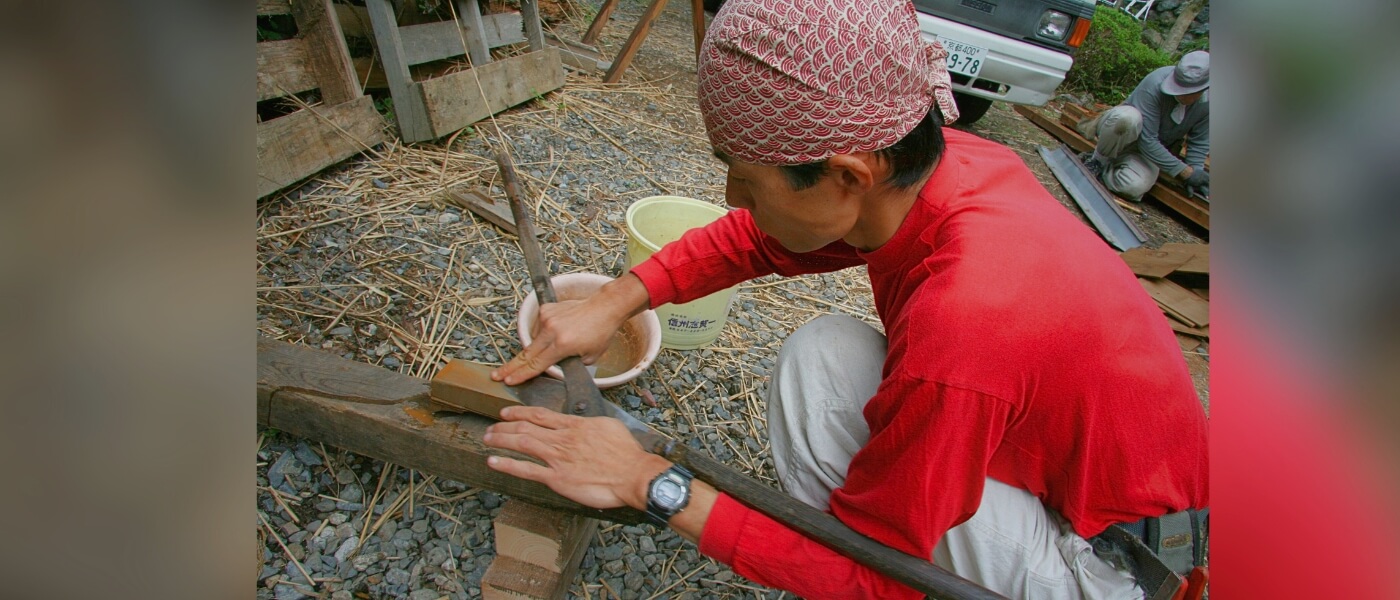
The work required little initial investment in tools, and although unpaid at first, they were provided with food and shelter.
Many craftsmen born in the 1930s entered the profession this way.
They later became independent and took on apprentices.
However, during the rapid economic growth of the 1950s, society changed dramatically.
Industrialization advanced, cities faced labor shortages, and young people flowed out of rural areas in large numbers.
They joined companies, earned monthly salaries, bought appliances and cars, and dreamed of owning homes.
During this time, a method of covering thatched roofs with metal sheets was developed and spread rapidly across Japan.
According to a thatcher in Okayama, half of the village roofs were covered with metal in just one year.
He himself learned both thatching and metal roofing to survive.
For rural people, this was a revolutionary invention.
It freed them from harvesting thatch, drying it, storing it, and helping others with their roofs.
In this environment, most young successors left the craft and became company workers.
The older generation continued on a small scale, and only in the 1990s did successors like us finally appear.
The craft was on the verge of extinction.
When society changes drastically, continuing as a thatcher becomes extremely difficult.
Many craftsmen I met had side jobs.
Imagining the fear of seeing one’s own work disappear fills me with deep gratitude toward those who endured.

The Present Condition
Today, people who become thatchers choose it for themselves.
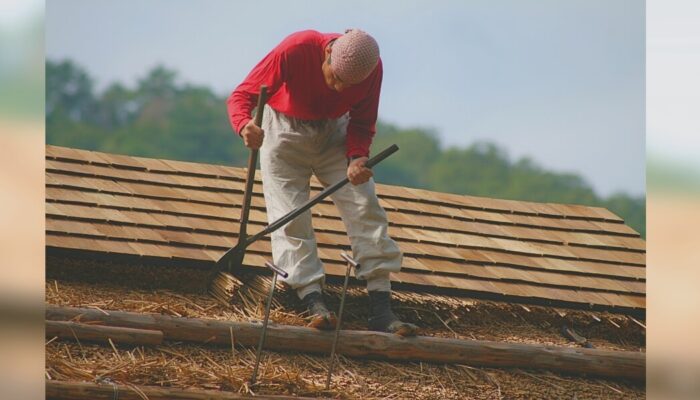
However, the number of thatched roofs continues to decline, and most work now focuses on cultural property restoration.
Projects are awarded through bidding, meaning lower cost is prioritized over skill.
Because everything is handmade, productivity is limited, and scheduling is always difficult.
Our schedules for the following year can be completely uncertain.
Yet we must still procure materials in advance.
The system itself has not changed for decades.
This creates extreme fluctuations year by year.
Why I Continue
I hesitated to write this article.
I want people to know the beauty of thatching.
I want them to dream.
But reality is harsh.
So why can I continue?
Because I know a world far more beautiful than this difficult reality.
I remember the laughter of villagers.
I remember the joy of working together.
My master once told me, “Be a bit silly and a little crazy.”
Now I understand what he meant.
To let go, and to live naturally.
Four days a week, I am filled with hope.
Three days, I feel down.
Each time, I remind myself to be a bit silly and a little crazy.
What about you?