Project Info
Project Description
The Essence of a Craftsman
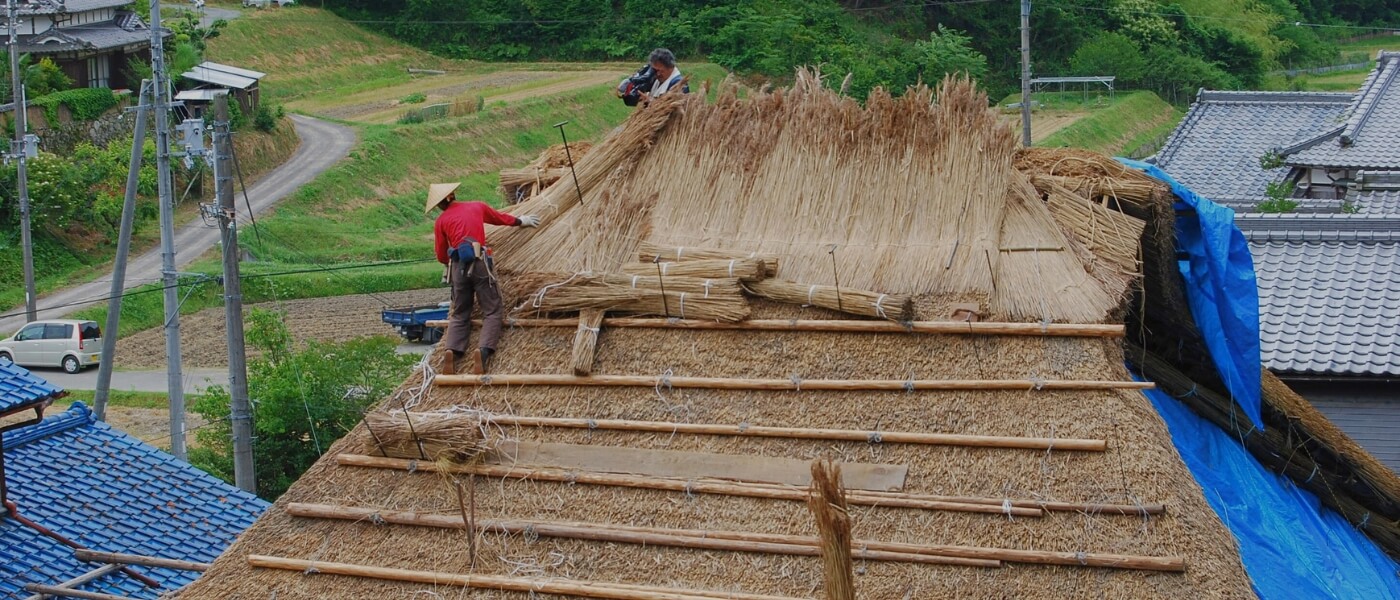
The Moment of Craft
When facing a difficult roof, I do not know what to do with my mind.
And yet, my body begins to move on its own.
My hands start shaping forms naturally.
It feels as if something behind me is guiding me.
And as the work nears completion, my mind begins to understand.
“So this is how it became.”
This strange sensation happens many times.
It feels as if I am connected to something greater, and my body becomes a medium for it.
Perhaps this is how art is created in the world.
My Master
My master often said,
“I cannot take my skills with me into the coffin.”
When I was young, I did not understand what he meant.
I thought it was just a joke.
But when he passed away, and I saw his peaceful face in the coffin, I finally understood.
He had given everything to us.
It did not belong to him.
It does not belong to me.
It is something we temporarily receive.
This is how the skill and spirit of thatchers have been passed on in Japan.
The individual eventually dies.
But the craft continues.
And within that flow, we continue to live.

When I was young, I wanted to leave my work behind in the world.
But now, that no longer matters.
It is enough for me to be part of this long, continuing history.
Perhaps my master felt the same way.
That is why he could say,
“I cannot take my skills with me into the coffin.”
He had already let go of ownership.
I think Japanese people did not place value on living as individuals alone, but on living within the whole.
This was not restraint.
It was a sense of peace.
And a quiet form of joy.
Conclusion
The skill of a craftsman is not something understood by the mind.
It appears through the body.
And eventually dissolves into something beyond the self.
It is not owned.
It is passed on.