Project Info
Project Description
Miyama EISA — The Story Behind Its Birth
By Haruo Nishio (Founder)
◆Introduction
I would like to share the story of how “Miyama EISA,” our fourth property, was born and opened in 2018.
If you are interested in architecture or traditional Japanese houses, you may find this story especially fascinating.
Because the person who developed this house is also the one who continues to operate it today, I am able to tell you these details firsthand.
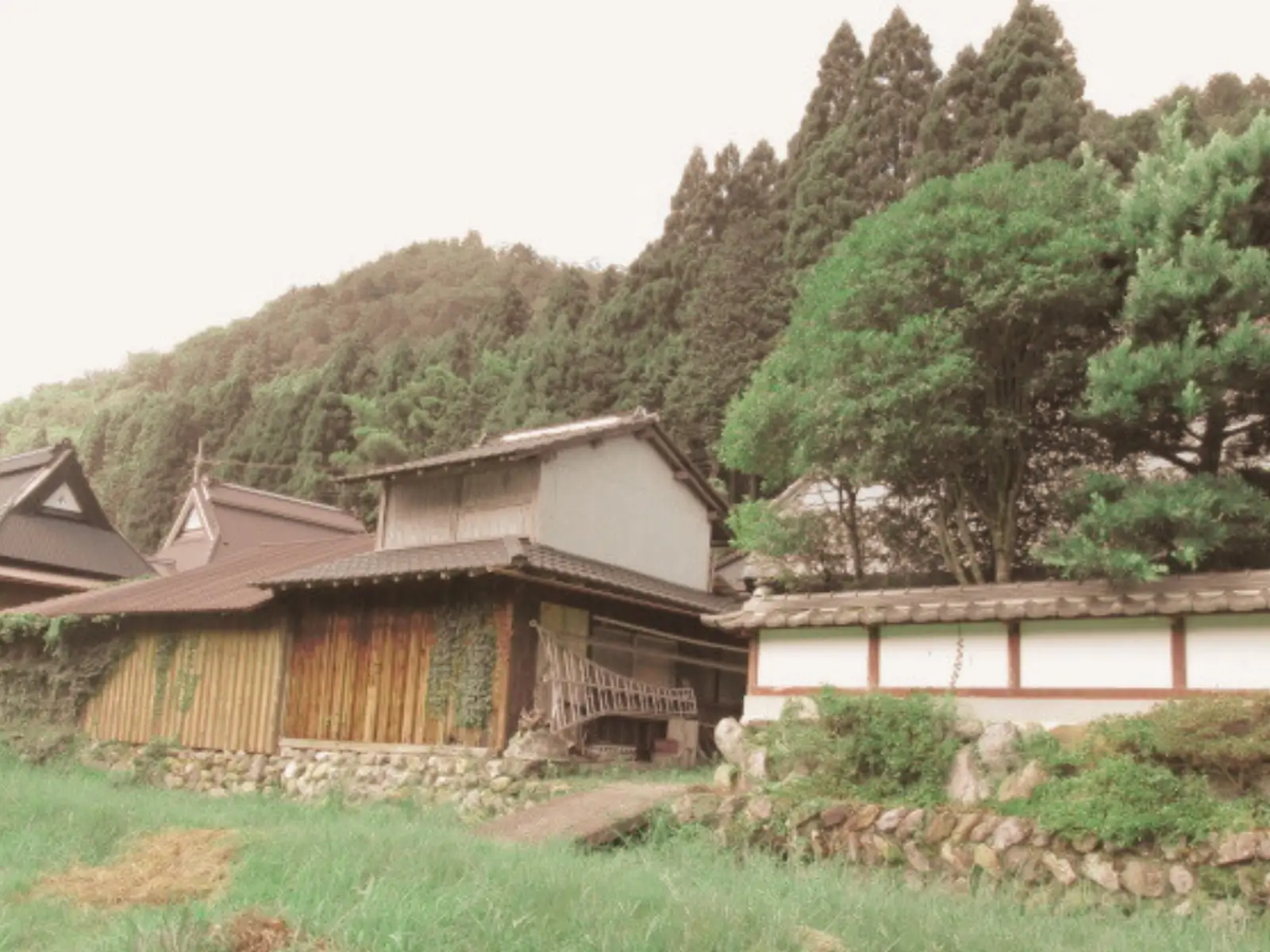
◆An Old Aerial Photograph and the Landscape of the Past
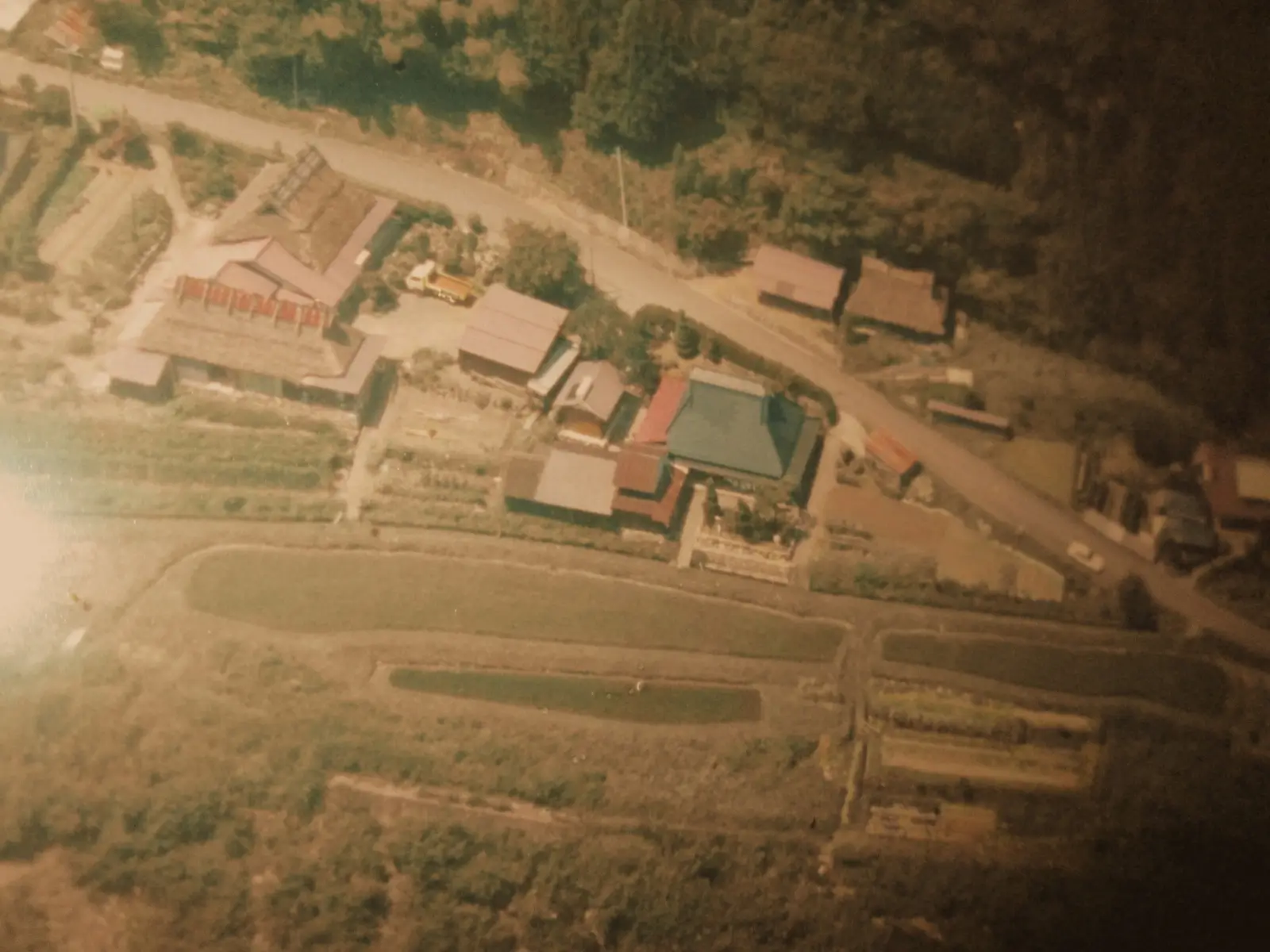
I received an old aerial photograph from the previous owner. It shows what this place looked like long ago.
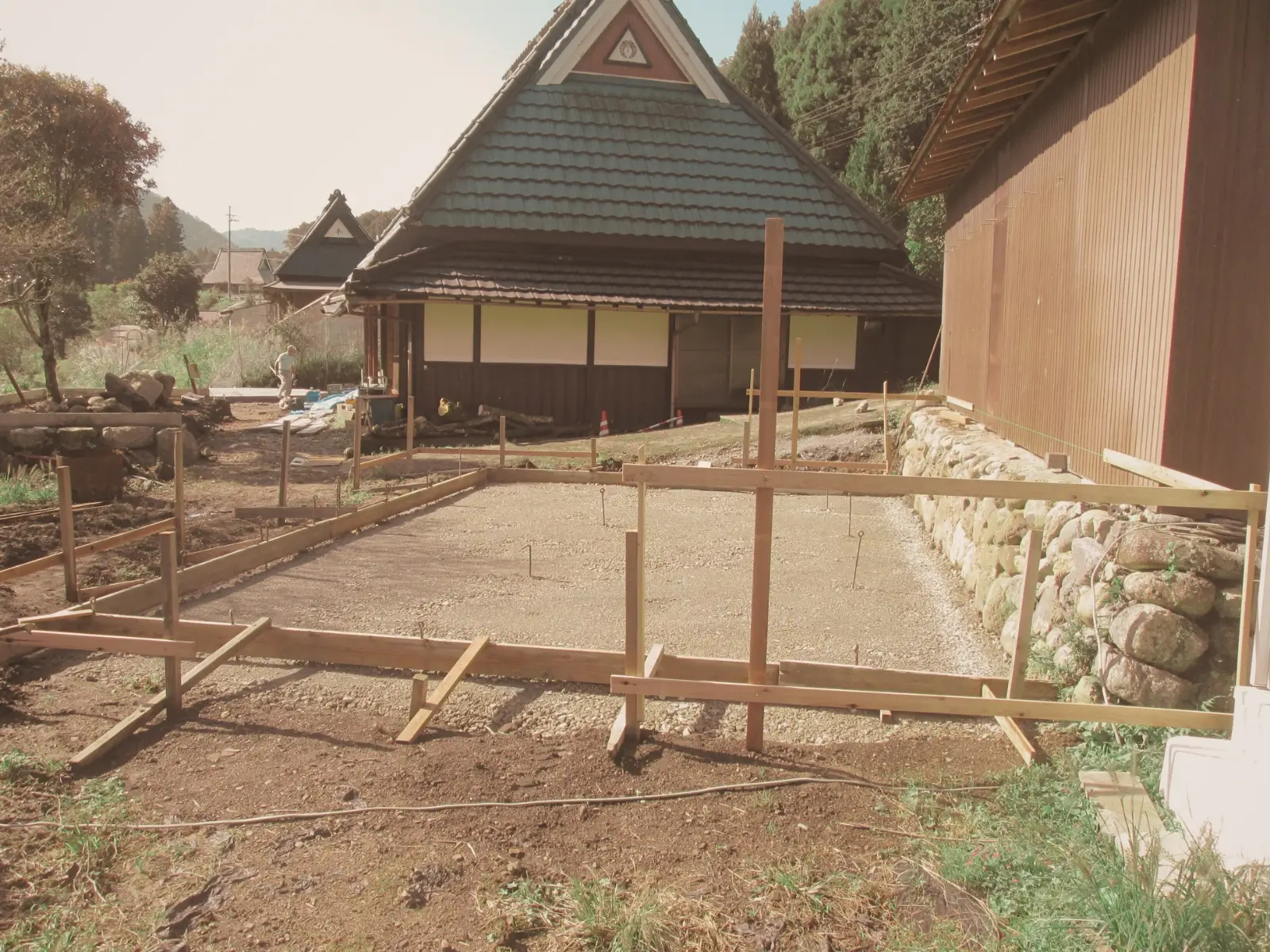
The area where our current dog run is located used to be rice fields.
And the neighboring house still had a thatched roof at that time.
◆A Request: “Please Take Over This House”
I was approached by the successor of the former owner.
An elderly grandmother had been living alone in the house for many years, but she was about to move into a care facility.
Since the successor lived in the city, they were worried that they would no longer be able to maintain the property.
◆A Village Called Shimoyoshida
This village is called “Shimoyoshida.”
It was also the village where my thatching master, Shuichi Yamauchi, once lived.
During my apprenticeship, I would ride my small motorbike early in the morning, pass by this house, and head to my master’s home.
Then, I would drive his car as his assistant and take him to thatching sites.
Because of those memories, this village has always held a special place in my heart.
That is why I began considering the possibility of transforming this house into a private rental villa.
◆A Perfect Riverside Location
This house stands along the river, and I immediately felt it would be an ideal place for people from the city to relax and spend time in nature.
So I decided to purchase the property.
◆A Buddhist Village and a House of Faith
This village is a rapidly aging rural community.
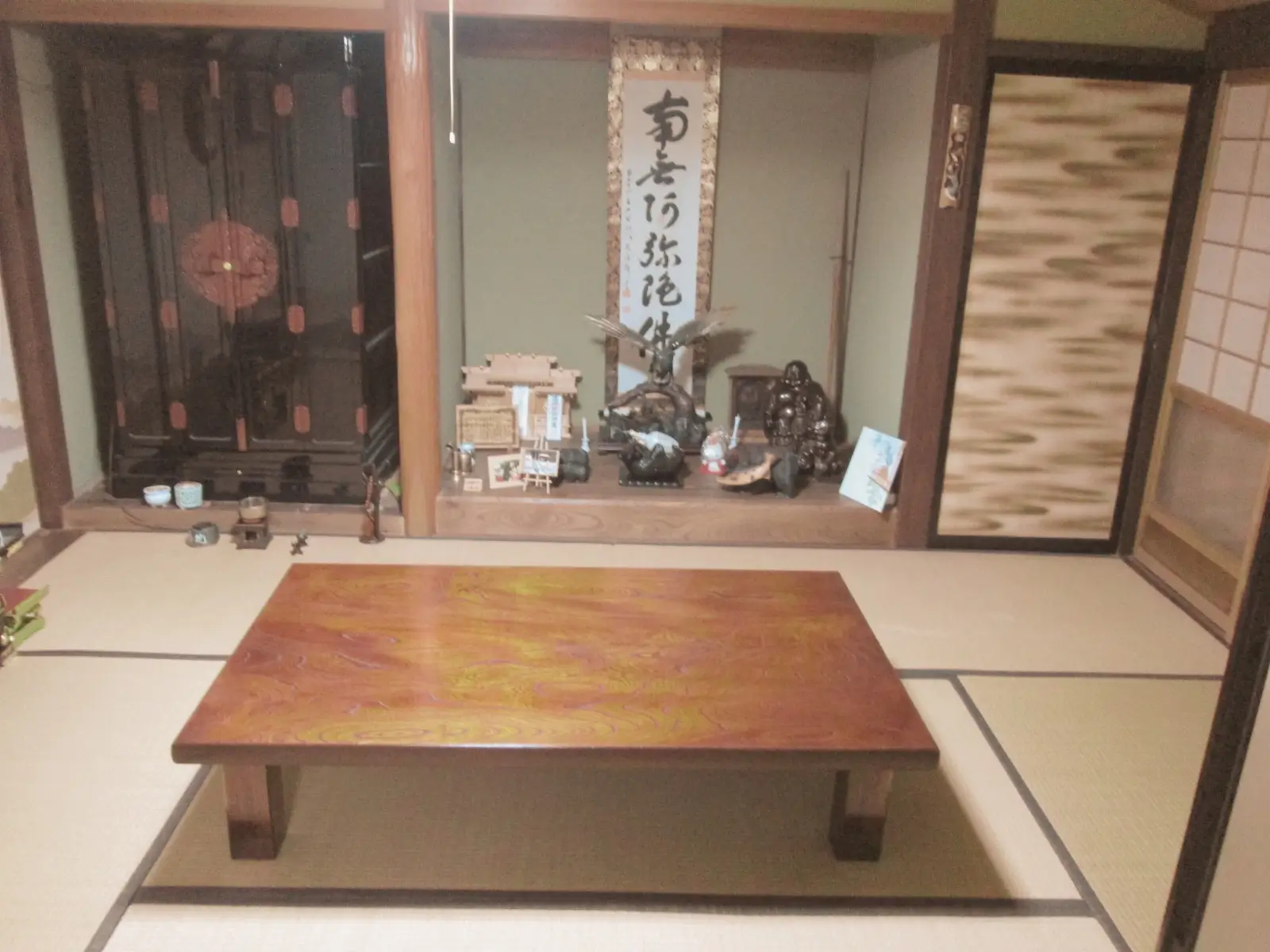
It is home to a Jodo Shinshu Buddhist temple, and this house once belonged to a devoted temple family. Inside, there was a beautiful traditional Buddhist altar and a hanging scroll with the words “Namu Amida Butsu,” a Buddhist prayer often recited in Japan. Since I studied at Otani University, a university closely connected to Jodo Shinshu Buddhism, I felt a strong sense of familiarity with this home.
◆A Difficult Challenge: The Main House Was Too Small
While planning the renovation, I realized that the main house was quite small.
If we tried to fit every function into it, the space would feel cramped and uncomfortable.
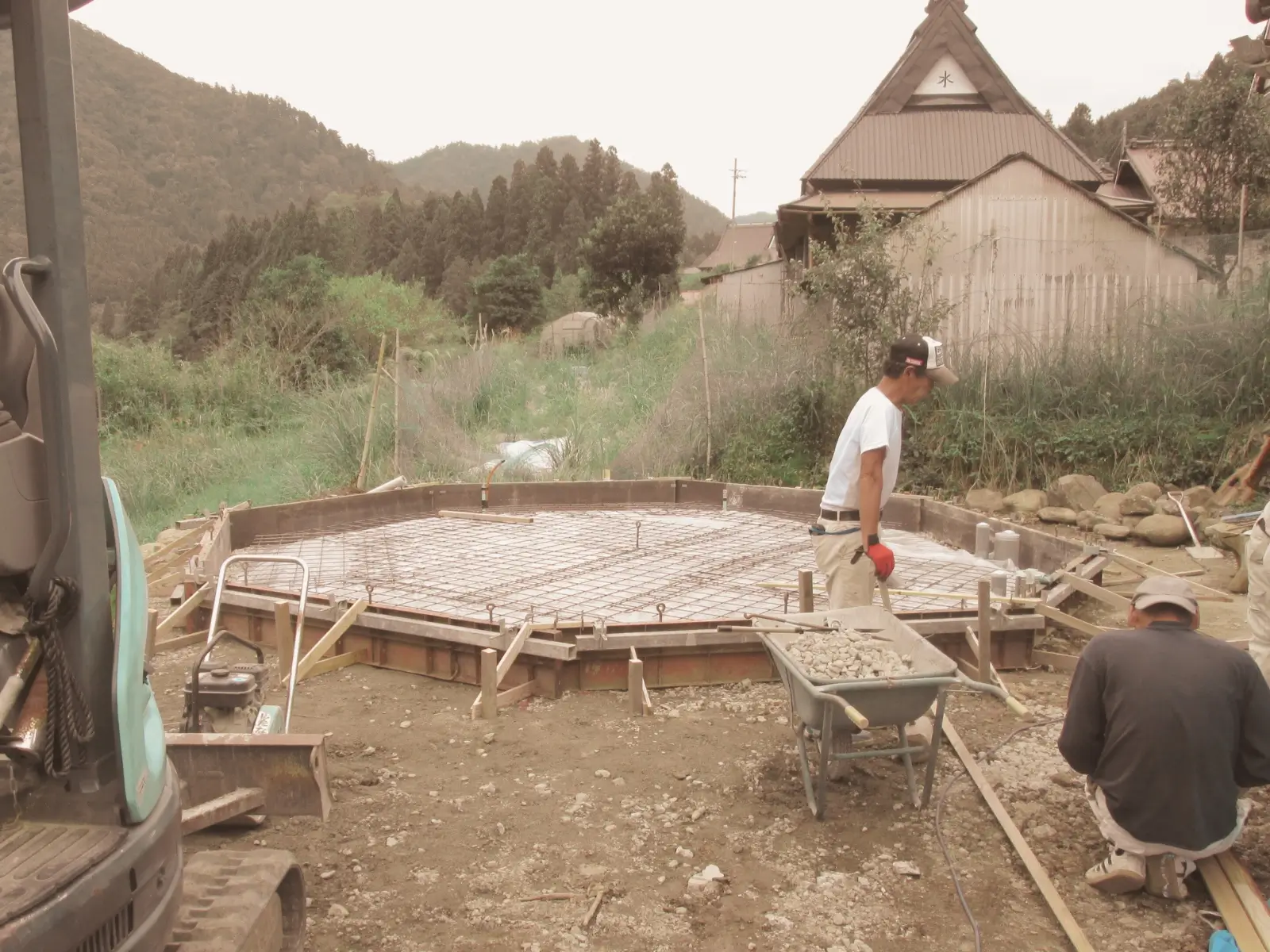
That is why I made a bold decision: the bathroom would be rebuilt as a separate building.
◆A Traditional Country House Always Has a Shed
In rural Japan, a traditional home usually consists of a main house and a small shed.
The shed was essential for storing farming tools and equipment.
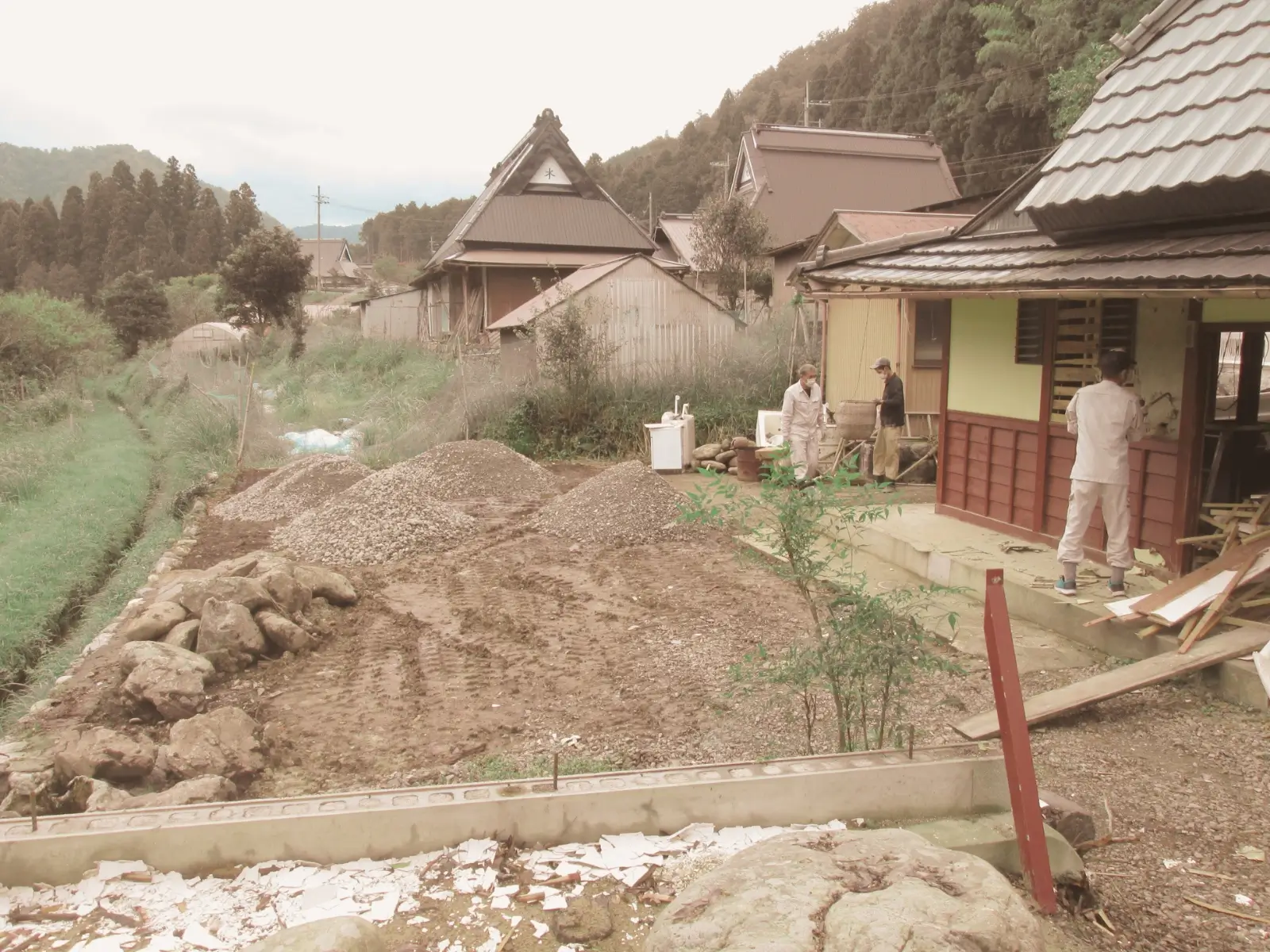
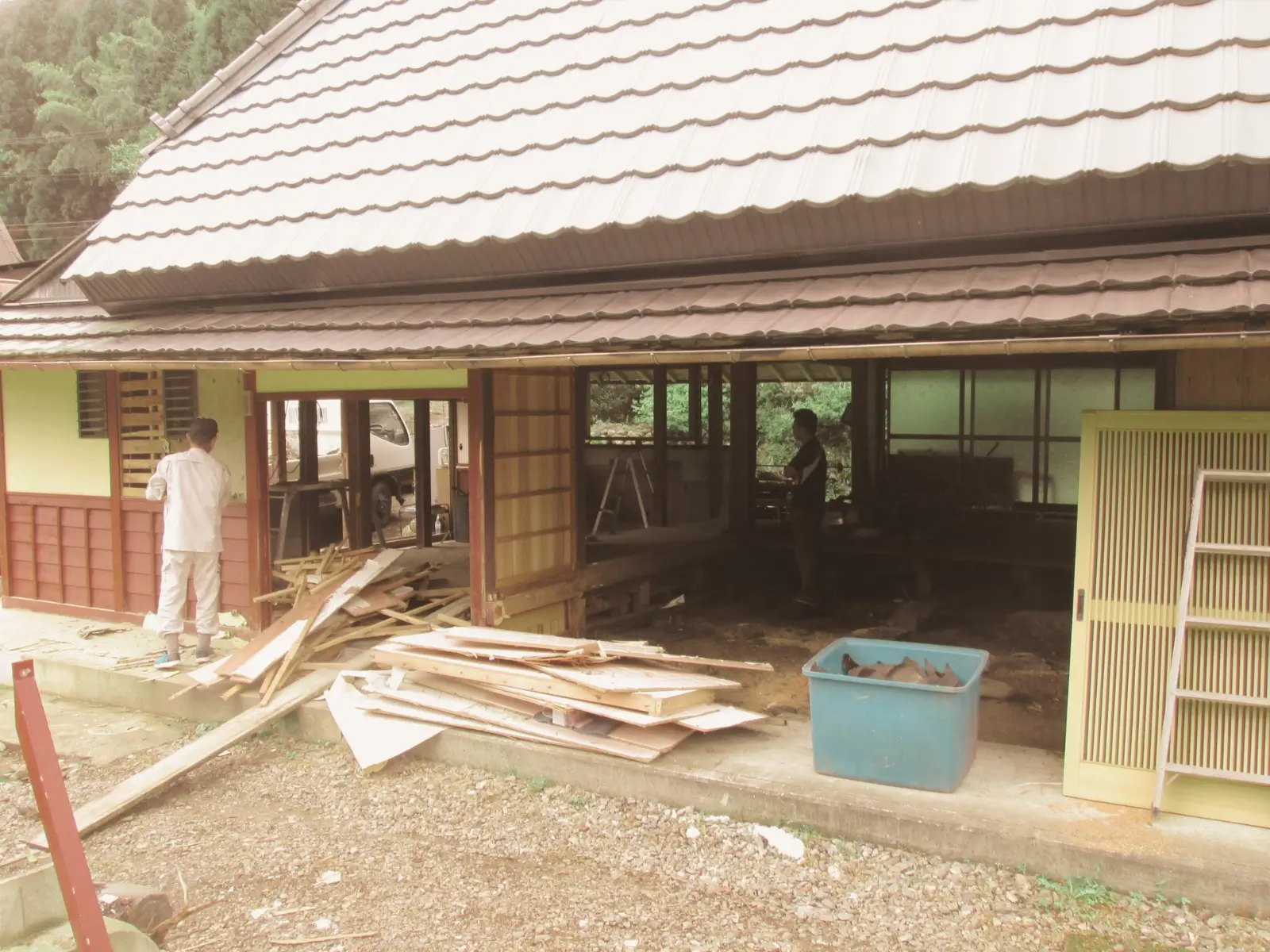
I hesitated to demolish the old shed, but in the end, I decided to tear it down and build a completely new structure in its place.
◆Building the Bathhouse With a Thatched Roof
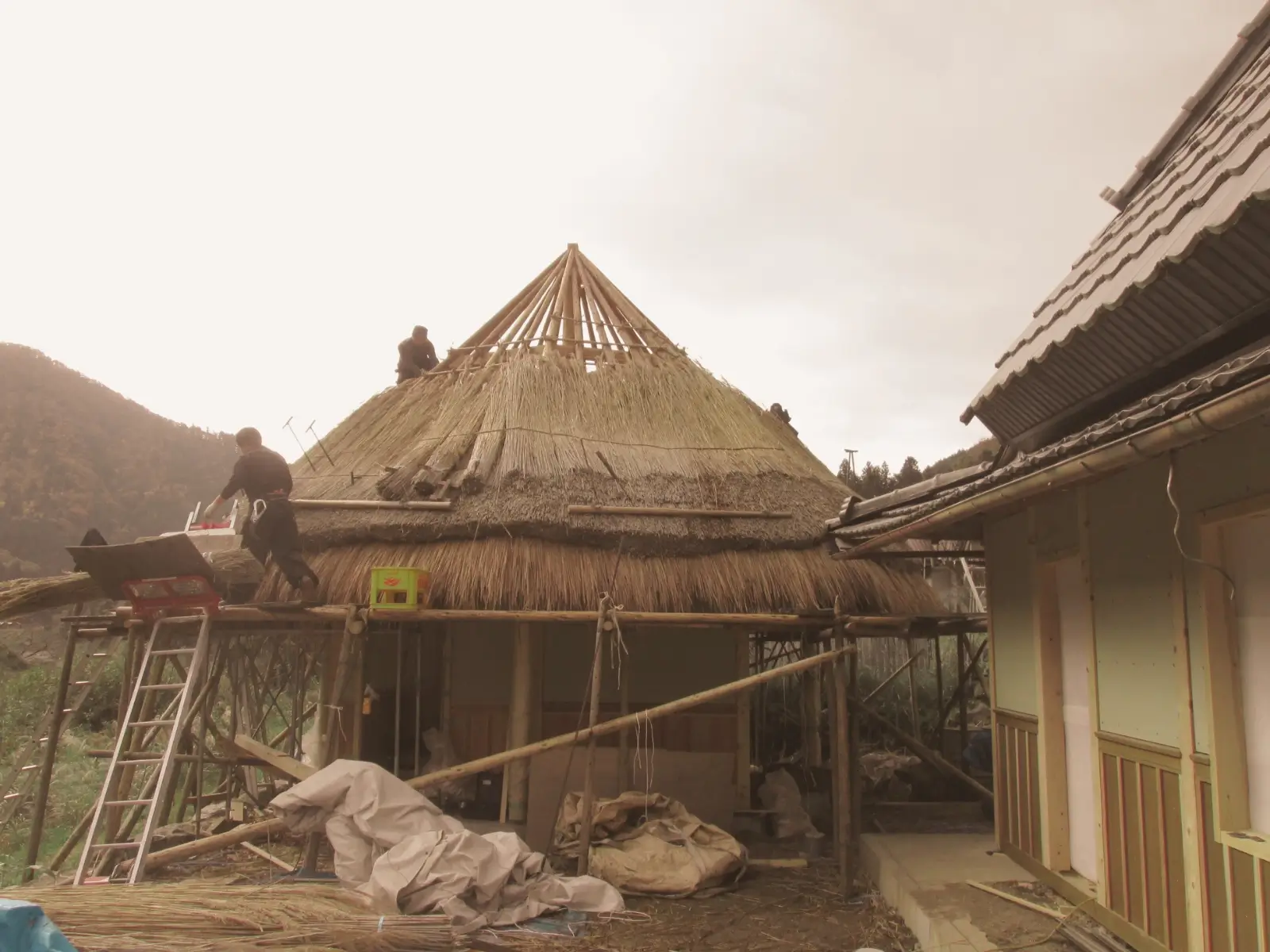
The new bathhouse was designed with a thatched roof.
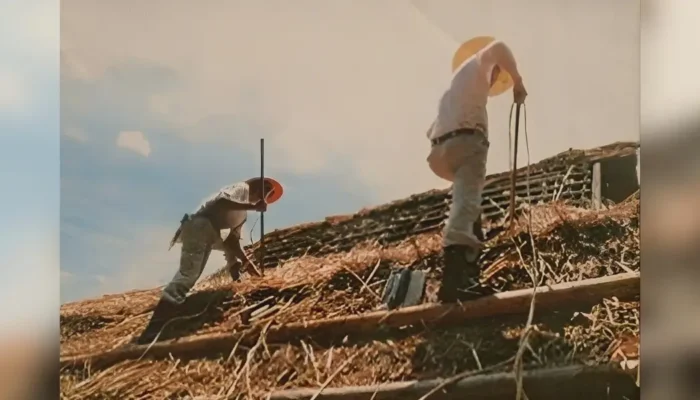
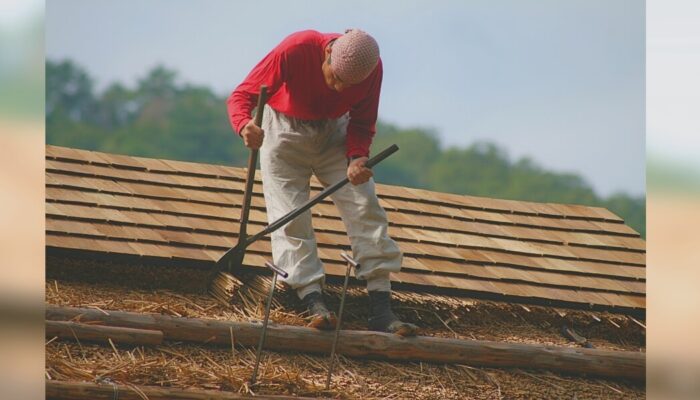
At the time, one of my apprentices was training under me, so I let him take on the thatching work as a valuable learning experience.
For the eaves, I used a special material that I personally imported from the Philippines, giving the building a slightly resort-like atmosphere.
◆The Ridge Was Inspired by South Africa
For the ridge at the top of the roof, I adopted a method I learned from South Africa.
It is reinforced with concrete and finished in a simple style.
In South Africa, thatched architecture is extremely popular—so much so that even international airports have been built with thatched roofs.
The cottages where safari travelers stay are almost always thatched.
That culture impressed me deeply, and I wanted to incorporate part of it into this project.
◆Where the Kitchen Stands Today
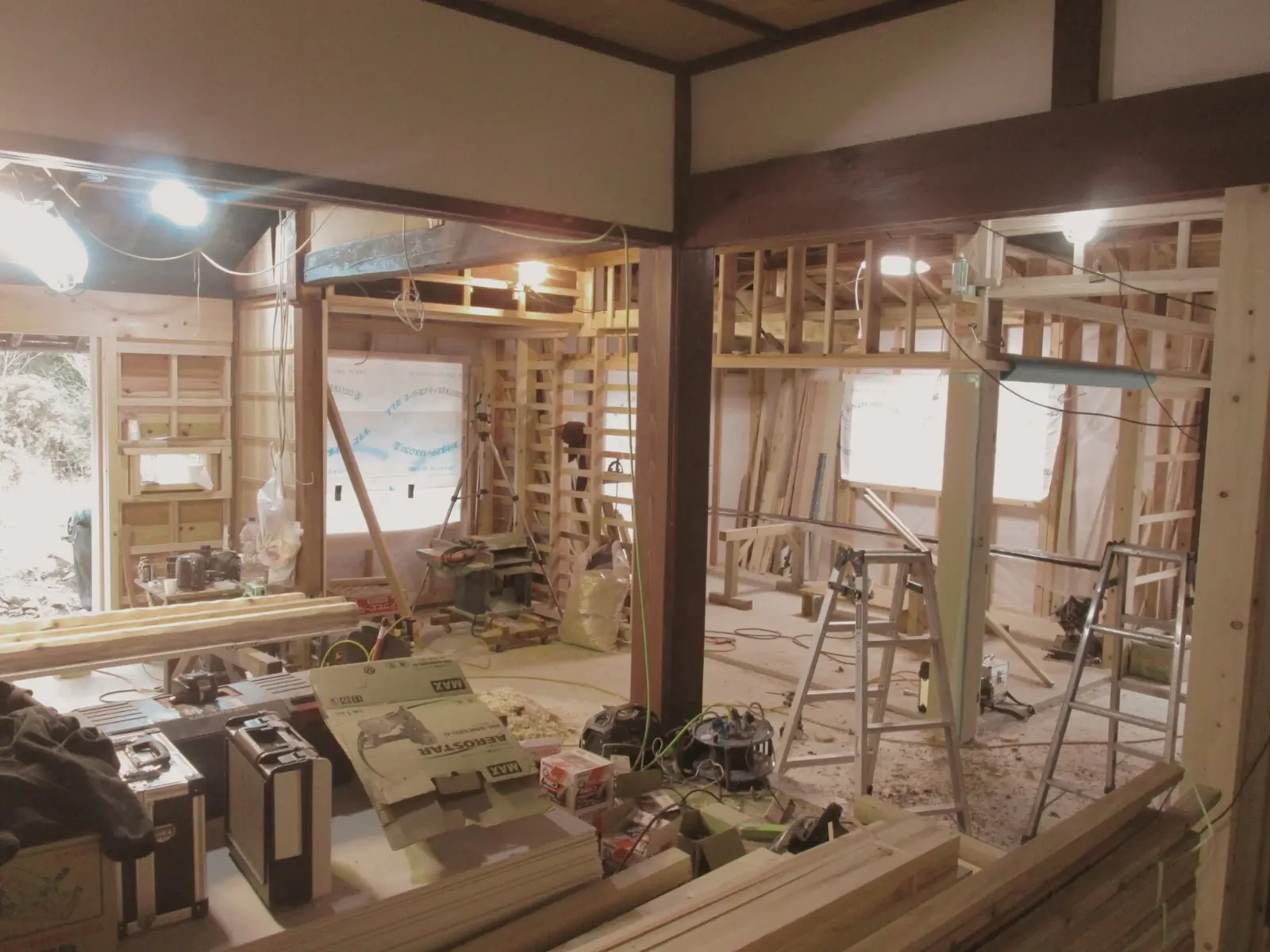
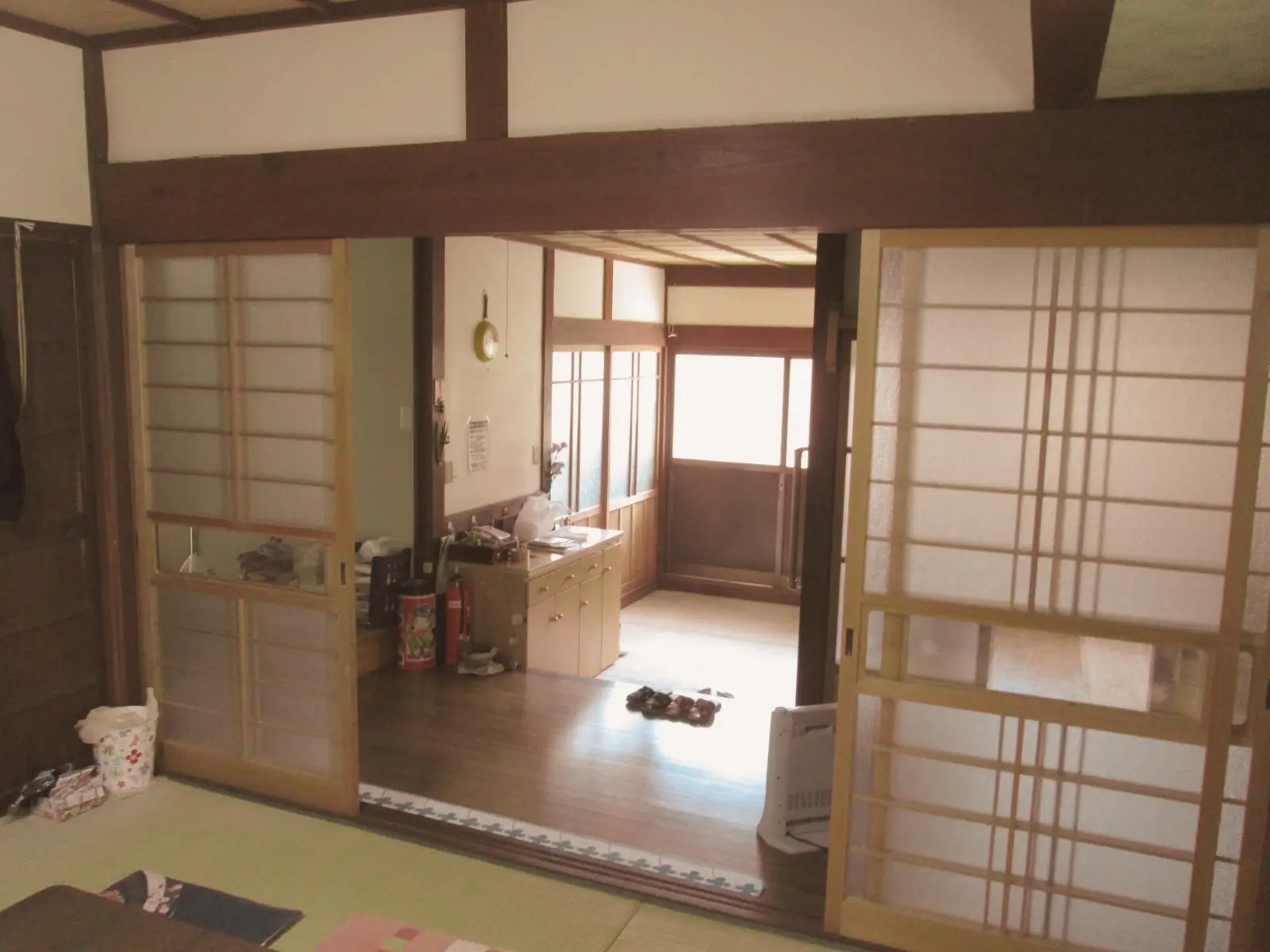
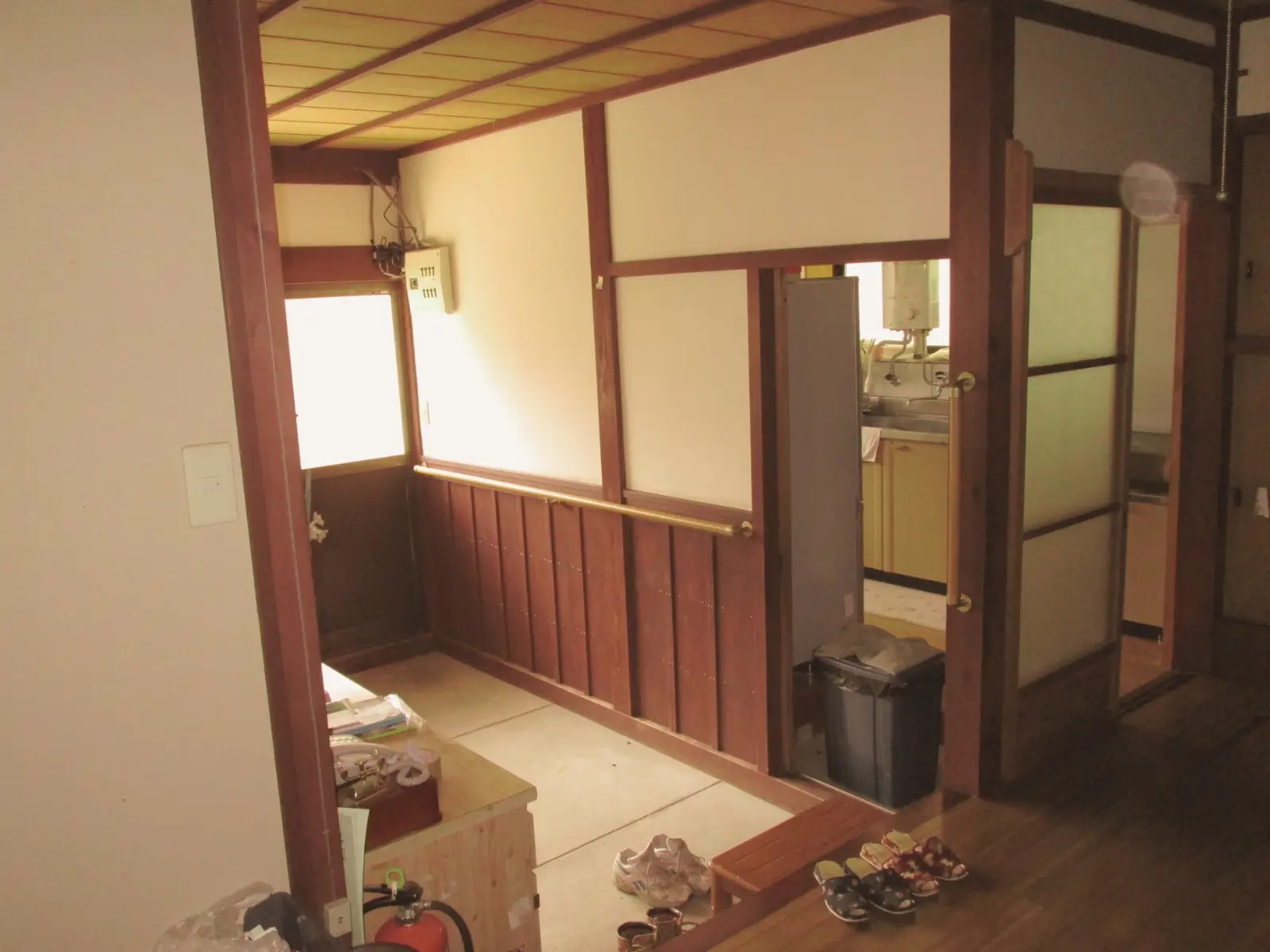
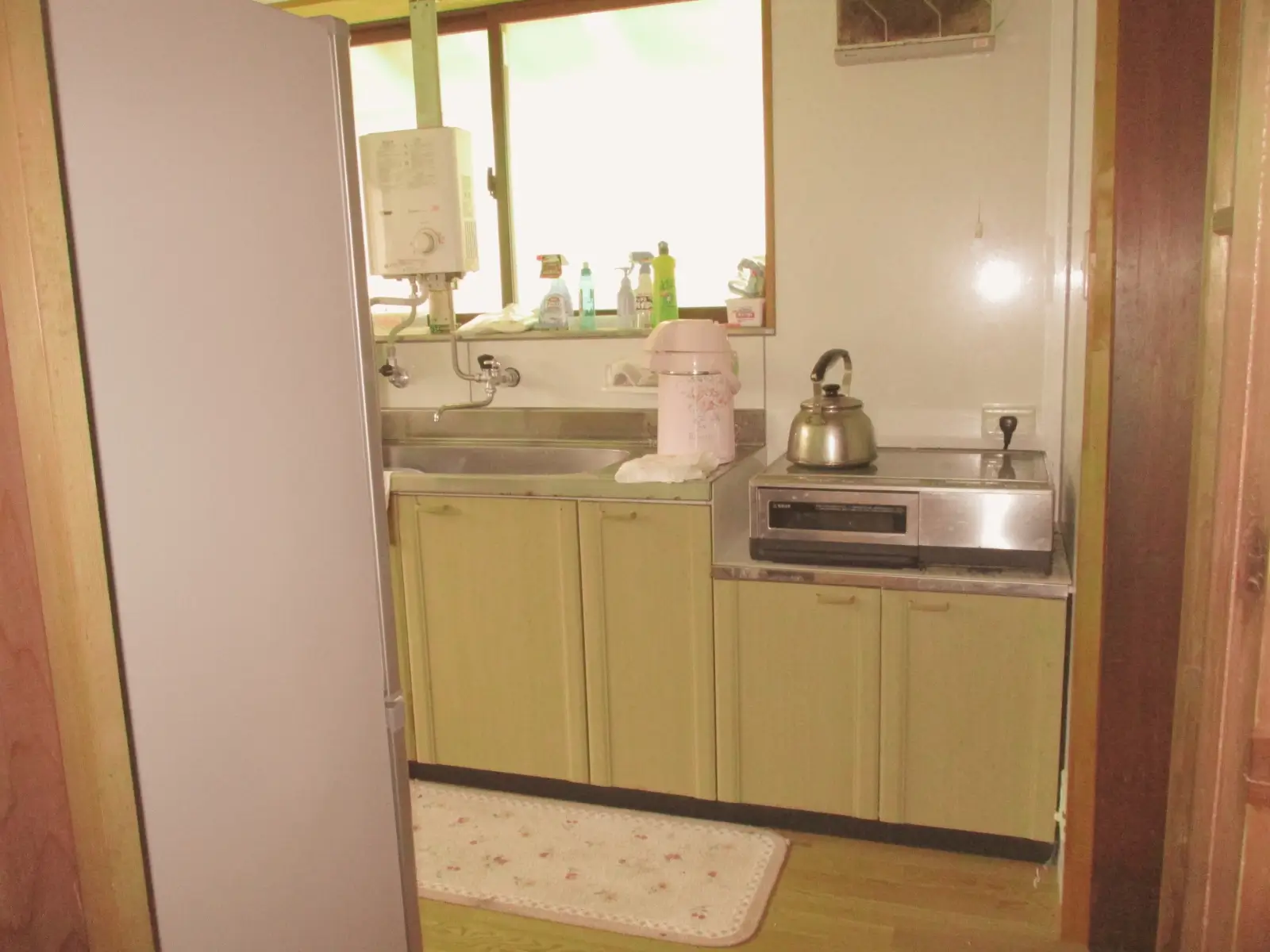
The area where the kitchen is located now used to contain a bathroom and washroom, making the space feel closed off.
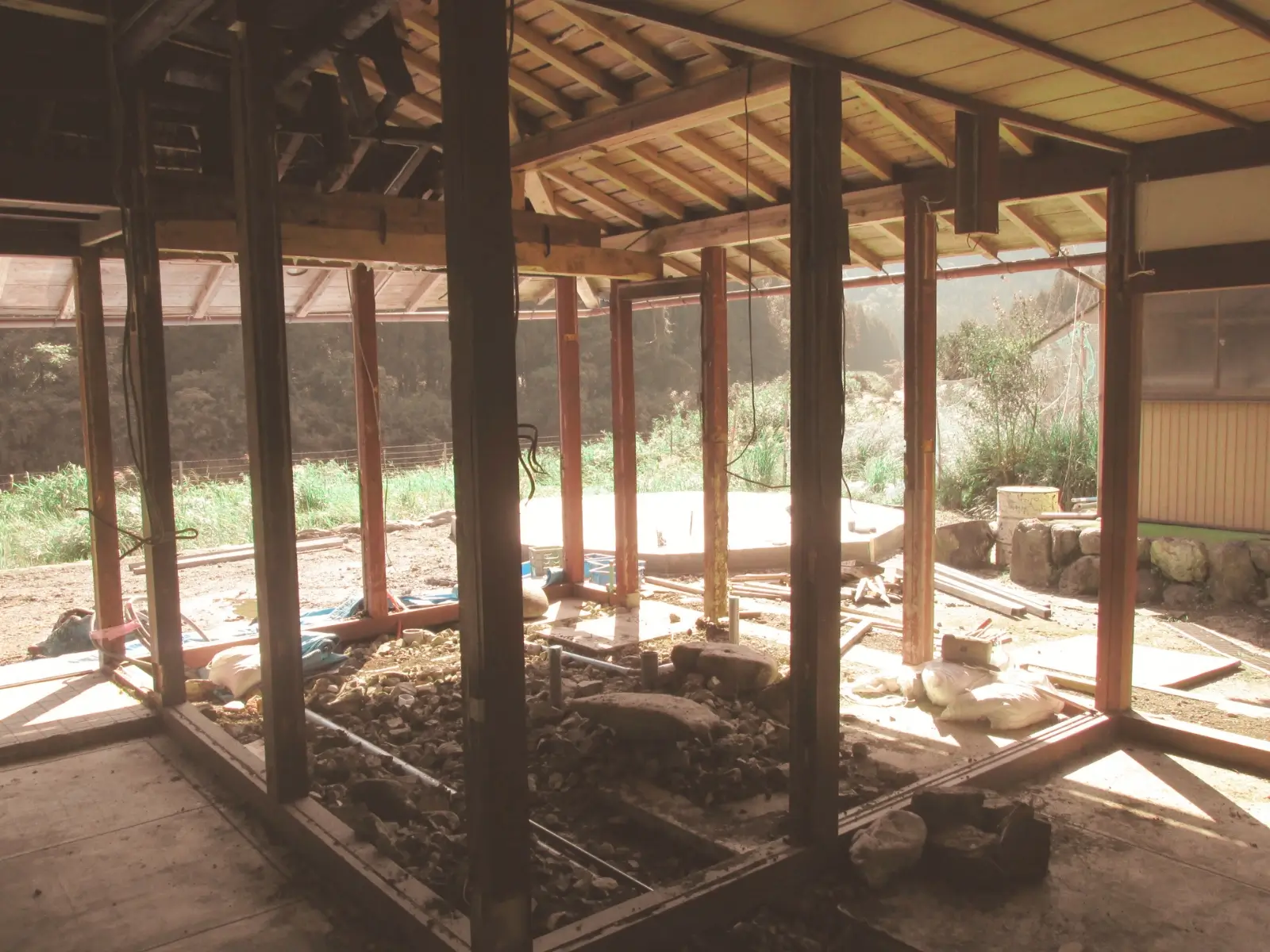
So we removed everything and rebuilt it into an open and spacious layout.
At first, the plan was to install the kitchen against the wall.
However, as the renovation progressed, I realized something important.
In an open floor plan, if the cook faces the wall, they will always have their back turned to everyone else.
So I made a sudden decision to switch to an island kitchen.
◆A Major Change During Construction
This decision required us to break the concrete floor once again and redo the plumbing from scratch.
It was a costly and time-consuming change, but in the end, I am truly glad I did it.
Thanks to the island kitchen, guests can cook, talk, and laugh together while staying connected to the dining area.
It completely changed the atmosphere of the house for the better.
◆The Drink Corner Was Born on Site
The drink corner was also something that was created spontaneously during construction.
It was not part of the original plan.
◆The Mini Bar Used to Be the Entrance
The mini bar space was originally the entrance of the old house.
At first, I considered placing a sofa there so guests could sit and enjoy the view outside.
But one day, inspiration struck me, and I decided to turn it into a mini bar.
The old furniture used there was not newly purchased—it was furniture that had been left behind in the house.
◆A Giant Zelkova Wood Slab Brought From Chiba
The countertop of the island kitchen is made from a massive slab of Japanese zelkova wood.
I found it on Yahoo Auctions and won the bid myself.
Then I drove a truck all the way to Chiba Prefecture on a two-day trip to pick it up.
If you look closely, the slab has a crack on one side, and it appears as if two trees have merged into one.
That unusual shape was exactly what I loved about it.
After bringing it back, I asked a carpenter to transform it into a kitchen countertop.
For the finishing, we even studied resin-coating techniques on YouTube and applied them ourselves.
◆Every Detail Required Time and Effort
The old sliding doors used in the kitchen, and even the fittings for the toilets, were also pieces I found through Yahoo Auctions.
When you put this much effort into rebuilding a single house, once it is finally complete, you become completely exhausted.
And honestly, for a while, you start to feel like you never want to renovate another traditional house again.
◆A Hidden Thatched Roof Beneath the Ceiling
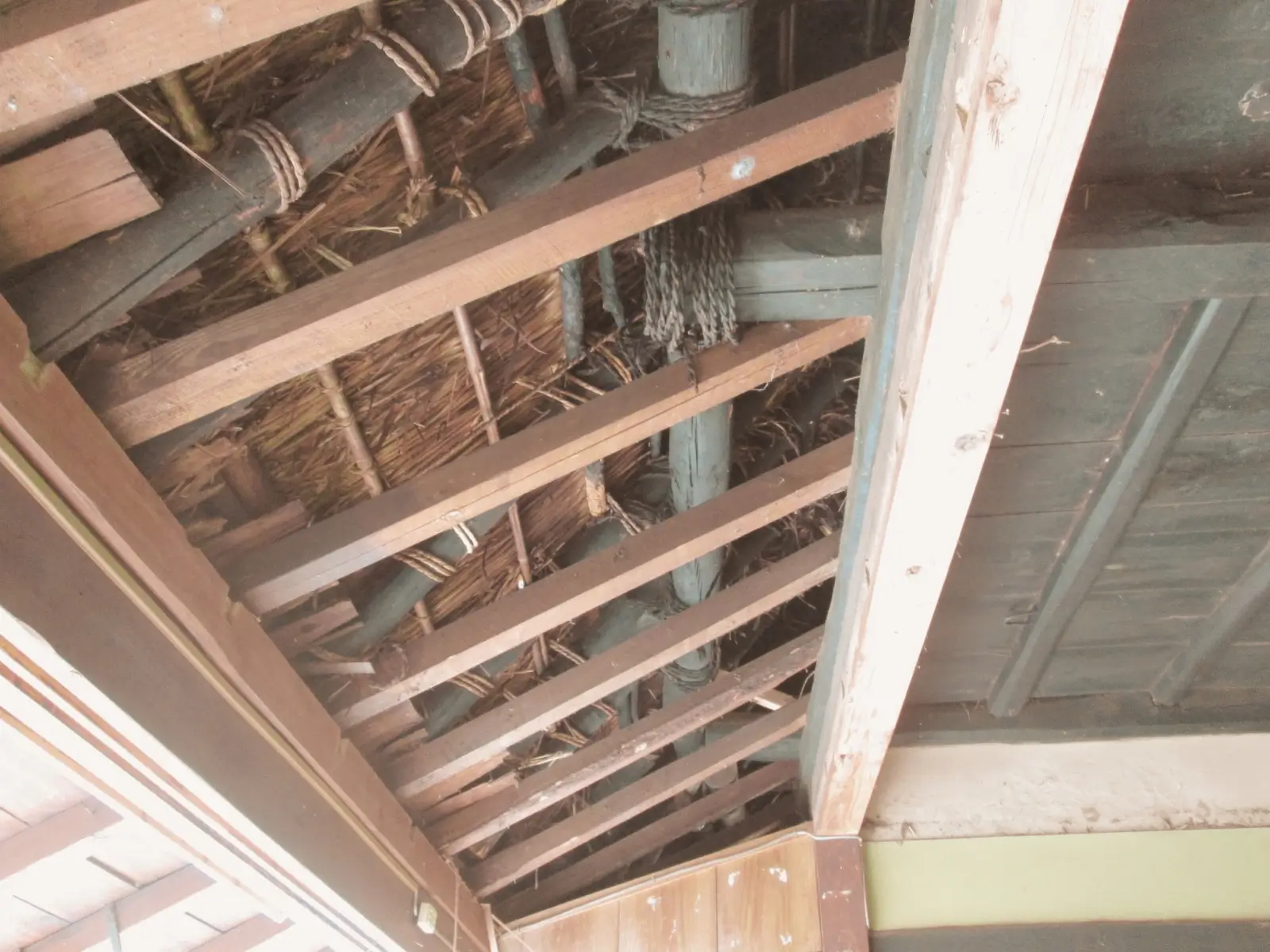
When we removed the ceiling during renovation, we discovered the original thatched roof structure underneath.
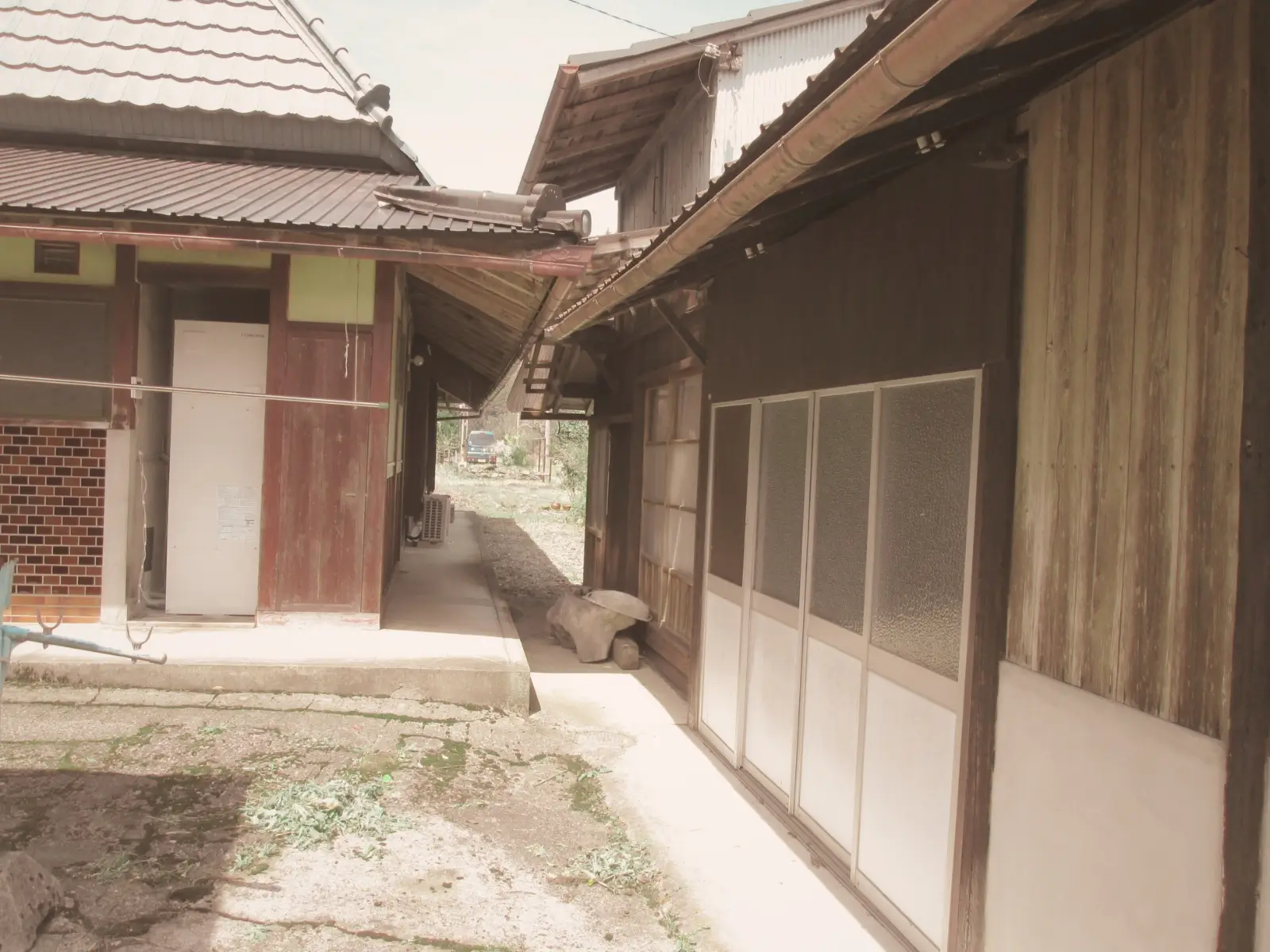
In fact, the main house is currently covered with metal roofing shaped like tiles, but beneath that metal roof, the original thatch still remains.
◆Why the Name “Miyama EISA”?
Finally, I would like to explain why this property is called “Miyama EISA.”
When I take over an old house, I do not want to inherit only the building itself.
I want to inherit its history as well.
So I spoke with neighbors and local residents about the house.
I learned that, for some reason, this house had long been called “EISA.”
◆The River Was Called “Eisa-ura”
The river across from this house has long been a swimming place for local children.
People used to call it “Eisa-ura.”
Older residents told me that when they were children, they would say, “Let’s meet at Eisa-ura,” because everyone knew the name.
It was a word deeply rooted in the memories of the community.
So I decided to name this place “Miyama EISA.”
◆Was There Once a Person Named EISA?
No one knows for certain, but there is also a story that perhaps someone named “EISA” once lived here long ago.
◆A House Reborn, Loved Once Again
I feel truly happy that the newly reborn “Miyama EISA” is now loved by so many guests.
Some of the people who stay here today are the grandchildren of the former resident.
They told me, “We used to come to Grandma’s house during summer vacation, and we are so happy to see it restored so beautifully.”
The neighbors are also pleased, because it is far better for the house to be used than to become an abandoned property.
We are grateful and proud that we were able to preserve and reuse this traditional home in such a meaningful way.
◆Supporting the Community
This village is aging rapidly and has become what is known in Japan as a “marginal community.”
However, the local residents are kind and warm-hearted people.
Twice a year, the village holds community work days, and our company also participates to support them.
We hope our guests can stay here with complete peace of mind.
◆Closing Thoughts: The Thatch Hidden Under Metal Roofs
There are more than 500 thatched-roof houses remaining in Miyama.
However, more than 95% of them are covered with metal roofing like this house.
This method became common throughout Japan around the 1950s.
Someday, I hope to remove the metal roof and restore the original thatched roof once again.
The End.