Life Around the Irori | A Japanese Home Built Around Fire
An irori hearth is more than a fireplace—it is the center of traditional Japanese life. Its smoke once protected the thatched roof and wooden structure, while families gathered around the fire each night to share food and stories. Guests can now enjoy cooking with charcoal and experience this timeless tradition.
Project Info
Client Miyama Heritage Stays
Project Description
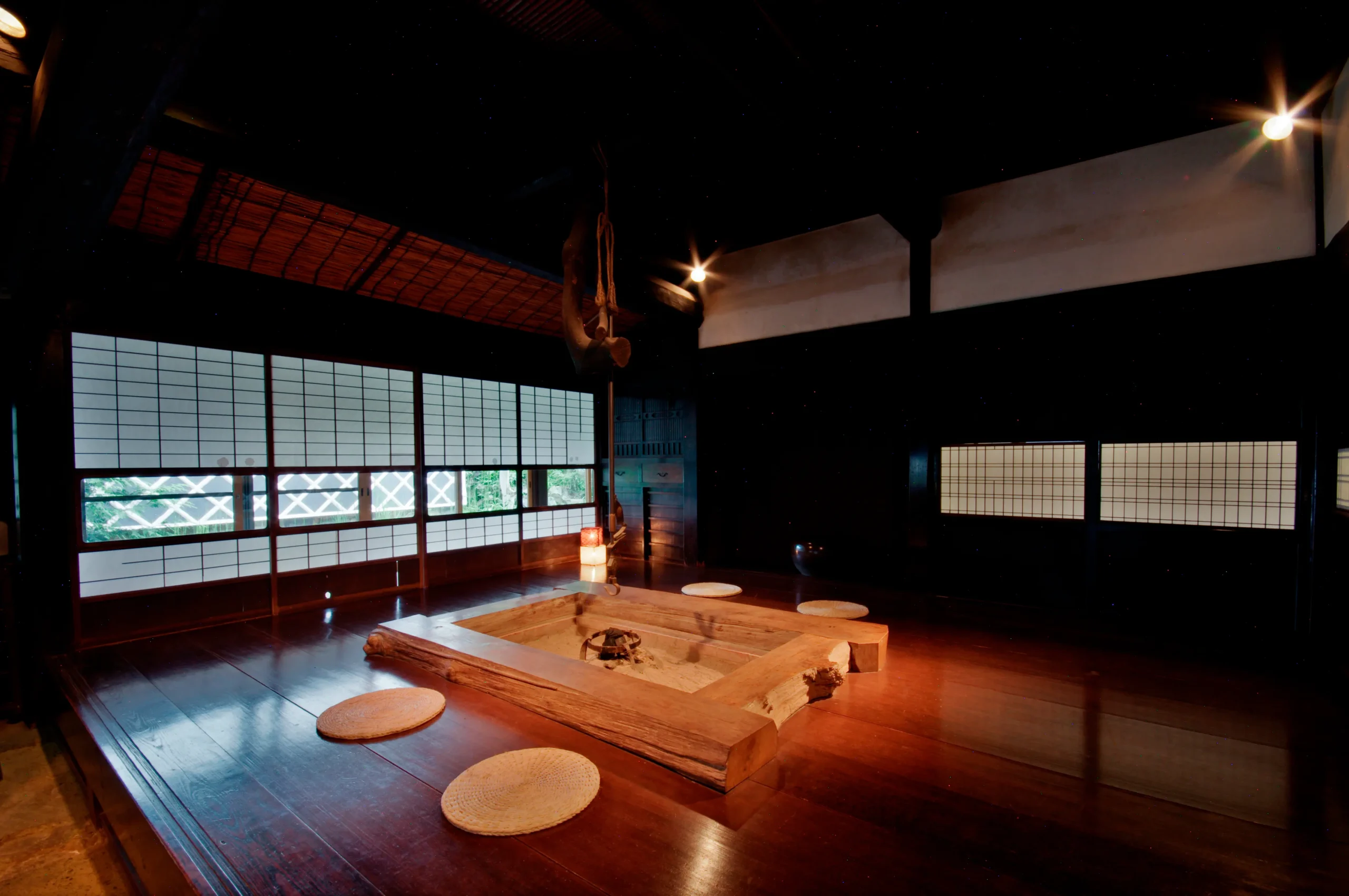
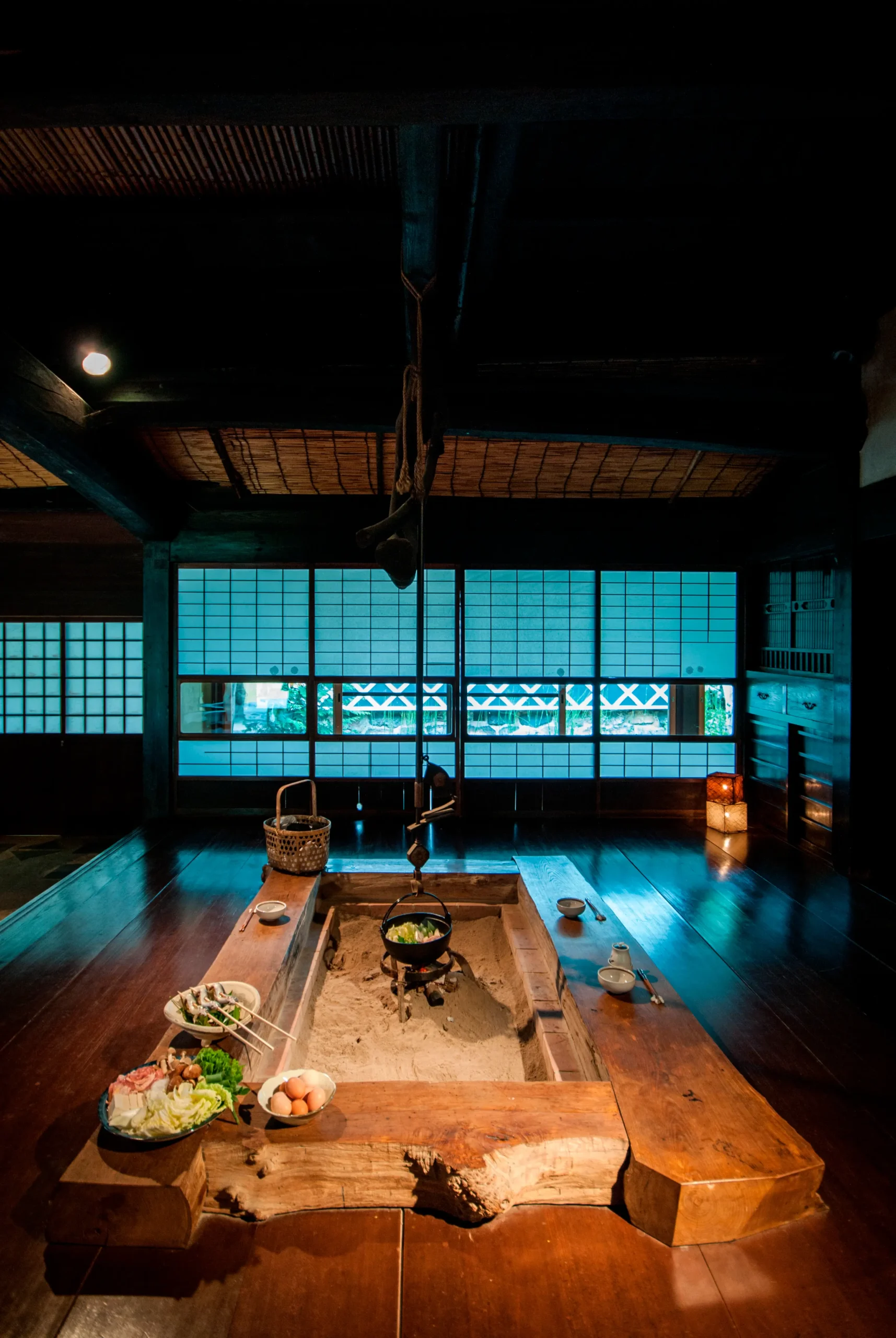
In the past, every traditional farmhouse in rural Japan had an irori hearth. Families burned firewood indoors and lived with fire as a constant presence in their daily lives.
The irori was not simply used for heating. In many ways, it was so essential that it could be said the entire house was built around the fire. This tradition dates back to ancient times, passed down from the era when people lived in pit dwellings, making the irori one of the oldest foundations of Japanese living culture.
By keeping a fire burning in the irori, natural airflow was created inside the house, preventing the air from becoming stagnant. The rising smoke also reached the attic, where it helped protect thatch, bamboo, and wooden structures through a natural fumigation effect. In this way, the irori not only warmed the family—it also helped preserve the house itself.
More than anything, the irori was a symbol of family life.
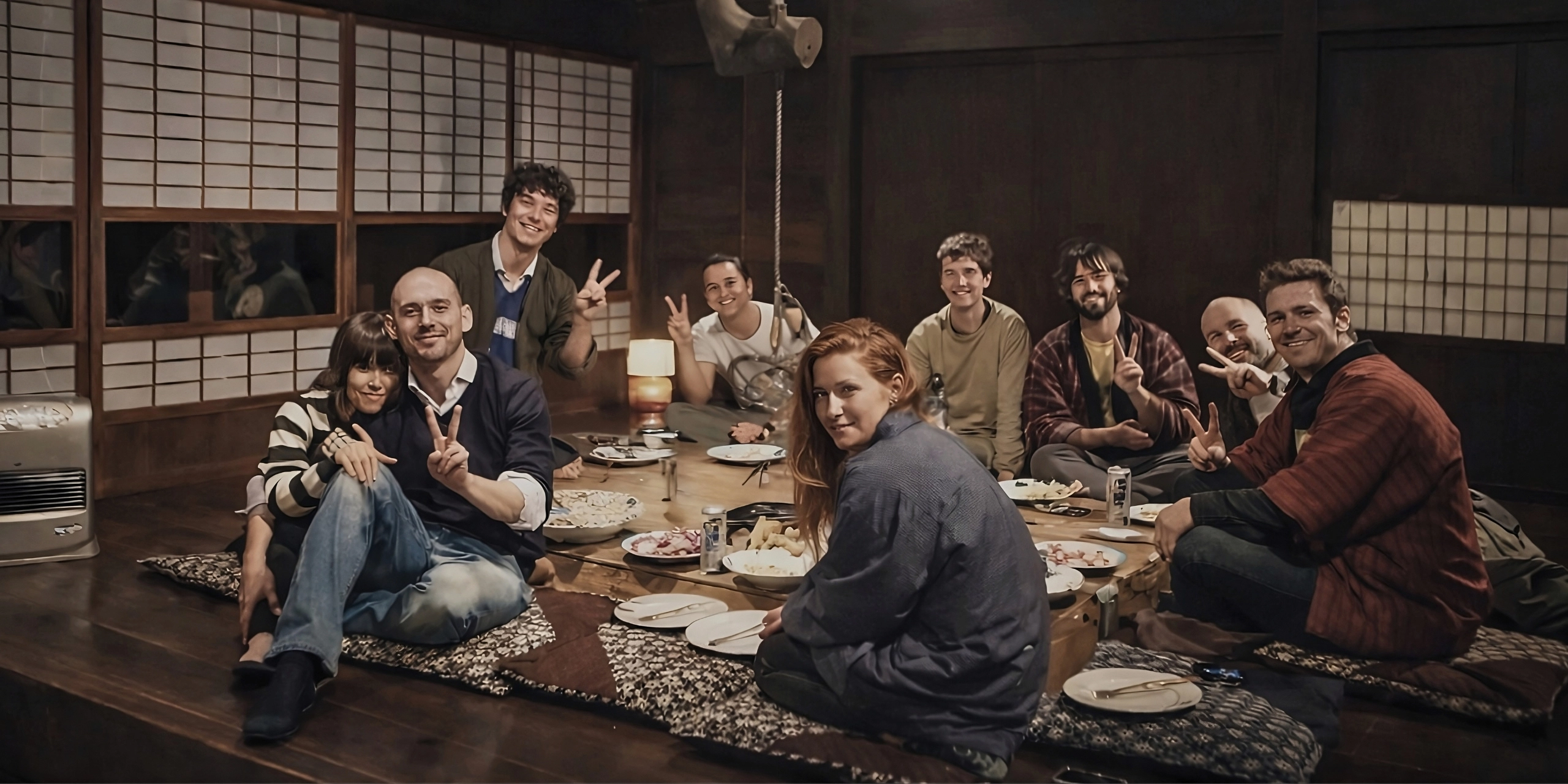
Every evening, family members gathered around it, shared meals, and spent time together. The hearth was the heart of the home, where daily life and human connection naturally came together.
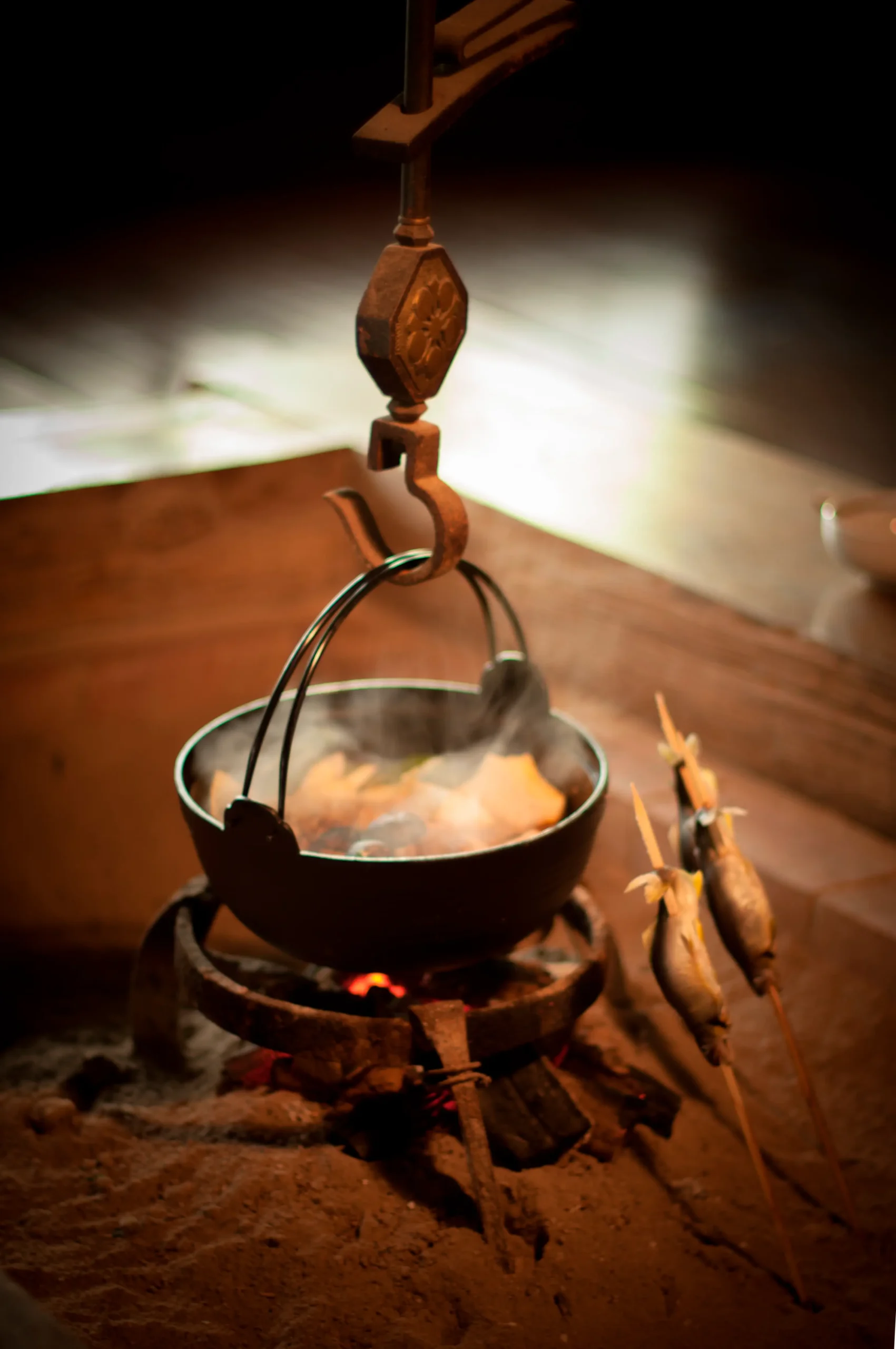
At Miyama FUTON & Breakfast, this traditional irori hearth still remains, and guests are allowed to enjoy using charcoal fire. You can experience authentic Japanese culture by cooking an irori hot pot, grilling river fish, and enjoying the slow, peaceful atmosphere that only a real hearth can create.
Watching the flames, feeling the warmth, and spending a quiet night by the fire—
staying in a home with an irori is a truly special way to experience Japan.
A thatched house is not just a place to live.
It is a space shaped by nature, tradition, and something unseen.
This article explores the deeper meaning of thatched houses in Japan.
A craftsman does not simply learn a skill.
At a certain moment, the body begins to move on its own.
This article explores the invisible dimension of craft—where technique, intuition, and something beyond the self meet.
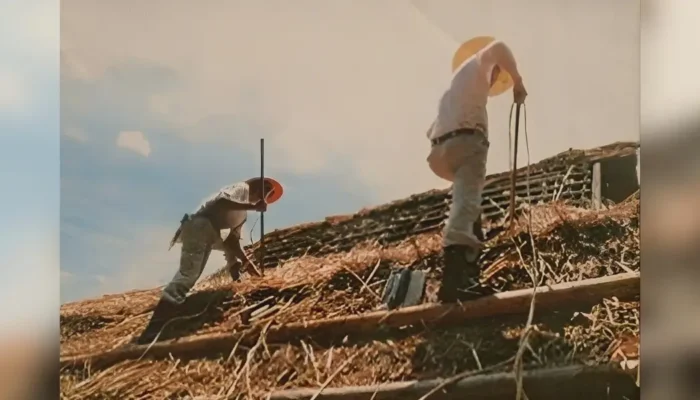
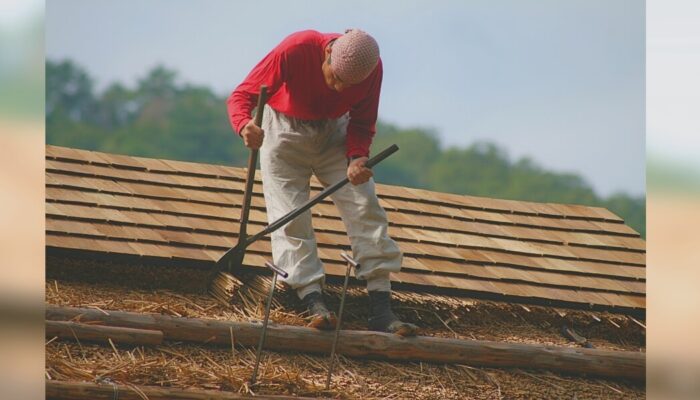
Becoming a thatcher is not just about learning a skill.
It requires years of discipline, observation, and endurance.
Through apprenticeship, repetition, and struggle, the craft is not taught—but absorbed.