Project Info
Project Description
Across the Sea — Discovering Thatch in England
One day, someone told me something unexpected.
“There are many thatched houses in Europe — especially in England.”
I had never imagined that.
On rainy days when work was canceled, I went to the local library and began researching. There was no internet at the time. I searched through books and magazines and discovered that England still had a large number of historic thatched houses.
I was astonished.
And I knew immediately — I wanted to go there.
The opportunity came sooner than I expected.
MOS Burger, a well-known Japanese hamburger chain, had launched a scholarship program to support young Japanese people seeking overseas apprenticeships. I applied. After several stages of screening, including a final interview with the company’s president, I was selected.
Out of approximately 20,000 applicants, I was chosen to receive funding to travel to England and work with British master thatchers.
It felt unreal.
Without internet access, I returned to the library once again and sent nearly fifty letters by post to organizations that might accept me. Eventually, one reply arrived.
Christopher White, chairman of the National Society of Master Thatchers, wrote that he would be willing to host me.
My wife and I traveled to England and stayed in Chris’s home. For one month, I worked with his company.
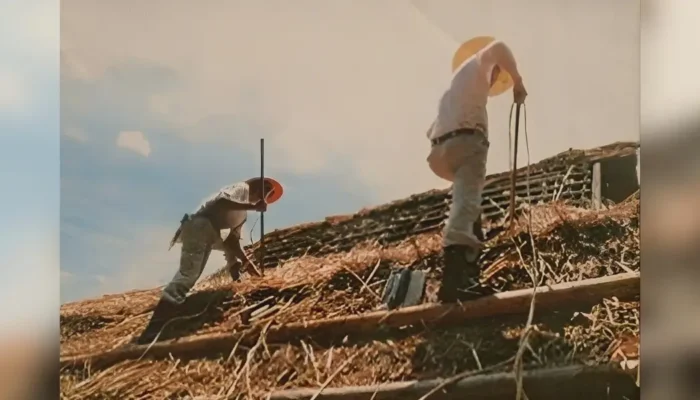
It may well have been the first time in history that a Japanese thatcher and British craftsmen worked side by side on a roof.
Yet from the very first day, we understood each other.
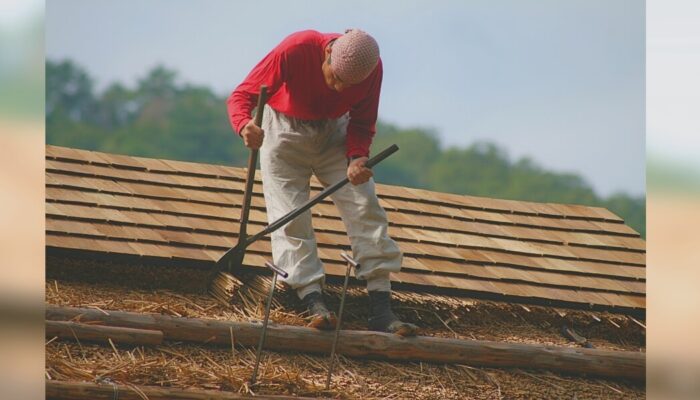
Though separated by geography and history, we used almost identical tools. We shaped the same natural material. We built roofs in remarkably similar ways.
I was deeply moved.
In England, thatched houses were not symbols of poverty or decline. They were cherished. Owners loved them. They were considered prestigious properties. There was even a formal school for thatching, and I attended a one-week training program there.
On weekends, we stayed in historic bed-and-breakfast inns and walked through the English countryside. The landscape felt both foreign and strangely familiar.
On my final night in England, I spoke honestly to Chris.
“In England, there are many young thatchers. Many homeowners value thatch. It is admirable. But in Japan, only a handful of young people are doing this work. I am anxious. I do not know whether I can build a life through this craft.”
Chris looked at me and said quietly:
“Thatching is one of the oldest skills in human history. Have more confidence.”
His words struck me.
Until that moment, I had been thinking only about my own insecurity.
But I was not just a struggling young man.
I was part of a long and profound tradition in Japan.
I was a successor.
When I returned to Japan, my perspective had changed.
My world had grown wider.